When you're trying to pick the right Protein Hydrolysates, it really comes down to one basic question: what do you actually need this ingredient to do? For example, a sports drink might just want something that disperses quickly and doesn't taste too strong. But a clinical nutrition formula? That's a different story—digestibility, nutritional profile, and consistent specs matter a lot more. At the end of the day, no single ingredient is going to nail every use case.
There's a useful rule of thumb that comes from food-protein hydrolysis researcher Jens Adler-Nissen — I’m paraphrasing here, not quoting him word for word — and it basically boils down to this: match the degree of hydrolysis to whatever function you actually need. In other words, don’t just take a supplier’s flashy claims at face value. Dig into the details: what protein source are they using, what’s the hydrolysis level, how are peptides sized, does it dissolve the way you’d expect, and is there a real amino-acid profile to back it up? Also, ask about batch testing and whether the specs stay consistent over time. Honestly, the little things can make or break a product.
But here's the thing: you've got to test the ingredient in the actual product. Just because a powder dissolves fine in a glass of water doesn't mean it'll behave the same way in a flavored drink, hot soup, or a protein bar. And don't forget taste — some hydrolysates might have a bitter bite or leave an aftertaste, even if the spec sheet looks great. So get samples, try them out under real-world processing and storage conditions, and see for yourself. So here’s a good first step: sit down with your technical team and go through the quality docs you’ve got—certificates of analysis, allergen info, all of that. Now, keep in mind, no single number is going to tell you everything about how something will taste or behave during processing. It’s surprisingly easy to forget that. Supplier guidance? Sure, it’s helpful, but it’s not a substitute for running your own trials. At the end of the day, the right choice is the one that works for your application, performs consistently, and you can back it up with evidence—not just the one with the fanciest label.
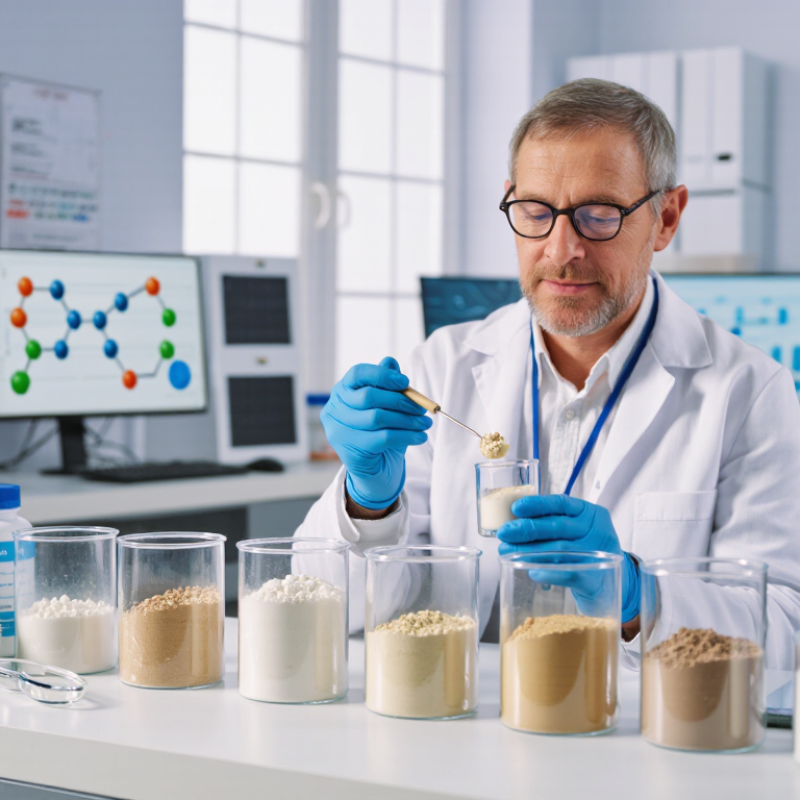
Define Protein Hydrolysates and Their Main Types
Protein hydrolysates are proteins broken into smaller peptides and, sometimes, free amino acids. Manufacturers usually use enzymes or acid to split protein bonds. The result is not one uniform ingredient: the original protein source and the extent of hydrolysis both shape its composition and use. That distinction matters.
Common source-based types include whey, casein, soy, and collagen hydrolysates. Whey and casein come from milk; soy hydrolysate comes from a plant protein. Collagen hydrolysate is made from connective tissue and has a different amino acid profile from complete dietary proteins. The categories can blur: two products from the same source may differ in peptide size because their processing differs.
Hydrolysates are also described as partially or extensively hydrolysed, referring to how far the protein has been broken down. More hydrolysis can change solubility, taste, and digestion characteristics, but it does not automatically make a product better. The FAO’s 2013 protein-quality report describes DIAAS, a method that assesses the digestibility of nine indispensable amino acids. That offers useful context when comparing protein quality, though it does not rank every hydrolysate product. Check the source, amino acid profile, and intended use; labels do not always make comparisons easy.
Identify Your Nutritional and Dietary Requirements
How to Choose the Best Protein Hydrolysates?
Identify Your Nutritional and Dietary Requirements
Start with your daily protein target, not the word “hydrolysate.” The U.S. National Academies’ Dietary Reference Intakes set 0.8 grams of protein per kilogram of body weight daily as the adult RDA. It is a baseline for healthy adults, not a personal prescription. Age, activity, health conditions, and total food intake can change individual needs. Check the protein per serving and serving size on the label.
Protein source matters. The FAO’s 2013 report, Dietary Protein Quality Evaluation in Human Nutrition, recommends assessing protein quality with DIAAS, which considers digestible essential amino acids. Compare Animal Protein And Plant Protein by looking beyond the source name: amino-acid profiles and digestibility differ. Also check for allergens, lactose, sweeteners, and sodium. Hydrolysis breaks proteins into smaller peptides, but it does not automatically make a product suitable for every diet. That distinction is easy to miss.
Tips: Match the ingredient list to your restrictions. If you avoid dairy, verify the source rather than relying on “hydrolyzed” wording. Ask a qualified dietitian about specific medical needs. Taste matters, too; a powder left unused is not much help.
How to Choose the Best Protein Hydrolysates?
Identify your nutritional and dietary requirements first. These daily protein reference ranges can help you estimate your needs; they are not a recommended serving size for a hydrolysate product.
Compare the product’s protein per serving with your personal daily target, and check its ingredient list for allergens and other dietary restrictions. Protein needs vary with health, activity, and life stage; consult a qualified healthcare professional for individualized advice. References: National Academies’ adult RDA (0.8 g/kg/day), ESPEN guidance for healthy older adults (1.0–1.2 g/kg/day), and the International Society of Sports Nutrition’s range for exercising individuals (1.4–2.0 g/kg/day).
Compare Protein Sources, Hydrolysis Levels, and Peptide Profiles
Choosing a hydrolysate starts with its source. Whey, casein, soy, and wheat differ in amino acid composition, allergen considerations, and suitability for particular diets. Hydrolyzed Wheat Protein, for example, can offer useful functional properties, but wheat protein is relatively low in lysine. Check the amino acid profile rather than assuming hydrolysis makes every source nutritionally equivalent. Details matter.
Hydrolysis level describes how extensively proteins have been broken into smaller peptides. A higher degree of hydrolysis often means smaller fragments, but it does not guarantee better performance for every use. It can also affect taste; some products develop noticeable bitterness. Compare the stated degree of hydrolysis with actual peptide-size data when available. A single number is not the whole picture.
Peptide profiles show the range of peptide sizes in a product, often reported as molecular-weight distribution. This can help explain differences in solubility, texture, and intended application. Look for clear testing methods and batch specifications, not just broad claims about “fast absorption.” In practice, I would also compare how a sample mixes in cool water and whether its flavor works in the finished recipe. Those checks are useful, though they cannot replace a full composition review.
Evaluate Purity, Digestibility, Allergens, and Added Ingredients
Choosing a protein hydrolysate starts with its specification, not the front-label claims. Request a batch-specific certificate of analysis and check protein content, amino-acid profile, moisture, and microbiological results. The FAO’s 2013 expert report recommends DIAAS, which evaluates the digestibility of individual essential amino acids—not just total protein grams. A high degree of hydrolysis may affect solubility and taste, but it does not prove superior nutritional quality. A smooth texture can mislead.
Allergens need careful review. The FDA lists nine major food allergens, including wheat. Hydrolysis can alter proteins, but do not assume it removes allergy risk. For Hydrolyzed Wheat Protein Powder, check the allergen statement and ask about cross-contact controls if the documentation is unclear. Then scan the full ingredient list: sodium, sweeteners, flavors, and carriers can change what seems like a simple protein ingredient. “Pure” can mean different things on different labels.
Tips: Compare protein per serving with protein per 100 grams, and look for a clear test method and named laboratory on the certificate. Check whether digestibility claims cite human data or only laboratory testing. If a supplier will not share basic specifications, pause. I would not treat a clean taste as proof of purity; that needs evidence.
Sources: FAO, Dietary Protein Quality Evaluation in Human Nutrition (2013); U.S. FDA, “Food Allergies”.
Check Manufacturing Standards, Testing, and Product Transparency
When choosing a protein hydrolysate, look beyond claims such as “high quality” or “high purity.” Ask how the protein is sourced and whether enzymatic hydrolysis, filtration, and drying steps are documented. A supplier should explain its manufacturing controls and provide current certifications relevant to its facility, such as food-safety management or good manufacturing practices. Standards matter. Check that certificates cover the actual production site, not just an office or distributor.
Request a certificate of analysis for the specific lot you are considering. It should report measured results, test methods, and acceptance limits for identity, protein content, moisture, and microbiological quality. Depending on the ingredient and its intended use, ask about allergens, heavy metals, and other relevant contaminants. For hydrolysates, information on peptide-size distribution or degree of hydrolysis can help compare products, though there is no single ideal value for every application. Verify that the testing comes from a qualified laboratory, and ask how out-of-specification results are handled. Even a neat certificate can leave questions. I would not treat a polished brochure as proof; batch records and traceability matter more. If answers are vague, delayed, or inconsistent across documents, pause and ask for clarification. Ingredient data can be imperfect, and suppliers may not disclose every process detail, so note what remains unverified before making a decision.
Match the Hydrolysate to Your Budget, Goals, and Usage Routine
How to Choose the Best Protein Hydrolysates?
Match the hydrolysate to your budget, goals, and daily routine—not just the fastest-absorbing claim. The International Society of Sports Nutrition’s 2017 position stand suggests 1.4–2.0 grams of protein per kilogram of body weight daily for exercising adults. It also describes roughly 20–40 grams per serving as a practical range. Check the protein amount, not just the scoop size.
Cost matters. A 2018 meta-analysis by Morton and colleagues, published in the British Journal of Sports Medicine, reviewed 49 studies involving 1,863 participants. It estimated that strength-training benefits levelled off around 1.62 g/kg daily, though the confidence interval was wide. That makes cost per useful serving worth comparing. Hydrolysates can cost more than intact proteins, and a higher price does not guarantee better results. Small but important.
Choose a format you can use consistently: a shaker after training, or a measured portion mixed into breakfast. Hydrolysed Wheat Protein may suit someone seeking a wheat-derived option, but wheat protein is relatively low in lysine. Pair it with other protein sources across the day. This is where shopping gets less tidy: taste, price, and stomach comfort do not rank neatly. Trial a small serving before buying a large container, and note how it fits your meals and budget.
Plant-Powered Nutrition: A Guide to High Quality Rice Protein Powder for Vegan Nutrition
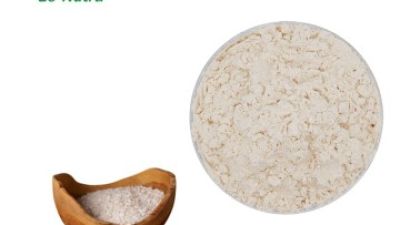
Plant-powered nutrition offers a practical way to add protein to everyday meals. Made from high-quality, non-GMO brown rice, rice protein powder is a plant-based option for vegans and others seeking alternatives to animal-derived protein. Its fine powder is typically light yellow or off-white, and its protein content ranges from 70% to 90%, depending on the extraction process. With unsaturated fat, it can fit into a variety of balanced nutrition plans.
Rice protein powder can be blended into smoothies, protein beverages, and shakes, or incorporated into protein bars and other functional foods. It is also used in health-care supplements and sports nutrition products. For active people, protein as part of a balanced diet can support muscle growth and recovery alongside regular exercise. Its versatility makes it easy to use at home or as an ingredient in formulated products.
For bulk supply, the powder is commonly packed in 20 kg kraft bags, with customization available. Keep it sealed in a cool, dry place, away from direct sunlight, heat, and humidity. Under appropriate storage conditions, its quality can generally remain stable for up to 24 months.
Conclusion
Choosing the right Protein Hydrolysates starts with understanding what they are: proteins broken down into smaller peptides, with different sources and degrees of hydrolysis that can affect their taste, texture, and digestion. Begin by considering your nutritional needs, dietary preferences, and any ingredients you need to avoid. Then compare protein sources and peptide profiles, and review the product’s protein content, purity, digestibility, allergen information, and added ingredients.
Look for clear information about manufacturing practices, quality testing, and sourcing so you can assess how transparent and consistent the product is. Finally, match your choice to your budget, fitness or nutrition goals, and typical routine, including how and when you plan to use it. Considering these factors together can help you select a hydrolysate that fits your needs rather than relying on a single feature or claim.