Leave Your Message
0%

Before you jump into routine production, a supplement contract manufacturing checklist can be a lifesaver for your brand. It basically takes all those big promises and turns them into actual checkable questions. For example: which Supplement Components will they source? How do they vet their suppliers? And what records follow each batch? Honestly, the answers need to be specific, documented, and consistent—whether we're looking at conversations, quality agreements, or production records. And yeah, details matter. A lot.

You know how it goes—quality isn’t something you just check at the end, it’s built in along the way. W. Edwards Deming, the quality-management guru, put it perfectly: “Quality comes not from inspection, but from improvement of the production process.” For supplements, that really means you can’t rely on a final product test alone. You have to dig a little deeper. Ask the manufacturer how they actually handle things like receiving ingredients, weighing, blending, packaging, and reviewing records. And don’t be shy—ask to see examples of batch documentation, ingredient specifications, testing procedures, and how they manage changes. It’s a lot, but it’s worth it. Sure, that slide deck looked great. But at the end of the day, pretty slides don't equal proof. Give me something I can actually check—real records—and that's way more useful.

So this guide walks you through a checklist that digs into the important stuff—capabilities, communication, quality systems, capacity, and commercial terms. It also helps sort out who’s actually responsible for what when something changes, whether it’s a formula, a supplier, or the production schedule. And here’s the thing: small gaps don’t stay small. You can have a checklist that looks totally complete, but the handoff is still fuzzy—that’s a red flag worth another look. Use the questions to compare manufacturers on a level playing field, jot down anything that wasn’t answered, and agree on what follow-up evidence you’ll need before you make the call. Honestly, no single checklist is going to do the real work for you. You still have to carefully look at the product, the facility, and how you actually work together. But a good checklist can help you focus that review—and maybe surface a few assumptions you didn't realize were worth revisiting.

What Is a Supplement Contract Manufacturing Checklist?

Defining a Supplement Contract Manufacturing Checklist

A Supplement Contract Manufacturing Checklist is a working document that defines what a manufacturer and a supplement company must agree on before production begins. It turns broad expectations into details that can be checked: product specifications, batch size, packaging, timelines, quality responsibilities, and records. For each Supplement Ingredient, identify its required name, grade, source documentation, allergen status, and acceptance criteria. Ask how incoming materials are inspected and what happens when a test result falls outside the agreed range. Small details matter. A powder that flows poorly, for example, may affect filling speed and finished serving weights.

The checklist should also state who approves formula or supplier changes, how deviations are documented, and which batch records are shared after production. Set expectations for sample retention, label review, and communication when schedules shift. These points help both parties spot gaps before they become costly rework. Still, a signed form is not proof that every control works. A checklist can look complete and still be wrong. Teams should compare it with actual production steps, quality records, and the product’s specific risks. Some details may need revision after a first run; that is useful feedback, not failure.

Understanding Its Purpose and Scope

A supplement contract manufacturing checklist defines what a manufacturer must demonstrate before, during, and after production. Its purpose is practical: align product specifications, quality controls, timelines, and responsibilities before ingredients reach the blending room. The 2023 Council for Responsible Nutrition Consumer Survey reported that 74% of U.S. adults use dietary supplements, while 55% use them regularly. That scale makes clear documentation more than paperwork. It supports consistent batches and gives teams a shared record when a test result or delivery date changes.

Scope should cover supplier qualification, ingredient identity and testing, batch records, packaging controls, storage conditions, and change management. For Health Supplement Actives, confirm acceptance criteria, test methods, and who reviews certificates of analysis. FDA’s 21 CFR Part 111 describes current good manufacturing practice requirements for dietary supplement production, including specifications and quality-control procedures. A checklist should translate those requirements into verifiable steps, not simply copy regulatory language. Ask to see sample records and how out-of-specification results are investigated.

It also needs boundaries. Define which party approves labels, retains samples, releases batches, and communicates deviations. Put details in writing. A checklist cannot replace competent oversight, and it may miss a weak handoff unless someone tests it against real workflows. That part is easy to overlook. Review it with quality, procurement, and production staff; then revise it when processes or specifications change.

Assessing a Manufacturer’s Qualifications and Capabilities

A supplement contract manufacturing checklist should test more than a polished sales presentation. Ask for current quality certifications, facility scope, and the products each site is qualified to make. Verify the information directly; a certificate alone does not show how daily controls work. Look for written procedures covering ingredient receipt, identity testing, batch records, sanitation, and deviations. Details matter.

Request recent audit findings and evidence that corrective actions were completed, not merely promised. Review how the manufacturer qualifies ingredient suppliers and handles out-of-specification results. Ask which tests are performed in-house and which go to qualified independent laboratories. Check sample certificates of analysis, product specifications, and retention-sample practices. A neat file is useful, but actual batch records reveal whether procedures are followed consistently. Some answers may remain unclear.

Assess capability against your formula, packaging, and forecast, rather than broad claims of capacity. Confirm that the equipment can handle the dosage form and batch size without avoidable quality compromises. Discuss pilot runs, scale-up criteria, stability support, labeling controls, and change-notification timelines. Ask who approves substitutions or process changes, and how those decisions are documented. Communication is part of capability. If timelines sound perfect, ask what happens when a raw material arrives late or a test fails. A checklist cannot remove every risk, but it can expose assumptions before production begins.

Setting Product, Ingredient, and Formulation Requirements

A useful supplement contract manufacturing checklist starts with a precise product brief. Define the intended user, product format, target serving size, and desired experience, such as a powder that mixes smoothly in cold water. Note practical limits too: capsule size, flavor, color, packaging, and acceptable production quantities. Small details matter. A checklist can still miss something; review assumptions before requesting a quote.

List each ingredient by its common and technical name, intended amount per serving, source, and required quality specification. For botanical materials, identify the plant part and any marker compounds that should be measured. Ask what documentation and testing support identity, purity, potency, and contaminant controls. Record allergens and any processing aids or excipients that may appear in the finished product. Set formulation requirements for taste, texture, moisture sensitivity, and stability, then discuss suitable packaging and storage conditions with the manufacturer. A formula that works in a small kitchen trial may behave differently on production equipment. Request samples and review them against written acceptance criteria. Have qualified quality and regulatory professionals assess labeling and claims for the product’s target market. This step is easy to underestimate.

What Is a Supplement Contract Manufacturing Checklist?

Setting Product, Ingredient, and Formulation Requirements

This illustrative checklist allocation shows example prompts to define before production. Confirm product specifications, ingredient identity and quality requirements, formulation details, testing expectations, and packaging and stability needs with your manufacturing partner. Counts are examples, not industry survey data.

Verifying Quality Systems and Regulatory Compliance

Verifying a supplement contract manufacturer’s quality systems takes more than collecting polished certificates. Request recent audit reports and confirm their scope covers the actual facility, product type, and processes used. In the United States, dietary supplement manufacturers must follow FDA current good manufacturing practice requirements under 21 CFR Part 111. Facility registration is not FDA approval. Paper trails matter.

The HHS Office of Inspector General reported in 2017 that FDA inspections found cGMP violations at about half of the supplement facilities reviewed from 2010 through 2016. Treat that finding as a reason to examine records closely, not as a prediction about any one supplier. Review sample batch records, supplier qualification files, deviation investigations, and corrective actions. Check that test methods identify the right ingredient and measure relevant specifications. For B12 Supplement Ingredients, ask how identity, potency, and contamination risks are assessed for each incoming lot.

Walk through the production area, if possible. Look for clear material labels, controlled storage conditions, and separation between released and quarantined stock. Ask who reviews out-of-specification results and how changes to formulas or suppliers are approved. A certificate alone is thin evidence. Independent laboratory testing can help, but only when the laboratory, method, and sampling plan are appropriate. Some gaps may be missed during a brief audit; document open questions and agree on deadlines before production begins.

Planning Production, Packaging, and Supply Chain Controls

What Is a Supplement Contract Manufacturing Checklist?
Planning Production, Packaging, and Supply Chain Controls

A useful supplement contract manufacturing checklist turns broad expectations into checks that can be verified on the production floor. Start with the product specification: ingredient identity, target amounts, tolerances, serving size, and handling requirements. Keep the approved formula version beside the batch record. Small mismatches matter. Operators should not have to guess which formula or label is current.

Plan capacity before setting a launch date. Confirm batch size, lead time, production schedule, and how delays in incoming materials are handled. Ask how ingredients are sampled, identified, and tracked through storage and dispensing. Review cleaning records, equipment calibration, in-process checks, and release criteria. Evidence matters more than reassuring language. Request sample records with confidential details removed, and clarify who investigates deviations and approves corrective actions.

Packaging controls deserve the same attention as production. Check label proofs against the approved specification, including serving directions, ingredient details, and lot-code placement. Confirm seal checks, packaging counts, and procedures for damaged materials. Traceability should connect each finished lot to its ingredients and packaging components. Ask whether critical suppliers have qualified alternatives, and how shipping conditions are monitored when heat or moisture may affect product quality. Not every risk has a neat checkbox. A checklist can still miss an awkward handoff, so walk through one real order with the manufacturing team.

Reviewing Records, Agreements, and Ongoing Performance

A supplement contract manufacturing checklist should begin with records that can be traced to a specific lot. Review ingredient specifications, supplier qualification files, certificates of analysis, batch records, and deviation reports. For Nac Supplement Ingredients, check that identity, purity, and acceptance criteria are documented before production. FDA dietary supplement cGMP rules require firms to establish specifications and maintain records under 21 CFR Part 111. A tidy file can still hide a weak process. Compare the paperwork with what operators actually do on the floor.

Agreements should name responsibilities, approval steps, change controls, complaint handling, and record-retention expectations. The Council for Responsible Nutrition’s 2024 Consumer Survey reported that 75% of U.S. adults use dietary supplements. That broad use makes consistent quality records more than administrative housekeeping. Ask how quickly the manufacturer can provide a complete lot history, and whether subcontractors follow the same controls. Also review recent audit findings and corrective actions. “Closed” is not the same as resolved; check for evidence that the fix lasted.

Tips: Set measurable service indicators, such as on-time delivery, deviation closure time, and batch-document accuracy. Review trends quarterly, not just during renewal. Keep meeting notes and assign owners with due dates. If a metric slips, ask for the cause and the follow-up evidence. Small misses matter.

What Is a Supplement Contract Manufacturing Checklist? - Reviewing Records, Agreements, and Ongoing Performance

A practical review framework for assessing a supplement manufacturing partner. The example findings below are illustrative; applicable requirements depend on the product, market, and contract.

Review area Checklist item Records or agreement to review Example review finding Suggested action and timing Example status
Facility & quality system Confirm the facility’s applicable food-safety and quality controls are documented and current. Quality manual, relevant inspection or audit reports, corrective-action records, and facility registration details where applicable. Quality manual is available; the latest audit report references one corrective action with supporting closure evidence. Verify the corrective action is closed and review audit findings before approval; repeat at least annually or after a significant change. Follow up
Regulatory & product scope Define the products, dosage forms, markets, and manufacturing activities covered by the engagement. Executed manufacturing agreement, product specifications, scope of work, and applicable market-specific regulatory responsibilities. The agreement identifies capsule and powder production, but the responsibility for market-specific label review is not assigned. Document responsibility for label and claims review before artwork approval or production. Open
Supplier controls Check that ingredient suppliers and incoming materials are qualified and traceable. Approved supplier list, supplier assessments, purchase records, ingredient specifications, and incoming-material review records. Supplier approval records and lot-specific receiving checks are available for sampled ingredients. Sample records from each critical ingredient and confirm requalification triggers and ownership are defined. Complete
Testing & release Confirm product testing and batch-release criteria are specified and documented. Finished-product specifications, test methods, certificates of analysis, laboratory records, and batch-release procedures. Release records include identity and microbiological results; the specification does not clearly identify who approves final release. Clarify release authority, required tests, acceptance criteria, and handling of out-of-specification results in writing. Follow up
Batch documentation Review whether production records support complete batch reconstruction. Master manufacturing instructions, executed batch records, component lot numbers, processing parameters, and reconciliation records. A sampled batch record links ingredient lots to the finished lot and records operator checks and yield reconciliation. Review representative records for each product type before launch and periodically during production. Complete
Label & packaging control Ensure approved packaging versions are controlled and obsolete versions are prevented from use. Approved artwork, label specifications, revision history, packaging issuance records, and line-clearance documentation. Artwork approval is recorded; the agreement does not specify how updated or obsolete packaging is managed. Add version-control, approval, change-notification, and obsolete-material disposition requirements. Open
Change management Require communication and approval for changes that could affect product quality or compliance. Change-control procedure and contract clauses covering ingredients, suppliers, processes, sites, specifications, and packaging. A change-control process exists, but the notice period for material changes is not stated in the agreement. Agree on written notification and approval steps before implementing defined material changes. Follow up
Deviations & complaints Establish how deviations, consumer complaints, and potential product-quality issues are investigated and escalated. Deviation and complaint procedures, investigation reports, escalation contacts, and timelines in the quality agreement. Investigation procedures are available; escalation timelines and the format for sharing investigation outcomes need clarification. Set notification expectations, investigation responsibilities, and documentation-sharing requirements before first production. Follow up
Traceability & recall Check that finished lots can be traced to inputs and distribution records and that recall roles are assigned. Traceability procedure, mock-recall results, shipment records, contact list, and recall or withdrawal clauses. A traceability exercise is documented; the agreement does not name the decision-maker for customer and regulator notifications. Define decision rights, contact responsibilities, and cooperation steps; review the process through periodic exercises. Open
Records & access Set expectations for record retention, retrieval, confidentiality, and access to relevant quality records. Record-retention schedule, confidentiality terms, audit-access provisions, and document-request procedure. Retention periods are described for batch records, but timelines for providing requested records are not specified. Agree on retention, retrieval response times, access rights, and secure handling of confidential information. Follow up
Delivery & service levels Review capacity, lead times, order acceptance, and procedures for delayed or short shipments. Forecasting and order terms, production schedule, delivery terms, service-level measures, and escalation contacts. Standard lead times and order quantities are stated; there is no defined escalation process for missed delivery dates. Document notification expectations, recovery planning, and the process for approving schedule changes. Follow up
Ongoing performance Track quality and service trends and review recurring issues with the manufacturing partner. Periodic review minutes, deviation and complaint trends, on-time delivery data, rejected lots, and corrective-action status. A quarterly review is proposed, but no shared measures or reporting format are defined. Agree on a review cadence and a concise scorecard covering quality events, delivery performance, and overdue actions. Open

Suggested use: Record the document reviewed, review date, responsible owner, and closure evidence for each item. Tailor the checklist to the product, contractual scope, and applicable regulatory requirements.

Giant Knotweed Extract Resveratrol Powder: A Practical Guide to Choosing a Supplement

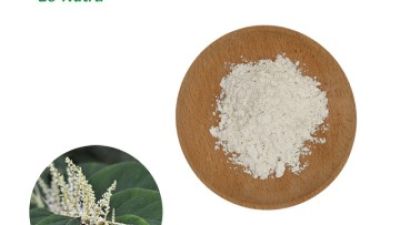
When choosing a resveratrol supplement made from giant knotweed extract, start by checking the stated resveratrol concentration. Ingredient powders may be specified at 50%, 98%, or 99%, so compare products by the amount of resveratrol they provide rather than by the total weight of the extract alone. A specification sheet should identify resveratrol (C₁₄H₁₂O₃; molecular weight 228.24 g/mol; CAS 501-36-0) and describe the powder’s purity and testing. White to off-white powder is a typical appearance, but appearance alone cannot confirm quality. Look for clear ingredient information and quality documentation, and follow the directions on the finished supplement label.

Packaging and storage also matter when comparing options. Resveratrol powder is commonly supplied in sealed vacuum aluminum foil bags or, for larger quantities, fiber drums with a food-grade inner liner. It should be kept sealed in a cool, dry place, away from direct sunlight, heat, and humidity. Under suitable storage conditions, its stated shelf life is usually 24 months; check the product’s manufacture and expiry dates before purchase. Resveratrol ingredients are used in health-care products and pharmaceutical applications, but a raw ingredient is not the same as a finished supplement. Choose a product intended for your needs and consult a qualified health professional if you have questions about use.

FAQS

What should a supplement manufacturing checklist include?

It should define product specifications, batch size, packaging, timelines, quality duties, and required records. Keep each item measurable.

What details should be recorded for each ingredient?

Record its name, grade, source documents, allergen status, and acceptance criteria. Small details matter.

How should incoming ingredients be checked?

Agree on inspection steps and what happens when results fall outside the accepted range. A poorly flowing powder can slow filling and affect serving weights.

Which production records should a company review?

Review ingredient specifications, supplier files, test certificates, batch records, and deviation reports. Match the paperwork to actual production steps.

What responsibilities belong in the manufacturing agreement?

Specify who approves formula or supplier changes, handles complaints, reviews labels, and keeps records. Name approval steps clearly.

How should a company check whether corrective actions worked?

Review audit findings and supporting evidence. A finding marked closed may not mean the fix lasted.

Which performance measures are useful?

Track on-time delivery, deviation closure time, and batch-document accuracy. Review trends quarterly, not only at renewal.

Is a signed checklist proof that every quality control works?

No. Compare it with production practices and quality records. Some details may need revision after the first run. That is feedback.

Conclusion

A Supplement Contract Manufacturing Checklist is a practical guide for evaluating and managing a partnership with a supplement manufacturer. It defines the project’s purpose and scope, then helps confirm that a manufacturer has the relevant experience, equipment, staffing, and production capacity. It also clarifies product requirements, including ingredient specifications, formulation details, and expectations for consistency.

The checklist should cover quality systems and applicable regulatory responsibilities, as well as production planning, packaging, storage, and supply chain controls. Before work begins, both parties can use it to review records, clarify agreements, and set expectations for communication, timelines, and performance monitoring. By organizing these considerations in one place, the checklist helps identify gaps early and supports a more transparent, reliable manufacturing relationship from initial planning through ongoing production.


Amelia

Amelia

Amelia is a dedicated professional marketing specialist with a deep commitment to promoting natural, healthy, and innovative raw materials. As an integral part of our team, she channels her extensive knowledge into researching and marketing products that significantly enhance the fields of......
Previous How to Ensure Cosmetic Ingredient Stability in Skincare?