Leave Your Message
0%

Picking a private label supplement partner isn’t just about comparing prices or flipping through glossy catalogs. You want a manufacturer who can actually walk you through where ingredients come from, how production runs, and how they double-check every batch. Don’t be shy—ask pointed questions about testing, traceability, facility standards, and quality records. The little details really do matter.

If you're trying to figure out which private label supplement manufacturer to go with, a good guide can help you turn all those questions into something you can actually work through. Don't just get drawn in by fancy packaging. Ask for sample docs, check if their production timelines are realistic, and make sure you know who's responsible for formula tweaks, label approvals, and customer complaints. You might want to ask the manufacturer how they evaluate their Supplement Components, what they do when they check incoming materials, and how they handle a failed quality test. A decent partner will tell you about their processes without all the jargon, and give you evidence when it makes sense. Just be a bit wary of any guarantee that sounds too sweeping – you know, the ones that promise everything.

These ten tips aren't just about the obvious stuff—experience, manufacturing capabilities, quality controls, communication, pricing, and flexibility. They also push you to dig into the details: minimum order quantities, packaging options, and the actual people giving the sales pitch. Ask pointed questions. Then compare what they actually say, not just the glossy brochures. Look, no checklist is a substitute for doing your homework, and a slick audit summary won't answer everything. It's easy to overlook that, honestly. Before you jump into picking a partner, take a step back and think about your product goals, who you're actually targeting, and what you've got internally to work with. Also, make sure you're up to speed on the requirements for the markets you want to sell in—and don't be afraid to ask a professional if you're unsure. Choosing well takes time. Honestly, that first chat often just raises more questions than it answers.

10 Tips to Choose a Private Label Supplement Manufacturer?

Define Your Supplement Product and Private Label Goals

Before contacting a private label supplement manufacturer, write a one-page product brief. Define the intended customer, product format, serving size, key ingredients, and price range. Is it a powder for busy commuters, or capsules for people who dislike mixing drinks? Small details matter. The Council for Responsible Nutrition’s 2024 Consumer Survey found that 75% of U.S. adults use dietary supplements. That broad demand does not define your customer, though. Be specific about who the product is for and what practical need it serves. Avoid promises that suggest a supplement treats or prevents disease.

Set measurable goals before comparing manufacturers. Estimate your first order, target launch date, acceptable unit cost, and expected reorder pace. Ask about ingredient sourcing, identity and purity testing, finished-product testing, stability data, and documentation for each production lot. The U.S. Pharmacopeia’s dietary supplement quality resources emphasize identity, strength, quality, and purity—useful benchmarks when discussing quality controls with a prospective partner. Confirm which tests and records the manufacturer actually provides; broad assurances are not enough. It is tempting to start with a trendy ingredient. That can be a costly shortcut. A goal may change, too. Write down what you are still unsure about, then test those assumptions with a small pilot run before committing to larger volumes.

Check the Manufacturer’s Certifications and Regulatory Compliance

Ask for current certificates, then verify them directly with the issuing organization. Check the facility address, expiry date, covered activities, and product categories. A certificate for packaging does not prove that the same site manufactures capsules. Look for evidence of independent audits against relevant standards, alongside compliance with FDA dietary supplement current good manufacturing practice requirements under 21 CFR Part 111. These rules cover identity, purity, strength, composition, and production controls. Certification helps, but scope matters.

The stakes are significant. The Council for Responsible Nutrition’s 2023 Consumer Survey reported that 74% of U.S. adults use dietary supplements, and 55% use them regularly. That broad use makes reliable manufacturing records essential. Ask for recent audit findings, corrective-action records, and procedures for handling out-of-specification batches. Request a sample certificate of analysis, too, and check whether testing covers identity and contaminants, not just potency. FDA does not approve dietary supplements before they reach the market.

Read the details, not just the logo. A polished certificate can still leave gaps. I would also check that the quality contact can explain a failed test, the investigation, and the decision to release or reject a batch. If answers feel vague, pause. A missed detail is easy to overlook.

Evaluate Ingredient Quality, Formulas, and Product Development Support

A private label supplement manufacturer should explain how it verifies each Supplement Ingredient, not just provide a polished specification sheet. Ask for recent certificates of analysis, identity testing methods, and details about contaminant screening. Check whether records identify the ingredient lot and match the material used in production. A certificate alone is not the whole story. Ask who performs the tests and how unexpected results are handled.

Review the formula with someone who can explain ingredient forms, serving sizes, and practical manufacturing limits. Request clear answers about flavor, solubility, and how the product may change during storage. Stability data can help guide packaging choices, but avoid treating early estimates as guarantees. Ask whether the manufacturer can make a small pilot batch and share observations before scaling up. Small details matter.

Product development support should include realistic timelines, documented revisions, and a clear process for approving samples. Find out who owns the formula and what happens if a requested ingredient becomes unavailable. A capable team should discuss trade-offs openly, rather than promise every feature at once. Pay attention to how they respond to basic questions. Some uncertainty is normal. Even a careful review cannot predict every production issue, so keep communication and quality checks active after launch.

Review Manufacturing Capacity, Minimum Orders, and Lead Times

A production quote is only useful when its assumptions are clear. Ask how much capacity is available for your product type, not just the facility’s total output. Tablets, capsules, powders, and liquids may use different equipment and changeover schedules. Request a realistic monthly allocation, backup plans for equipment downtime, and confirmation that testing and packaging fit the same timeline. A neat spreadsheet can still be wrong if it leaves out these steps.

Minimum order quantities often depend on formulation, packaging, and ingredient sourcing. Ask for separate MOQs for a pilot run and a repeat order, plus the cost of unused packaging or excess raw materials. Health Supplement Actives with longer sourcing or testing requirements may affect both order size and schedule. The Council for Responsible Nutrition’s 2023 Consumer Survey found that 74% of U.S. adults use supplements. That signals broad demand, but it does not guarantee factory space for a new product. Ask the manufacturer to show how its capacity plan accounts for existing commitments.

Map the lead time in stages: ingredient receipt, production, quality testing, packaging, and release. Ask which dates are estimates and which are confirmed. Request recent, anonymized on-time delivery data, and clarify what happens if a test fails or a shipment arrives late. Small details matter. I would avoid relying on a single “four-week” promise; it can conceal several uncounted steps. A written schedule with named milestones gives both sides something concrete to review.

Compare Pricing, Packaging Options, and Private Label Services

Tip: Compare complete quotes, not just the unit price. Ask whether setup fees, label design, samples, and freight are included. A low quote can change quickly. Request estimates for different order sizes, then check minimum quantities and reorder terms. Keep the assumptions in writing.

Tip: Compare packaging options using real samples. Check bottle or pouch size, closure type, label finish, and how clearly required information fits. Ask for material specifications and a filled sample before approving a large run. Packaging that looks good on screen may feel flimsy in hand. Small detail, big difference.

Tip: Verify what private label services actually cover. When reviewing B12 Supplement Ingredients, request current specifications and ask which quality checks and batch documents are available. Clarify who reviews label text and how changes are handled. “Full service” can mean different things. One easy mistake is assuming testing, artwork revisions, or shipping coordination are automatically included; spell out each responsibility before signing.

Assess Testing Standards, Quality Control, and Customer Support

Choosing a private-label supplement manufacturer requires more than comparing prices. The Council for Responsible Nutrition’s 2024 Consumer Survey found that 75% of U.S. adults use supplements, making dependable quality controls especially important. Ask for recent, batch-specific certificates of analysis, not just a sample report. Check whether testing covers identity, potency, microbes, and heavy metals, and whether independent laboratories use validated methods. For Nac Supplement Ingredients, request traceability records linking each ingredient lot to its finished batch. Details matter.

Tip: Ask how the manufacturer handles a failed result. A credible quality team should explain quarantine, investigation, corrective action, and retesting in plain language. Review written procedures for supplier approval, sanitation, and production checks. Request an audit summary or evidence of current good manufacturing practice compliance. A certificate alone is not proof that every batch was independently tested. I would still verify the scope.

Tip: Test customer support before signing. Send a specific question about sample retention, documentation, or a delayed order, then note how quickly and clearly the team responds. Ask who handles complaints and how deviations are reported. Good partners provide realistic timelines and complete records, even when the answer is inconvenient. I have seen polished sales materials hide slow technical support; that deserves a second look.

Choosing a Supplement Manufacturer: Elemental Contaminant Testing Benchmarks

USP General Chapter specifies these oral daily exposure limits for elemental contaminants in dietary supplements. Ask manufacturers for product-specific test results and confirm that serving size and applicable standards are considered; these benchmarks are not a substitute for regulatory or product-specific requirements.

Natural Melatonin Powder for Sleep Support: Benefits, Uses, and Tips for Better Sleep Quality

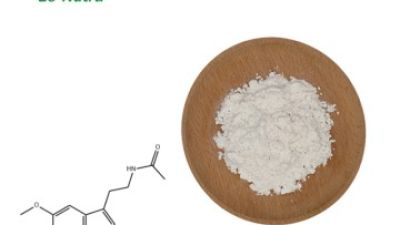
Sleep challenges are common: the U.S. Centers for Disease Control and Prevention reported that about 35% of American adults slept fewer than seven hours per night in 2014. Melatonin is a hormone involved in regulating the body’s sleep–wake timing, and supplemental melatonin may be useful for certain circadian-rhythm concerns, such as jet lag. A 99%-purity melatonin powder is a concentrated ingredient for food-supplement or pharmaceutical formulations; purity alone does not determine an appropriate serving size or guarantee better sleep. The National Center for Complementary and Integrative Health notes that evidence varies by sleep concern and that long-term safety is not well established.

For better sleep quality, keep a consistent bedtime and wake time, reduce bright light and screen exposure before bed, and make the bedroom dark, quiet, and comfortable. If considering a melatonin supplement, follow the finished product’s directions and consult a healthcare professional—especially for children, pregnancy, ongoing health conditions, or use alongside medicines. The American Academy of Sleep Medicine recommends that adults regularly get at least seven hours of sleep, while individual needs vary. Melatonin should support healthy sleep habits, not replace them or be treated as a guaranteed remedy.

FAQS

What should a one-page product brief include?

Describe the intended customer, format, serving size, key ingredients, and target price. Add your first-order estimate and launch date. Keep it practical.

How can I define the right customer?

Identify a specific need and who experiences it. For example, commuters may prefer a powder that travels easily. Broad demand alone is not a customer profile.

What quality questions should I ask a manufacturer?

Ask about ingredient sourcing, identity and purity checks, finished-product testing, stability data, and lot records. Request details about the tests provided. Broad assurances are not enough.

How should I verify a certificate?

Check it with the issuing organization. Confirm the facility address, expiry date, covered activities, and product categories. A packaging certificate may not cover capsule production.

What manufacturing standards should I check?

Ask for evidence of independent audits and compliance with applicable dietary supplement good manufacturing requirements, including 21 CFR Part 111. Certification scope matters.

What should a certificate of analysis show?

Review whether it covers identity and contaminants, as well as potency. Ask for a sample. One document may not answer every quality question.

What records can help assess a manufacturer’s quality process?

Request recent audit findings, corrective-action records, and procedures for out-of-specification batches. Ask how a failed test is investigated and whether the batch is released or rejected. Vague answers are a reason to pause.

Why consider a small pilot run?

A pilot can test assumptions about cost, product details, and production before a larger order. Some plans may still change. That is worth admitting early.

Conclusion

Choosing the right partner begins with clearly defining your supplement concept, target customers, preferred format, and private label goals. This Private Label Supplement Manufacturer Guide emphasizes checking that a manufacturer’s certifications, regulatory practices, and documentation align with your product needs. Review ingredient sourcing, formula options, and the level of product development support available before making a decision.

Also consider practical and commercial factors: production capacity, minimum order quantities, and realistic lead times. Compare pricing alongside packaging choices and the private label services included, rather than focusing on cost alone. Ask about testing procedures, quality control throughout production, and how the team handles questions or issues. A careful comparison of these areas can help you choose a reliable manufacturing partner and set clear expectations for a smooth product launch.
Oliver

Oliver

Oliver is a dedicated marketing professional with extensive expertise in the research and production of natural, healthy, and innovative raw materials. He plays a crucial role in our company's mission to provide high-quality ingredients for nutraceuticals, food and beverage, as well as cosmetics......
Previous Top 10 Protein Peptide Suppliers for Global Buyers
Next How to Choose the Best Protein Hydrolysates?