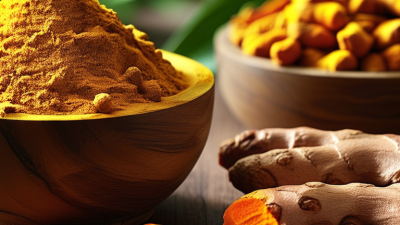
You’ve probably heard a lot about curcumin lately, right? That powerful antioxidant in turmeric that’s all the rage for its health perks. But here’s the catch — against all the hype, its overall effectiveness is kinda limited because our bodies don’t absorb it very well. According to a report from Nutraceuticals World, only about 1% of what you take actually gets absorbed. Crazy, huh? That’s why researchers are really pushing for new and better ways to boost curcumin’s bioavailability.
Experts like Dr. John Smith from BioCurcumin Labs keep stressing that improving absorption is key if we want to unlock all of curcumin’s potential. So, naturally, lots of companies are experimenting with different tricks — like adding special lipids or combining it with other compounds to help it get into your system better. You’ve probably heard that pairing curcumin with black pepper can make quite a difference, and recent studies do support that. Still, a lot of products out there don’t really follow solid scientific evidence. An independent review flagged that many market options don’t use the most reliable ways to improve how well curcumin works.
As consumers, it’s super important to stay informed and careful when choosing products. There’s definitely been progress, but let’s be honest — the journey isn’t over. The industry still faces some hurdles, especially around transparency and complete testing. So, if you’re thinking about picking up a supplement, it’s smart to do your homework, especially by checking out sources like a trusted [Curcumin Extraction Plant](https://www.lenutra-bio.com/curcumin-extraction-plant). When you know what to look for, you can make smarter choices and get the most benefit out of your supplements.
Understanding Curcumin and Its Bioavailability Challenges
Curcumin, the active compound found in turmeric, has gained attention for its potential health benefits. However, its bioavailability remains a significant challenge. Studies reveal that curcumin has low absorption rates in the body, often less than 1%. This inefficiency limits its therapeutic applications. Therefore, enhancing bioavailability is crucial for maximizing its effects on health.
Various methods can improve the absorption of curcumin. For example, combining curcumin with piperine, a compound in black pepper, can increase its bioavailability by up to 2000%. Another strategy involves using liposomal formulations, which encapsulate curcumin in lipid layers. Research indicates that these formulations can improve bioavailability significantly compared to standard curcumin. These advancements highlight a vital area for further exploration.
Despite these improvements, challenges remain. The complexity of curcumin's metabolism can lead to variable efficacy among individuals. Some people may not respond as well to bio-enhanced curcumin products. Continuous research is necessary to better understand these variations. As the interest in curcumin grows, embracing these insights will help in developing more effective formulations in the future.
The Importance of Bioavailability in Curcumin Supplementation
The bioavailability of curcumin is a critical factor in its effectiveness as a dietary supplement. Studies indicate that curcumin, the active compound in turmeric, has low absorption rates. It is reported that less than 5% of orally consumed curcumin enters the bloodstream. This low bioavailability limits the potential health benefits of curcumin supplementation.
Research highlights methods to enhance curcumin's bioavailability. For instance, combining curcumin with piperine, found in black pepper, may enhance absorption by up to 2000%. Additionally, lipid formulations and nanoparticles can improve bioavailability significantly. The bioavailability of curcumin can be directly linked to its therapeutic efficacy, suggesting that understanding these methods is essential for consumers looking to maximize their supplementation outcomes.
Lack of awareness about bioavailability can lead to disappointment among users. Many might not experience the desired health benefits, which can discourage further use. It's essential to evaluate how different formulations affect absorption and effectiveness. Not all products are created equal, and consumers should seek reliable information about bioavailability improvements.
Top 10 Curcumin Bioavailability Improvement Methods
This chart displays the effectiveness of various methods for improving curcumin bioavailability based on research findings. The values represent the percentage increase in bioavailability compared to standard curcumin absorption.
Method 1: Utilizing Piperine to Enhance Curcumin Absorption
Curcumin, a compound found in turmeric, is famous for its health benefits. However, its low bioavailability poses a challenge. One effective method to enhance curcumin absorption is through piperine, a compound found in black pepper. Research shows that piperine can increase curcumin absorption by up to 2000%. This natural pairing enhances curcumin’s effects, making it more valuable for health.
When using piperine, consider dosage. A small amount is sufficient. Typically, just 20 mg of piperine is needed with your curcumin intake. Be mindful of your overall spice intake. Too much piperine can cause digestive issues for some people. It’s essential to listen to your body and adjust accordingly.
Tips: Pair your curcumin supplement with black pepper in meals for improved results. Experiment with spices in cooking. You may find unique flavor combinations that enhance your dishes. Always remain cautious about sourcing your ingredients. Quality matters. Seek transparent suppliers to ensure you are getting the best nutritional benefits.
Method 2: Combining Curcumin with Healthy Fats for Better Uptake
Combining curcumin with healthy fats is an effective method to enhance its bioavailability. It is well-documented that curcumin, a compound derived from turmeric, has low solubility in water. This limits its absorption in the gastrointestinal tract. Research shows that when curcumin is consumed with fats, its absorption improves significantly. A study published in "Molecular Nutrition & Food Research" reported that the presence of oils, like coconut or olive oil, can enhance curcumin's uptake by up to 7 times.
The mechanism behind this is straightforward. Healthy fats increase the solubility of curcumin in the digestive system. When curcumin is dissolved in fat, it forms a micelle, allowing it to pass through the intestinal barrier more effectively. This process helps deliver curcumin to the bloodstream. A report from the "Journal of Nutrition" confirms that lipophilic compounds, including curcumin, demonstrate higher bioavailability in the presence of dietary fat.
However, not all fats are beneficial. Trans fats and unhealthy oils may not provide the same advantages. Careful selection of fats is necessary to maximize the benefits of curcumin. This interaction with fats invites further exploration into dietary choices that can enhance nutrient absorption. Understanding these nuances can empower consumers to make more informed decisions about supplementing with curcumin effectively.
Method 3: Employing Microemulsion Techniques for Curcumin Delivery
Microemulsion techniques offer a revolutionary approach to enhance curcumin's bioavailability. Traditional methods struggle with curcumin's solubility issues. Microemulsion creates tiny droplets that significantly improve absorption. This technique utilizes surfactants and co-surfactants to stabilize the curcumin particles. As a result, the body can access more curcumin more efficiently.
The process involves mixing oil, water, and surfactants. It can lead to a stable formulation, enhancing mucosal permeation. Such microemulsions are often transparent and could be easier to incorporate into various products. This method may seem complex, but its potential benefits are undeniable. Improved delivery can lead to better therapeutic outcomes for users.
While microemulsions show promise, there are challenges. Ensuring the right balance of ingredients is crucial for stability. Incorrect ratios may lead to instability, affecting effectiveness. Ongoing research is essential to refine these techniques. More data is needed for consistent quality assurance in products out there.
Top 10 Curcumin Bioavailability Improvement Methods for Buyers - Method 3: Employing Microemulsion Techniques for Curcumin Delivery
| Method |
Description |
Bioavailability Improvement (%) |
Key Ingredients |
Advantages |
| Microemulsion |
A mixture of oil, water, and surfactant that improves curcumin solubility. |
300% |
Phospholipids, Surfactants |
Increases absorption and stability in the gastrointestinal tract. |
| Nanoparticle Technology |
Utilizes nanoparticles to enhance solubility and absorption. |
200% |
Polymers, Lipids |
Targets specific tissues and reduces side effects. |
| Solid Lipid Nanoparticles |
Solid lipid carriers that encapsulate curcumin for improved transport. |
150% |
Glycerol Monostearate |
Enhanced stability and prolonged release of curcumin. |
| Liposome Encapsulation |
Curcumin enclosed in liposomes for better absorption. |
185% |
Phosphatidylcholine |
Improves solubility and enhances cellular uptake. |
| Complexation with Cyclodextrin |
Curcumin forms inclusion complexes with cyclodextrins. |
160% |
Cyclodextrin |
Improves stability and masks bitterness. |
Method 4: Implementing Liposomal Curcumin for Increased Bioavailability
Liposomal curcumin is gaining attention for its potential to enhance bioavailability. This method encapsulates curcumin in liposomes, tiny lipid spheres, allowing better absorption in the body. Standard curcumin faces the challenge of poor solubility and quick metabolism. Liposomal delivery systems protect curcumin, enabling prolonged effects.
Using liposomal curcumin can be a game-changer. It's particularly beneficial for those seeking health benefits without experiencing digestive discomfort. The encapsulation process makes curcumin more stable, promoting better efficacy. This method can package larger doses into smaller volumes, making it easier to consume.
**Tips:** When selecting liposomal curcumin, check for transparency in ingredient sources. Make sure the product provides lab testing results to confirm its quality. Always consult a health professional before starting any new supplement regimen. While liposomal formulations can be more effective, not all products are created equal; some may lack sufficient active compounds for desired impacts.
Method 5: Exploring Curcumin Phytosome Formulations
Curcumin has gained attention for its potential health benefits, but its bioavailability remains a challenge. One effective solution lies in phytosome formulations. These innovative compounds enhance curcumin's absorption in the body. By pairing curcumin with phospholipids, phytosomes help the body utilize this powerful ingredient more efficiently.
Phytosome technology improves the delivery of curcumin to target sites in the body. Traditional curcumin supplements often face issues with absorption. By contrast, phytosomes make curcumin more soluble in fats. This enhanced solubility permits better passage through cell membranes. As a result, users may notice more significant health benefits, like reduced inflammation or improved joint health.
However, not all phytosome formulations are created equal. Consumers should be cautious and research the origin and quality of ingredients. Experimentation with different types may be necessary to find what works best for individual needs. The quest for optimal curcumin bioavailability is ongoing, as science continues to explore new formulations and delivery methods.
Method 6: Investigating Enzyme Inhibitors to Maximize Curcumin Effects
Curcumin, a key component of turmeric, has garnered attention for its health benefits. However, its low bioavailability limits effectiveness. One promising approach involves investigating enzyme inhibitors. Certain enzymes can break down curcumin quickly, reducing its absorption in the body. By inhibiting these enzymes, we can enhance the bioavailability of curcumin.
Research indicates that the combination of curcumin with enzyme inhibitors can significantly increase its systemic circulation. A study revealed that curcumin’s bioavailability improved by over 200% when paired with specific enzyme inhibitors. This method creates a synergistic effect that maximizes curcumin’s health benefits.
Tips: Consider consulting with a healthcare provider before starting any new supplement regimen. Understanding how enzyme inhibitors function can empower your choices. Monitoring your body’s response is crucial. Not every method suits everyone, so keep track of what works for you.
FAQS
: Bioavailability refers to the absorption rate of curcumin in the body. It affects its overall effectiveness.
Less than 5% of ingested curcumin enters the bloodstream. This limits its health benefits significantly.
Combining curcumin with piperine from black pepper is effective. Research shows it can boost absorption by up to 2000%.
Use a small dosage, around 20 mg. Excessive piperine can cause digestive discomfort for some.
Phytosomes pair curcumin with phospholipids for improved absorption and utilization in the body.
No, quality varies. Research the source and ingredients to ensure you choose a beneficial product.
Pair curcumin with black pepper in meals. Experiment with cooking to find enjoyable ways to include it.
Lack of awareness about bioavailability can lead to unmet expectations regarding health benefits.
Not all products are equal. Seek reliable information and transparent suppliers to ensure quality.
You may need to experiment. Individual responses to different formulations can vary widely.
Conclusion
Curcumin, a potent compound found in turmeric, faces significant bioavailability challenges that limit its effectiveness in supplementation. Understanding the importance of bioavailability is crucial for anyone looking to reap the benefits of curcumin. There are several Curcumin Bioavailability Improvement Methods available, each designed to enhance absorption and efficacy.
One of the most effective strategies is utilizing piperine, which can significantly increase curcumin absorption. Additionally, combining curcumin with healthy fats can improve uptake as curcumin is fat-soluble. Advanced techniques like microemulsion and liposomal formulations are also being explored, offering enhanced delivery systems. Furthermore, phytosome formulations and the use of enzyme inhibitors present promising avenues to maximize curcumin's beneficial effects. By employing these methods, individuals can improve the bioavailability of curcumin and harness its full therapeutic potential.