Leave Your Message
0%

When you're sourcing protein peptides from overseas, it’s really not just about comparing prices or scrolling through product catalogs. To build a solid shortlist, you need to dig into things like ingredient specs, batch-to-batch consistency, quality paperwork, and how responsive they are during sampling and shipping. A certificate of analysis is helpful, sure, but you also have to check if their testing methods and limits actually line up with what you need. Honestly, the details are where things can go sideways. Honestly, how a company gets back to you about lead time or sample availability? That can be just as telling as their fancy website, if not more.

Looking for a solid place to start when comparing peptide suppliers? This guide breaks down the top 10 protein peptide suppliers for global buyers—but honestly, it’s not about crowning any one company. Instead, it walks through the practical stuff worth checking: product range, traceability, technical support, and export experience. No supplier is treated as a perfect fit, because, well, none of them are. If you're looking into Hydrolysis Wheat Protein Peptide, don't just take the product page at face value. Reach out to the supplier directly and ask about the exact composition, how it's supposed to be used, and what documentation they can provide. It also helps to request a sample and go through the specs carefully before committing to a bigger order. Even small differences in things like solubility, odor, or how it handles can really throw off production. Look, paperwork only tells you so much—it’s not exactly a guarantee that everything’s going to run smoothly. Suppliers change, and what’s published on paper won’t always cover every technical question that pops up. So treat the comparison as a starting point for your due diligence, then dig deeper: talk to them directly, look at the actual quality records. Yeah, it takes a bit more time, but that little extra effort can save you from some expensive surprises down the road.

Top 10 Protein Peptide Suppliers for Global Buyers

What Protein Peptides Are and Where They Are Used

Protein peptides are short chains of amino acids, often produced when enzymes break larger proteins into smaller fragments. Their size and amino-acid sequence affect solubility, taste, and how they behave in a product. Rice Protein Peptide, for example, may be used in powdered nutrition blends and beverages. Peptides also appear in food formulation and are studied for potential roles in nutrition and personal care. Effects depend on the specific peptide; “peptide” alone does not prove a health benefit.

Use varies by application. Food manufacturers may value easy mixing, while nutrition developers may assess protein content, flavor, and digestibility. Grand View Research estimated the global protein supplements market at USD 25.4 billion in 2023. That figure covers a broader category, not peptide sales specifically, but it reflects substantial demand for protein-based products. Evidence for individual peptide benefits is uneven. That matters. Buyers should distinguish established product specifications from early-stage research claims.

Tips: Request a current certificate of analysis and check peptide profile, source, amino-acid composition, solubility, and contaminant testing. Ask for batch-to-batch consistency data, too. A clear powder can still vary in taste or performance. Product testing under your actual processing conditions is useful; supplier documents alone may not predict the final result.

Key Criteria for Evaluating Global Peptide Suppliers

Global buyers should evaluate peptide suppliers through verifiable evidence, not polished product pages. Request a current certificate of analysis and confirm that its test methods match the product specification. Check batch numbers, manufacturing dates, and traceability records. Can the supplier explain a result clearly?

Review quality controls for identity, purity, moisture, and microbiological limits. For Pea Protein Peptide, ask how the supplier manages raw-material variability and verifies each production lot. Compare sample results with later shipments, since one strong sample does not prove consistent quality. Small differences matter.

Assess whether documentation supports your intended market and use. Ask about packaging, storage conditions, shelf life, and export documents before placing a large order. Clear answers from technical staff are a practical sign of supplier competence. Delivery planning matters, too. A checklist helps, but it can create false confidence if buyers never verify the documents or test incoming material. Independent testing may add time and cost, yet it can reveal gaps that a supplier’s paperwork misses. Good evaluation takes patience, and sometimes the evidence remains incomplete.

Top 10 Protein Peptide Suppliers for Global Buyers

Global buyers reviewing the top 10 protein peptide suppliers should treat any ranking as a starting point, not proof of fit. Two quotes for the same sequence may differ in purity, salt form, moisture, or analytical records. Small differences matter. Grand View Research’s 2024 Peptide Therapeutics Market report valued the market at USD 44.3 billion in 2023. It projected a 9.2% compound annual growth rate from 2024 to 2030. This forecast signals demand, but it does not establish supplier quality.

Compare suppliers using lot-specific evidence. Request high-performance liquid chromatography and mass spectrometry results, clear acceptance criteria, and a certificate of analysis for the quoted batch. Ask whether the supplier can provide a small evaluation quantity before production-scale orders.

Check lead times, packaging details, shipping temperature controls, and how the team handles delayed or damaged shipments. These practical details often matter more than a polished product catalogue.

A useful top-ten comparison should separate custom synthesis, catalog availability, and technical support rather than treating them as interchangeable. Buyers can also compare response times and the clarity of quotation documents. A quick reply is helpful. It is not a quality system.

One weakness in many purchasing reviews is overreliance on stated purity without checking methods or batch records. That deserves a second look. Clear documentation and realistic delivery commitments make supplier comparisons more dependable.

How Leading Suppliers Differ in Products and Services

For global buyers, supplier differences appear in peptide range, documentation, and delivery reliability. Some offer catalog peptides for routine assays; others specialize in custom sequences, modifications, or larger synthesis batches. The distinction matters when a project needs a specific purity level, analytical method, or repeatable lot. Speed matters. But a short lead time means little if the certificate lacks clear identity and purity results.

Market reports help explain the expanding choice. Grand View Research valued the global peptide therapeutics market at USD 43.0 billion in 2022 and projected 7.4% annual growth through 2030. MarketsandMarkets estimated the peptide synthesis market at USD 0.6 billion in 2023, with a forecast of USD 1.1 billion by 2028. These figures describe markets, not supplier quality. Buyers should compare available analytical data, batch traceability, packaging, and temperature-control options. Ask whether the supplier can provide chromatograms and mass-spectrometry results for the requested lot. Check how it handles delays, too; this detail is easy to overlook. No supplier excels at everything, and published specifications may not reflect every shipment. A small test order can reveal gaps before a larger purchase.

Top 10 Protein Peptide Suppliers for Global Buyers - How Leading Suppliers Differ in Products and Services

Comparison of common supplier profiles, not a ranking of named companies. Product availability, quality systems, and regulatory suitability vary by supplier and should be confirmed for each project.

Supplier profile Typical products How the service differs Typical buyer What to verify
1. Catalog research-peptide supplier Ready-to-order research peptides in standard sequences, lengths, and formats. Offers a searchable catalog and relatively straightforward ordering; customization is usually more limited than with a synthesis specialist. Academic, biotechnology, and laboratory buyers needing common research materials. Sequence, purity specification, analytical documentation, storage conditions, and research-use restrictions.
2. Custom peptide synthesis supplier Made-to-order peptides with customer-specified sequences and, where available, modifications such as terminal changes or tags. Quotes projects against sequence, scale, purity, and modification requirements; lead time and feasibility depend on the design. Researchers and product-development teams with non-catalog sequences. Sequence confirmation, requested versus reported purity, analytical methods, scale definition, and shipment conditions.
3. Long and complex peptide specialist Longer sequences and more challenging designs, potentially including multiple modifications or disulfide bonds. May provide feasibility review and sequence-specific process development; complex sequences can require additional time and purification work. Teams developing difficult research reagents or peptide candidates. Documented feasibility, expected yield, identity testing, handling of isomers or variants, and acceptance criteria.
4. GMP peptide active-ingredient manufacturer Peptide active ingredients manufactured for regulated development or commercial pharmaceutical use. Works within defined quality and manufacturing systems and may support process documentation, quality agreements, and regulatory submissions. Pharmaceutical and clinical-development organizations. GMP scope, site and process suitability, audit access, batch records, change control, and applicable regulatory documentation.
5. Peptide development and manufacturing CDMO Development and manufacturing services spanning process development through production, depending on project scope. Can integrate multiple project stages; capabilities, scale ranges, and technology differ by facility and contract. Drug developers seeking outsourced development or manufacturing support. Facility capabilities, scale fit, technology transfer plan, capacity, project governance, and quality responsibilities.
6. Stable-isotope-labeled peptide supplier Peptides containing stable isotopes, commonly used as internal standards in mass spectrometry workflows. Supports specified labeling positions and isotope formats; labeling design and analytical confirmation are central to the service. Proteomics, biomarker, and quantitative analytical laboratories. Label position, isotopic enrichment, unlabeled-peptide contamination, concentration method, and certificate details.
7. Peptide library and screening supplier Sets of related peptides, overlapping peptide pools, or arrays designed for screening and mapping studies. Focuses on coordinated batches, array or pool formats, and project-level organization rather than a single peptide order. Immunology, epitope-mapping, and assay-development teams. Library design, sequence coverage, pool composition, format, plate mapping, and traceability across the set.
8. Cosmetic peptide ingredient supplier Peptide ingredients marketed for cosmetic formulations, sometimes supplied as solutions or blends. May provide formulation-oriented documents and guidance on ingredient handling; cosmetic suitability does not establish drug efficacy. Cosmetic formulators and personal-care manufacturers. Ingredient identity, composition, specifications, safety documentation, permitted claims, and local market requirements.
9. Food-grade protein hydrolysate supplier Protein-derived peptide mixtures, such as hydrolysates made from food proteins, rather than single defined peptide sequences. Typically supplies bulk ingredients characterized by source and composition; the mixture profile differs from sequence-defined synthetic peptides. Food, beverage, and nutrition-product manufacturers. Protein source, allergen information, food-safety controls, compositional specifications, and destination-market requirements.
10. Peptide reference-standard and impurity supplier Sequence-defined peptides used as analytical references, including selected related substances or impurities. Prioritizes characterization and documentation for analytical use; it may not be intended to supply material for therapeutic manufacturing. Quality-control, analytical-development, and research laboratories. Identity and purity data, assigned value or uncertainty where applicable, traceability, storage, and intended-use statement.

Quality Standards, Compliance, and International Shipping

Global buyers assessing protein peptide suppliers should treat certificates as starting evidence, not a substitute for lot-level checks. Request specifications, a recent certificate of analysis, test methods, allergen statements, origin details, and traceability from raw material to finished lot. For Oat Protein Peptide, verify protein content, moisture, microbiological limits, heavy metals, and processing aids against the intended use. Paperwork matters.

ISO 22000 and HACCP-based controls offer useful food-safety frameworks, but verify each certificate’s scope and current status. The WHO’s 2017 report estimated that 10.5% of medical products in low- and middle-income countries were substandard or falsified. This is not an estimate for food ingredients, but it highlights the value of independent checks and documented custody. An OECD/EUIPO report estimated counterfeit and pirated goods represented 3.3% of global trade in 2016. That figure is broad, not specific to peptide shipments.

International shipping can quietly affect product quality. Confirm packaging protection, storage conditions, and procedures for temperature or humidity excursions before dispatch. At receiving, check seals, labels, lot numbers, and temperature records where applicable. Align invoices, origin documents, and certificates with destination food-import requirements. A fast quote proves little. Some gaps remain. Record deviations and request corrective actions, even when a shipment looks fine.

Cold-Chain Temperature References for Peptide Shipments

Temperature points show common laboratory storage references, not universal shipping requirements. Peptide stability varies by product; follow the supplier’s product-specific instructions, certificate of analysis, and shipping documentation.

How to Match Supplier Capabilities to Procurement Needs

Matching a peptide supplier starts with the intended use, not a catalogue. Define the required peptide profile, purity, format, annual volume, and delivery window before requesting quotations. Ask for representative certificates of analysis, validated test methods, batch traceability, and change-control procedures. A polished specification is not enough. Check that the supplier’s routine production records support it.

The OECD-FAO Agricultural Outlook 2024–2033 projects global agricultural and fish production to rise 14% by 2033. That broader growth makes dependable capacity and raw-material planning worth checking, even for specialized ingredients. For Peanut Protein Peptide, request clear allergen controls, origin documentation, and lot-specific identity and quality results. Compare lead-time history and minimum order quantities against your forecast. A small pilot order can expose gaps in solubility, taste, or documentation before scale-up. Yet one pilot cannot prove year-round consistency.

Tips: Send suppliers the same specification and scoring sheet. Ask what happens when a raw-material lot fails or delivery slips. Verify claims with records, not promises. Then reassess the shortlist; procurement teams sometimes overlook how much testing time adds to the launch schedule.

Cosmetics-Grade Hydrolysed Corn Protein Manufacturers: Market Insights from Grand View Research’s Cosmetics Market Report

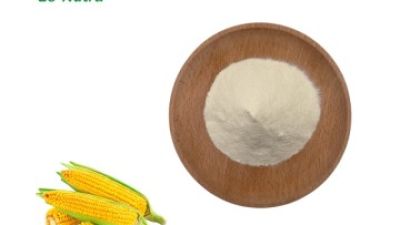
Cosmetics-grade hydrolysed corn protein is gaining attention as formulators seek plant-derived ingredients for hair and skin care. Its appeal lies in combining a protein-based profile with water compatibility and functional versatility. For manufacturers, consistent quality, clear technical specifications, and suitability for different product formats are important considerations when evaluating this ingredient for damaged-hair treatments, mild cleansing products, and skin care formulations.

Available as hydrolyzed corn protein, corn peptide, corn oligopeptide, or corn protein peptide, the ingredient can be specified at a molecular weight below 2,000 Da. It is supplied as a light-yellow powder and, when dissolved, forms a very clear liquid without visible impurities. The listed product properties include protein content of at least 80% on a dry basis, total nitrogen content of at least 12.5, and a pH range of 4.0–5.5. Its stated benefits include hair antistatic, repairing, restructuring, and conditioning functions. Good solubility, fast action, and maintenance of enzyme stability are also useful formulation attributes for manufacturers developing targeted cosmetic products.

FAQS

What are protein peptides?

They are short amino-acid chains, often made when enzymes break larger proteins into smaller fragments. Their sequence and size can affect taste, solubility, and product performance.

Where are protein peptides used?

They may be included in powdered nutrition blends, beverages, and other food products. Developers may test how easily they mix and how they taste.

Do peptides automatically provide health benefits?

No. Evidence varies by peptide, and the word “peptide” alone does not establish a health effect. Some claims need more careful review.

What information should buyers request?

Ask for a recent certificate of analysis, peptide profile, amino-acid composition, source, and contaminant testing. Batch consistency data can reveal differences between lots.

Which tests matter for a food ingredient?

Check protein content, moisture, microbiological limits, and heavy metals against the intended use. Also review allergen statements, test methods, and traceability records.

Are food-safety certificates enough to confirm quality?

No. Verify each certificate’s current status and scope, then review lot-specific documents and independent test results. Paperwork matters.

How can shipping affect peptide quality?

Heat, humidity, or weak packaging may affect a shipment. Confirm storage conditions and excursion procedures, then inspect seals, labels, lot numbers, and temperature records.

Does a supplier’s paperwork predict how a peptide will perform?

Not always. Test the powder under your actual processing conditions; documents may not predict its final taste or mixing behavior. Some uncertainty remains.

What does the protein supplements market estimate tell us?

One estimate placed the broader market at USD 25.4 billion in 2023. It does not measure peptide sales specifically. Context matters.

Conclusion

This article explains what Protein Peptide products are and how they are used in areas such as research, product development, and specialized manufacturing. It outlines the factors global buyers can consider when evaluating suppliers, including product range, technical support, production capacity, documentation, consistency, and responsiveness. A comparison of ten supplier profiles highlights how providers may differ in their offerings and services without suggesting that one option suits every buyer.

The article also discusses quality systems, relevant compliance documentation, packaging, and international shipping considerations. It concludes with a practical approach to matching supplier capabilities with procurement needs, such as order volume, specifications, destination, and delivery schedules. By comparing these factors carefully, buyers can make informed decisions and identify a Protein Peptide supplier that aligns with their project requirements and quality expectations.


Amelia

Amelia

Amelia is a dedicated professional marketing specialist with a deep commitment to promoting natural, healthy, and innovative raw materials. As an integral part of our team, she channels her extensive knowledge into researching and marketing products that significantly enhance the fields of......
Previous China Top 10 Pea Protein vs Rice Protein for Muscle Growth