





How does hydrolysed quinoa protein maintain pH balance?
In the 2026 personal care market, where pursuit of ultimate efficacy and “clean beauty” reigns supreme, one of the greatest challenges facing formulators lies in striking a dynamic equilibrium between potent cleansing action and preserving the skin's natural acid mantle. While traditional alkaline surfactants progressively erode the skin barrier, Hydrolysed Quinoa Protein emerges as an indispensable ‘pH stabiliser’ in premium cleansing and barrier-repair formulations, owing to its exceptional zwitterionic buffering properties.
As a 1:1 vegan alternative to animal keratin, Quinoa Peptide not only delivers the nutritional depth of a full spectrum of essential amino acids but also significantly neutralises formulation irritants and closes hair cuticles through its unique charge-modulating capabilities. As the world's leading supplier of functional plant proteins, Le-Nutra employs precise enzymatic hydrolysis to ensure every drop of raw material maintains formulation pH equilibrium while imparting an ‘instant repair’ sensory experience to end products. This in-depth blog post unpacks the biochemical logic behind this superfood, empowering your brand to establish a robust commercial moat between ‘scientific efficacy’ and ‘gentle safety’.
I. Why is pH balance so crucial for formulations?
In skincare and personal care formulations, pH is a key parameter influencing product stability, efficacy performance, and mildness – not merely a technical specification.
From a formulation development perspective, pH primarily determines three aspects:
-
1. Formulation stability:
Excessive pH fluctuations can cause plant proteins or peptides to aggregate, leading to precipitation, cloudiness, or even separation.2. Active ingredient stability:
Most plant extracts, fruit acids, and vitamin-based ingredients remain stable only within specific pH ranges. Deviations from the designed range compromise their efficacy.3. Product mildness:
When pH deviates from the natural range of skin or scalp, irritation risks significantly increase, adversely affecting user experience.
During formulation development, a product may perform well in initial testing. However, upon changing raw material batches or incorporating new active ingredients, pH often becomes the first variable to become unmanageable. Plant protein-based ingredients are particularly sensitive to pH fluctuations; if improperly controlled, stability issues can be significantly amplified.
II. What is Quinoa Oligopeptide? Let's Start with the Basics
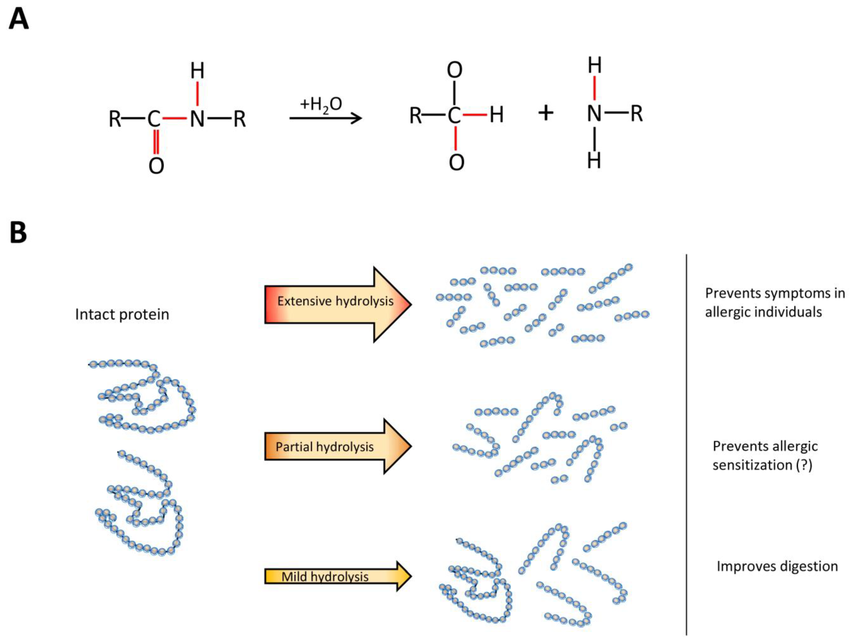
It is produced through an enzymatic hydrolysis process that breaks down quinoa's plant protein into smaller molecular peptides and free amino acids. Compared to unhydrolysed protein, it undergoes three fundamental changes: significantly reduced molecular weight, greatly enhanced water solubility and dispersibility, and a markedly broader pH tolerance range.
Unravelling the Mechanism: How Does Hydrolysed Quinoa Protein Stabilise?
You may wonder how a plant-derived protein powder can regulate pH levels. The secret lies in its amphoteric character.
1. A Natural “Chemical Buffer”
Hydrolysed quinoa protein breaks down into small molecules of amino acids and peptides. These molecular structures contain both acidic groups (carboxyl groups) and basic groups (amino groups). In an alkaline environment, it releases protons to neutralise alkalinity; in an acidic environment, it absorbs protons.
This property enables it to function as a ‘buffering agent’ within formulations, smoothing out drastic pH fluctuations to ensure the product remains in its mildest state upon skin contact.
2. Unique Isoelectric Point (pI)
Quinoa contains all eight essential amino acids required by the human body. The isoelectric points of these amino acids precisely enable Quinoa Protein Powder to exhibit exceptional stability and affinity at a pH of approximately 5.5. This means it not only regulates formulations but also perfectly aligns with the human biological environment.
III. Application Scenarios: A Holistic Balancing Solution from Scalp to Toes
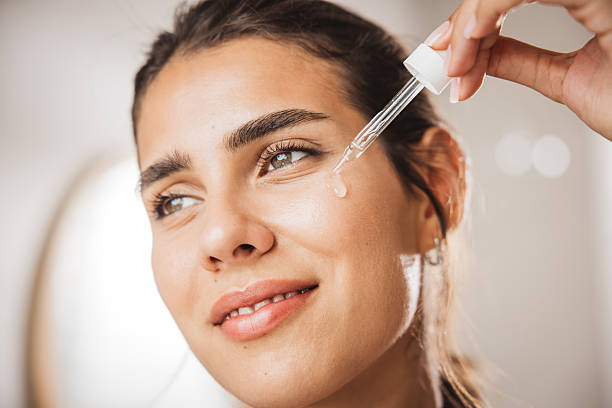
In our laboratory testing, hydrolysed quinoa protein demonstrated versatile efficacy across various formulations:
In hair care products: Hydration retention and cuticle closure
After shampooing, hair often carries a negative charge with raised cuticles. The positively charged quinoa protein molecules rapidly adhere to damaged areas, regulating local pH to promote smooth, closed cuticles. Commercial Value: Brands may claim ‘pH-balanced repair’, ‘sealed cuticles’, or ‘colour protection lasting up to 4 weeks’.
In Sensitive Skin Serums: A Gentle ‘Soothing Agent’
When formulating with alpha hydroxy acids (AHAs) or beta hydroxy acids (BHAs), incorporating Hydrolysed Quinoa Protein mitigates the immediate stinging sensation caused by acids without compromising their penetration efficacy. Commercial Value: Enables brands to enter the high-growth segments of ‘vegan barrier repair’ and ‘gentle exfoliation’.
IV. Commercial Insight: Why Your Formulation Will Need It by 2026
-
As manufacturers, we frequently remind clients: not all Quinoa Protein Powders perform identically. The critical factor lies in the degree of hydrolysis.
Molecular Weight Range: Le-Nutra employs a precise enzymatic hydrolysis process, controlling molecular weight between 2000-5000 Daltons. Beyond this range, molecules become too large to penetrate the stratum corneum; below it, they are too small to form an effective protective barrier.
Purity Advantage: Our process guarantees gluten-free and non-GMO raw materials – crucial for European and American clients pursuing “clean label” standards.Today's consumers are increasingly discerning, scrutinising not only ingredient lists but also the values behind those ingredients.
Vegan Alternative to Keratin: Traditional pH-balancing and repair proteins often derive from wool keratin. Hydrolysed quinoa protein offers a 1:1 vegan substitute, perfectly aligning with cruelty-free brand philosophies.
Multifunctional all-in-one: It serves as an antistatic agent, moisturiser, repairing agent, and pH buffer. Amid the “simplified formulation” trend, this versatile ingredient significantly optimises production costs.
V.FAQ
Q1. Within what pH range is hydrolysed quinoa protein most stable?
A: Hydrolysed quinoa protein typically exhibits optimal stability in weakly acidic to neutral systems, making it suitable for most skincare and haircare formulations. Compared to unhydrolysed plant proteins, it possesses a broader tolerance range for pH variations and is less prone to precipitation or cloudiness from minor fluctuations.
Q2. Can hydrolysed quinoa protein be used in low pH skincare formulations?
A: Yes. At appropriate concentrations, hydrolysed quinoa protein is compatible with formulations containing fruit acids or plant acids. Its small peptide structure helps buffer pH fluctuations, reducing their impact on formulation stability. However, stability testing in actual formulations is still recommended.
Q3. Why is hydrolysed quinoa protein more ‘formulation-friendly’ than standard plant proteins?
A: The key lies in its lower molecular weight, superior solubility, and reduced isoelectric point influence. These properties prevent aggregation across varying pH conditions, making it more suitable for multi-ingredient blends or complex systems.
Q4. Does hydrolysed quinoa protein require additional pH adjustment in hair care products?
A: Typically, no additional adjustment is needed. Hydrolysed quinoa protein exhibits good compatibility with common surfactant systems, exerting minimal impact on formulation transparency and stability. However, the final pH should be determined by testing the complete system.
Q5. With which types of active ingredients is it suitable for formulation?
A: It synergises effectively with diverse plant extracts, peptides, amino acids, and moisturising agents. It is particularly well-suited for formulations demanding high stability and mildness.
The path to balance is the path to growth
Hydrolysed Quinoa Protein is more than a nutritional term; it is the scientific solution to achieving gentle formulations, stability, and efficacy. It bridges the gap between effective cleansing and preserving the skin's natural barrier.
Would you like to incorporate hydrolysed quinoa protein into your next formulation?
We provide comprehensive pH stability test reports alongside comparative hair repair data across varying concentration levels.
Request the technical white paper: info@lenutra.com
Customised sample service: Our application laboratory can furnish benchmark formulations containing 2%-5% quinoa protein.
Together, let us harness botanical power to restore beauty through equilibrium.
📚 References: