









Pentadecanoic Acid vs Ordinary Fatty Acids: What Exactly Sets Them Apart?
Within formulation development and nutritional ingredients, most fatty acids are understood as ‘foundational components’: providing energy, building structure, and enhancing system stability. However, with the advancement of precision nutrition and functional lipids, certain non-mainstream fatty acids are being re-evaluated, with Pentadecanoic Acid (C15:0) being a prime example.
For brands and R&D teams, it transcends mere academic terminology to become a functional lipid ingredient capable of establishing product differentiation. Grasping its fundamental distinction from ‘ordinary fatty acids’ constitutes the first step in determining its value for inclusion.
I. Why does pentadecanoic acid merit separate consideration?
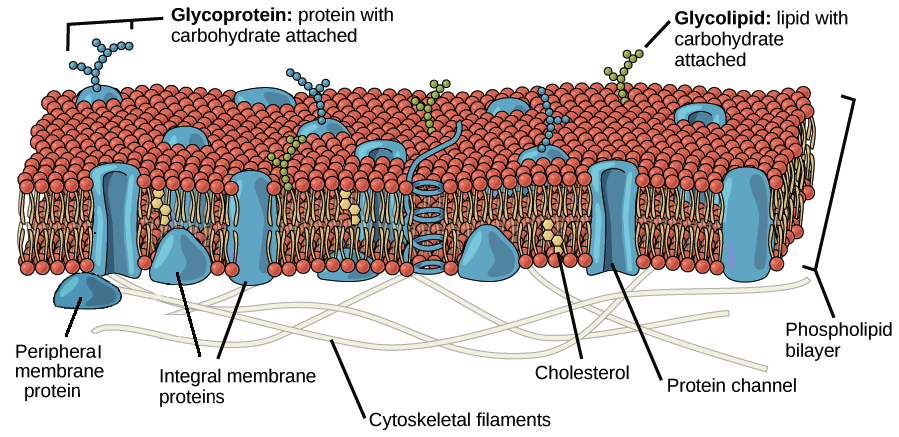
In traditional nutrition, fatty acids are most commonly categorised by the presence of double bonds:
• Saturated fatty acids
• Monounsaturated fatty acids
• Polyunsaturated fatty acids
This classification has long been effective, yet it overlooks a more fundamental yet equally significant factor—whether the carbon chain is odd or even. This classification has long been effective, yet it overlooks a more fundamental yet equally significant factor—whether the carbon chain is odd or even.
-
Almost all fatty acids synthesised by the human body possess an even-numbered carbon structure; the most prevalent fatty acids in our daily diet follow suit. In contrast, odd-chain fatty acids are inherently scarce in nature and have long occupied a marginal position in research and application.
Pentadecanoic acid (C15), composed of 15 carbon atoms, is precisely this ‘non-mainstream structure’ that sets it apart from common fatty acids in terms of metabolic behaviour and biological significance.
II. What are the so-called ‘common fatty acids’?

In food, nutritional supplements and formulation systems, the most prevalent fatty acids typically include:
Palmitic acid (C16:0)
Stearic acid (C18:0)
Oleic acid (C18:1)
These are widely present in vegetable oils, animal fats and various processed foods, serving as the primary source of lipid energy for the human body.
From a structural and metabolic perspective, these fatty acids share several characteristics:
• An even-numbered carbon chain
• Well-established synthetic and degradative pathways within the human body
• Primarily utilised for energy production or storage
Functionally, they serve as the ‘universal components’ within lipid systems: indispensable, yet rarely forming the core selling point for product differentiation.
III. The First Layer of Difference: Distinct Metabolic Pathways Within the Body

What truly sets C15 0 pentadecanoic acid apart from ordinary fatty acids is how the body processes them.
Upon entering the body, most even-chain fatty acids follow a standard breakdown pathway:
→ Release energy
→ Or convert to fat for storage during periods of energy surplus
This constitutes a highly evolved and exceptionally efficient metabolic system.
However, due to its distinct carbon chain structure, C15:0 enters different metabolic nodes during breakdown, generating intermediate products that are not entirely identical to those of common fatty acids. This means its role within the body extends beyond being merely ‘fuel to be consumed’; it functions more like a lipid factor involved in regulation. It is precisely because of this difference that it is studied and discussed separately, rather than being simply categorised as ‘just another saturated fatty acid’.
IV. The Second Layer of Distinction: Its Value Extends Beyond Merely “Calories”
-
For a long time, saturated fatty acids have been discussed in aggregate terms, often receiving a singular label. However, research is increasingly revealing that not all saturated fatty acids carry identical physiological significance.
In numerous studies, blood levels of Pentadecanoic Acid (C15:0) are frequently employed as an observational marker, showing associations with metabolic states and cardiovascular-related parameters. This distinguishes C15:0 from ‘ordinary lipids,’ opening greater scope for functional discussion.
From a raw material application perspective, this distinction is crucial:
• Ordinary fatty acids ≠ Functional fatty acids
• The significance of pentadecanoic acid lies in its research background and structural characteristics
This explains its frequent emergence in recent years within discussions of premium nutrition, functional lipids, and precision nutrition.
V. The third layer of difference: their roles in the recipe are completely different.
In practical formulation design, common fatty acids predominantly fulfil ‘foundational tasks’:
Providing energy
Constructing lipid systems
Enhancing palatability or texture
Though highly present, they seldom feature in core product selling points.
Pentadecanoic acid, however, is positioned more as a ‘strategic ingredient’:
Its dosage does not prioritise high levels
It emphasises structural uniqueness
It emphasises scientific rationale and application logic
In premium nutritional products, research-driven formulations, or precision recipes, it often serves to ‘explain why the product is different’ rather than merely supplementing lipid content.
1. Research discussion has markedly increased
An increasing number of studies are adopting C15:0 as an observational indicator, propelling it from the background to the forefront.
2. Growing demand for premium and precision nutrition
Brands no longer settle for ‘conventional fats’, instead seeking differentiation at the ingredient level.
3. More stable ingredient supply
As production techniques mature, the purity, batch consistency, and regulatory compliance of pentadecanoic acid have become more controllable, significantly lowering application barriers.
Q1: What is the primary role of pentadecanoic acid within the body?
A: Research indicates it correlates with metabolic markers, functioning more as a functional lipid than a mere energy source.
Q2: Can it be obtained through regular diet?
A: Primarily found in dairy fats, though its content is limited, making precise intake control challenging.
Q3: What about its safety profile?
A: As a naturally occurring fatty acid type, reputable suppliers provide comprehensive quality and testing documentation.
Q4: Are storage and stability requirements stringent?
A: Being a saturated fatty acid, it exhibits good stability. Simply avoid exposure to high temperatures, intense light, and moisture.
As nutritional products evolve from ‘macro-formulation’ to ‘structure-and-mechanism-oriented’ approaches, pentadecanoic acid is increasingly capturing the attention of R&D teams.
As a long-term supplier of functional lipid ingredients, Le-Nutra provides technical specifications and application support for high-purity C15:0, enabling brands to establish clear, credible scientific rationale in premium nutritional and functional products.
Should you be evaluating next-generation ‘cell-level’ ingredients, Pentadecanoic Acid, C15:0 warrants serious consideration.
📚 References: