



Why is 1,2-Pentanediol Commonly Found in Cosmetic Formulations?
An increasing number of cosmetic brands are incorporating 1,2-Pentanediol into their product ingredient lists. This trend is evident not only in premium skincare lines but is also gradually extending to mass-market skincare and haircare products.
Against the backdrop of Clean Beauty, sensitivity-friendly formulations, and reduced preservative use becoming mainstream topics, brands' ingredient selection logic is evolving. Compared to high-profile functional claims, foundational ingredients that simultaneously deliver mildness, formulation stability, and regulatory compliance have become pivotal factors underpinning sustained product sales. Within this trend, 1,2-Pentanediol stands as one representative ingredient continually validated and widely adopted by the market.
I. Why is it present in almost every modern formulation?
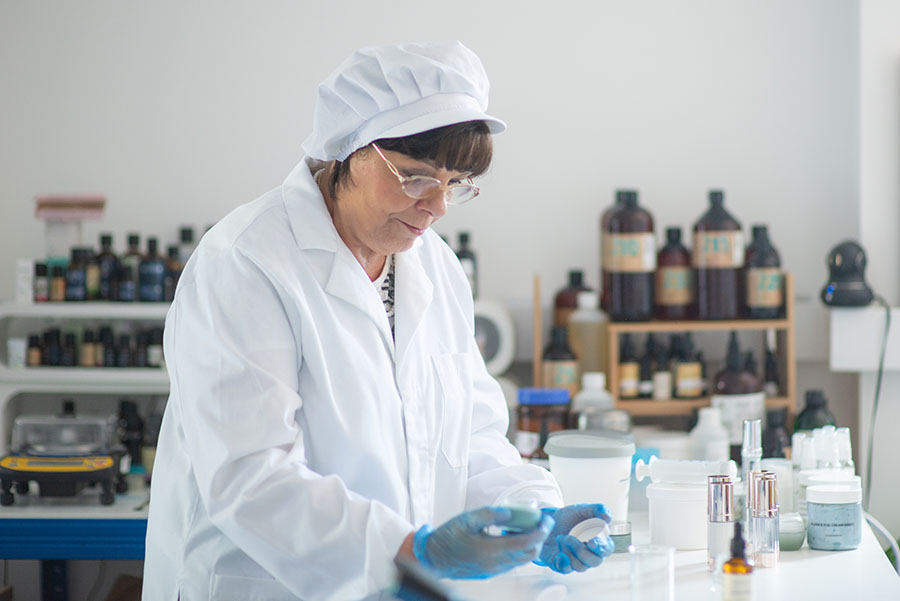
Why does 1,2-Pentanediol appear in the ingredient lists of such a wide variety of products and formulation systems? In truth, this high frequency of occurrence is neither coincidental nor a mere industry fad. The core reason for its repeated adoption lies in its status as a genuinely multifunctional base ingredient.
-
Within the current cosmetics development landscape, the focus of formulation decisions has shifted. Formulators and brands no longer concern themselves solely with ‘whether an ingredient is effective,’ but rather with more practical questions:
• Can formulation objectives be achieved while ensuring mildness?
• Can more functions be accomplished with fewer ingredients?
• Can the burden on the preservative system be reduced without increasing irritation risks?
• Can regulatory compliance and consumer ingredient perceptions be simultaneously satisfied?It is precisely under these multiple constraints that 1,2-Pentanediol demonstrates exceptional formulation value. It serves as both a humectant and solvent, synergises within preservative systems, and offers excellent compatibility alongside established regulatory acceptance. For brands and OEM manufacturers seeking to balance formulation efficiency, product mildness, and commercial sustainability, this ingredient with its ‘multi-layered advantages’ is naturally incorporated into formulation systems time and again.
II. What is 1,2-Pentanediol?
From a chemical structural perspective, 1,2-Pentanediol belongs to the diol class of compounds, featuring two hydroxyl groups within its molecule. This structural characteristic endows it with both moisturising and solvent properties within cosmetic formulations, forming the basis for its stable functionality across diverse systems.
In practical applications, 1,2-Pentanediol typically exhibits the following key physical properties:
• A colourless, transparent liquid with stable appearance, facilitating quality control and batch consistency management
• Excellent water solubility, suitable for diverse aqueous and high-water-content formulations
• Minimal odour, minimising interference with fragrance or active ingredient scent profiles
• Relatively light, non-greasy skin feel, aligning with contemporary consumer expectations for application experience
Within the INCI (International Nomenclature of Cosmetic Ingredients), it is directly labelled as 1,2-Pentanediol, without complex aliases or marketing-driven nomenclature. This further underscores that it is not a recent ‘conceptual ingredient’ but rather a mature raw material long-established and validated within global formulation systems.
III. Why is it so frequently used?
1. More than just a moisturiser
Many first encounter 1,2-Pentanediol for its hydrating properties.
Unlike glycerine, a “strongly hygroscopic” moisturiser, 1,2-Pentanediol's advantage lies in:
Its moderate moisture-binding capacity avoids sticky residue, making it ideal for lightweight, water-based formulations. Consequently, in formulations, it often serves as a supplementary moisturiser to balance texture and structure.
2. An Excellent Solvent Role
In practical formulation development, 1,2-Pentanediol is frequently employed to:
Assist in dissolving certain active ingredients
Enhance formulation uniformity
Improve the stability of water-based formulations
For formulations aiming to reduce solvent types, it offers a highly flexible solution.
3. The Truly Valued Reason: Preservative Synergy
This is the most critical yet frequently misunderstood aspect. It must be emphasised that 1,2-Pentanediol is not a preservative, but it can:
Reduce the ‘comfort level’ of the microbial growth environment
Assist traditional preservative systems in their efficacy
To some extent, alleviate the pressure to reduce preservative dosage
This explains why its usage has notably increased under trends such as ‘low-preservative’, ‘reduced preservative’, and ‘Clean Beauty’.
4. Safety and Regulatory Compliance: The Confidence for Long-Term Brand Use
From a regulatory perspective:
1,2-Pentanediol is permitted for use in cosmetics across major global markets
It is not listed as a restricted preservative
Its commonly used concentrations fall within safe limits
This explains why it has become a stable, long-term ingredient rather than a short-lived trend.
IV. Why is it particularly suited to modern cosmetics?
-
1. Aligns with Clean Beauty and Gentle Formulation Trends
An increasing number of brands seek to:
- Reduce controversial irritants
- Simplify ingredient lists
- Enhance consumer psychological reassurance
As 1,2-Pentanediol is not classified as a preservative, it offers greater flexibility in formulation labelling and market communication.2. Exceptional Formulation Compatibility
Based on our experience with formulation projects, it demonstrates remarkable adaptability across systems:
Aqueous solutions
Emulsions
Gels
Cleansing systems
For OEM manufacturers and brands, this means: a single ingredient can be reused across multiple product lines.3. Suits diverse product types
Common applications include:
Serums, toners, sprays
Alcohol-free formulations
Sensitive skin products
Facial cleansers, shampoos
This versatility is key to its status as a ‘foundational formulation ingredient’.
V.Why is it preferred over common diols?
When selecting diol ingredients for cosmetic formulations, formulators typically compare several common compounds, including:
Propylene Glycol
Butylene Glycol
Pentylene Glycol
In this comparative process, 1,2-Pentanediol has progressively distinguished itself, with its advantages primarily manifested in the following aspects:
• Significantly reduced odour
Compared to propylene glycol or butylene glycol, 1,2-Pentanediol possesses virtually no detectable odour, thereby avoiding interference with the fragrance design of formulations. This is particularly crucial for premium skincare products or those emphasising a natural scent profile, while also reducing the need for additional fragrance additives.
• More Controllable Irritation Risk
For sensitive skin or gentle skincare products, ingredient irritation is one of the key concerns for formulators. The low irritation profile of 1,2-Pentanediol makes it an ideal choice for mid-to-high-end products, infant and child care, or sensitive skin ranges.
• Enhanced preservative synergy
Whilst not a preservative itself, 1,2-Pentanediol excels in supporting conventional preservative systems: it diminishes microbial growth conditions and enhances preservative stability and efficacy. This property is particularly favoured by brands pursuing “low-preservative” or Clean Beauty formulations.
VI. FAQ
Q1: What is the primary function of 1,2-Pentanediol in cosmetics?
A: It serves as a multifunctional ingredient, functioning as a humectant, solvent, and preservative synergist. It helps improve formulation texture, enhances the solubility of active ingredients, and supports the efficacy of preservative systems.
Q2: What advantages does 1,2-Pentanediol offer compared to propylene glycol and butylene glycol?
A: Compared to other commonly used diols, 1,2-Pentanediol exhibits lower odour, reduced irritation potential, and superior formulation compatibility. It also demonstrates greater stability in preservative synergy, making it particularly suitable for mid-to-high-end skincare, sensitive skin, and water-based formulations.
Q3: Can it directly replace preservatives?
A: No. 1,2-Pentanediol itself is not a preservative, but it assists traditional preservative systems in their efficacy, reducing the pressure to use higher preservative concentrations. This facilitates the design of low-preservative or Clean Beauty formulations.
Q4: Can it be used in water-based, emulsion, or gel formulations?
A: It possesses excellent water solubility and formulation compatibility, making it suitable for diverse systems including water-based products, emulsions, serums, gels, and hair care products. Formulators can utilise it flexibly according to requirements.
Q5: What distinguishes cosmetic-grade from industrial-grade 1,2-Pentanediol?
A: Cosmetic-grade 1,2-Pentanediol features high purity and low heavy metal content, meeting cosmetic regulations and skin safety requirements. Industrial-grade variants are typically lower cost but unsuitable for skincare or cleansing products.
Q6: How does one select a reliable supplier?
A: A reputable supplier should provide:
Consistent batch quality and uniformity
Comprehensive cosmetic ingredient test reports (purity, moisture, heavy metals, etc.)
Support for regulatory filings and formulation technical guidance
Long-term supply capability to meet large-scale production demands
1,2-Pentanediol has become an indispensable base ingredient in modern cosmetic formulations due to its multifunctional properties, mild safety profile, and excellent formulation compatibility. Whether serving as an auxiliary humectant, solvent, or preservative synergist, it helps brands achieve low-preservative, lightweight, and sensitive-skin-friendly product designs while ensuring formulation stability and consumer experience.
As a specialist supplier of botanical extracts and functional ingredients, Le-Nutra Ingredients not only provides high-quality cosmetic-grade 1,2-Pentanediol but also offers stable supply, technical support, and regulatory guidance to brands and OEM/ODM manufacturers. Choosing us means you gain:
• Consistent batch quality, ensuring formulation uniformity
• Comprehensive technical support to enhance formulation optimisation and product development
• Flexible supply capabilities catering to both small/medium batches and large-scale production
• Reliable regulatory compliance assurance to mitigate export and registration risks
In fiercely competitive markets, selecting a dependable ingredient partner outweighs mere price considerations. We are committed to delivering sustainable, efficient, and safe ingredient solutions, making 1,2-Pentanediol the robust foundation for your product's success.
📚 References: