








Why is L-Mandelic Acid More Suitable for Sensitive Skin Formulations?
Against the backdrop of a growing population with sensitive skin and a trend towards more rational efficacy-driven skincare, the cosmetics industry is re-evaluating the role of acid ingredients in skincare formulations. For brands and formulators, the question is no longer ‘which acid is stronger’, but rather which acid can deliver efficacy while ensuring safety, tolerance, and long-term stability.
As a long-standing supplier of functional cosmetic ingredients, Le-Nutra Ingredients observes in practical applications that L-Mandelic Acid is progressively moving beyond professional resurfacing treatments to occupy a central position in formulations for sensitive skin and efficacy-driven skincare. Compared to traditional alpha hydroxy acids, it demonstrates superior overall value in gentle exfoliation, irritation risk management, and formulation adaptability. Consequently, it is becoming the preferred choice for an increasing number of brands developing products for sensitive skin, acne-prone skin, and post-aesthetic treatment care.
I. In the Era of Sensitive Skin, Acid Ingredients Are Being Redefined
For a considerable period, skin resurfacing and exfoliation were virtually synonymous with ‘potent acids’. Highly active ingredients such as glycolic acid and salicylic acid, renowned for their rapid and visibly effective results, long dominated mainstream formulations. However, as the proportion of individuals with sensitive skin continues to rise, the limitations of these traditional acids in practical application have gradually become apparent. Common issues include:
✔ Irritation reactions such as redness, stinging, peeling, and hyperpigmentation;
✔ Significant intolerance in post-aesthetic procedures or barrier-compromised skin;
✔ And the risk of cumulative damage to the skin barrier with prolonged use.
-
This authentic market feedback is compelling the industry to re-examine a fundamental question: must the ‘effectiveness’ of skincare ingredients necessarily come at the cost of irritation?
Particularly within sensitive skin care, the answer is now unequivocal—high irritation does not equate to high value. Brands are increasingly prioritising ingredient mildness, long-term safety, and skin comfort during use, rather than solely focusing on short-term exfoliation effects.
Against this industry backdrop, the market is increasingly turning its attention to acid-based ingredients with more controllable mechanisms of action and lower irritation risks. L-Mandelic Acid, owing to its molecular structure and gentle skin interaction, is emerging from professional resurfacing applications into the mainstream of formulations for sensitive skin and efficacy-driven skincare.
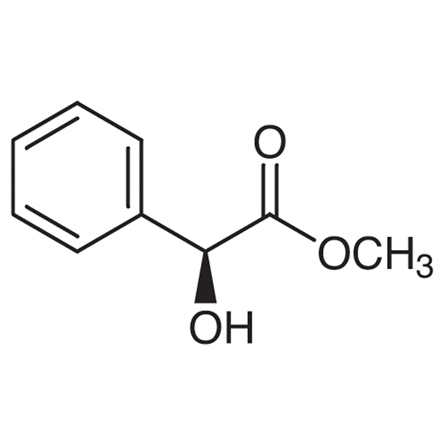
II. What is L-Mandelic Acid?
Compared to common standard mandelic acid (typically a racemic mixture), its core distinction lies in its singular and stable optically active structure—retaining only the ‘L-form’ isomer with specific biological activity. This structural characteristic confers significant advantages in skincare applications:
- Enhanced precision and controllability: Uniform molecular structure delivers more consistent efficacy across the skin
- Superior stability and reliability: High batch-to-batch consistency significantly improves formulation stability
- Superior tolerability: Markedly lower irritation than standard mandelic acid, with mildness comparable to gluconolactone
It is precisely these properties that establish L-mandelic acid as the preferred ingredient for acid-based products suitable for sensitive skin, post-procedure recovery care, and functional skincare requiring a balance of efficacy and gentleness. It retains the core benefits of alpha-hydroxy acids in exfoliation and skin tone brightening while substantially reducing the irritation risks associated with traditional acids.
III. Three Key Skincare Advantages of L-Mandelic Acid for Sensitive Skin
L-Mandelic Acid, with its unique molecular structure and gentle exfoliating properties, offers three core benefits in skincare formulations for sensitive skin:
1. Gently promotes keratin renewal without compromising the skin barrier
Unlike traditional high-irritation alpha hydroxy acids, L-Mandelic Acid does not achieve exfoliation through ‘forceful stripping’ of keratin. Instead, its mechanism of action involves gently regulating the renewal rhythm of keratinocytes.
This approach avoids a sudden weakening of the stratum corneum structure
making it more suitable for long-term, regular use
Particularly compatible with barrier-repair formulations
This gentle exfoliation mechanism enables brands to design products for sensitive or barrier-compromised skin that deliver sustained renewal without triggering irritation or redness.
2. Addresses closed comedones and acne while minimising irritation risk
For acne-prone or mildly inflamed skin, L-mandelic acid effectively:
Clears clogged pores
Inhibits abnormal keratin accumulation
Reduce closed comedones caused by keratin buildup
Simultaneously, its low-irritation profile minimises dryness, flaking, or stinging during use. Consequently, L-mandelic acid is frequently incorporated into: sensitive acne serums and post-aesthetic treatment products (requiring appropriate formulation design).
This characteristic provides brands with a balance between efficacy and safety, enhancing product acceptance and repurchase rates among target consumers.
3. Brightening complexion whilst mitigating hyperpigmentation risks
Highly irritating acids may induce mild inflammation during skin tone improvement, with inflammation being a primary trigger for post-inflammatory hyperpigmentation (PIH).
L-mandelic acid, owing to its gentle exfoliating properties:
is more suitable for sensitive skin prone to uneven tone and dullness
can improve skin texture while reducing the risk of post-inflammatory hyperpigmentation or darkening
This advantage makes it an ideal choice for brightening and efficacy-focused formulations targeting sensitive skin, while also offering brands greater scope for product differentiation.
IV. From a Formulation Perspective: Why L-Mandelic Acid is More Effective?
-
In skincare formulation development, the physicochemical properties of raw materials directly influence formulation stability, processability, and the final product's user experience. As a long-term supplier to international brands, our practical formulation support has revealed that L-Mandelic Acid demonstrates significant advantages across multiple dimensions, making it particularly suitable for sensitive skin and performance-driven skincare products.
Relatively broad pH tolerance range allows greater formulation flexibility
Excellent water solubility facilitates application in serums and aqueous systems
Demonstrates excellent synergistic effects with multiple soothing ingredients, such as:
Panthenol
Centella asiatica extract
Ceramides
Furthermore, it is readily positioned as a ‘low-irritation functional acid’, offering greater flexibility for brand claims and regulatory compliance.
V.Compatibility of L-Mandelic Acid with Other Common Acids for Sensitive Skin
In skincare formulation development, distinct differences exist among various acid ingredients regarding irritation potential, tolerance for sensitive skin, and efficacy strength. Glycolic acid, while potent and delivering noticeable exfoliation, presents high irritation that renders it difficult for sensitive or barrier-compromised skin to tolerate. Its use frequently triggers discomfort such as stinging, burning sensations, or peeling. Salicylic acid exhibits moderate irritation potential, presenting limitations for sensitive skin compatibility. While effective at controlling sebum and improving acne-prone skin, caution remains advisable for users seeking gentle skincare solutions. In contrast, PHAs (polyhydroxy acids) possess large molecular weights and slow penetration rates, resulting in minimal irritation and high compatibility with sensitive skin. However, their efficacy is relatively weaker, failing to meet the exfoliation demands of certain performance-driven formulations.
L-mandelic acid strikes a balance between gentleness and efficacy. Its moderate molecular weight and slow penetration rate enable gentle exfoliation and skin texture improvement without compromising the stratum corneum or skin barrier. This low-irritation yet controllably effective profile makes L-mandelic acid particularly outstanding in formulations for sensitive skin, acne-prone skin, and post-aesthetic treatment care. It delivers perceptible skin-renewing benefits while ensuring comfort and safety during use. From an overall formulation balance perspective, L-mandelic acid occupies the ideal ‘gentle yet still effective’ range, making it the preferred choice for sensitive-skin-friendly AHA ingredients.
VII. Frequently Asked Questions
Q1: Is L-Mandelic Acid suitable for daily use on sensitive skin?
A: Due to its larger molecular weight and slower penetration rate, L-Mandelic Acid is considered a mild AHA and can be safely incorporated into formulations for sensitive skin. Usage frequency should be adjusted according to formulation concentration and the formulator's advice. Generally, it may be applied daily or every other day, and yields optimal results when combined with soothing ingredients such as panthenol or Centella asiatica extract.
Q2: Why is L-Mandelic Acid gentler on sensitive skin compared to Glycolic or Lactic Acid?
A: Glycolic acid has a small molecular size and rapid penetration, resulting in high irritation potential. Lactic acid offers moderate irritation. L-Mandelic Acid, however, possesses a moderate molecular weight and acts slowly, primarily remaining on the surface of the stratum corneum. This minimises the risk of stinging and redness whilst maintaining gentle exfoliation. Consequently, it is more suitable for use in products for sensitive skin or post-aesthetic treatment recovery.
Q3: With which ingredients can L-Mandelic Acid be combined?
A: L-Mandelic Acid exhibits excellent synergistic effects with various soothing and barrier-repairing ingredients, such as Panthenol, Centella Asiatica Extract, and Ceramides. It may also be combined with low-concentration brightening or anti-inflammatory active ingredients, provided the formulation pH is maintained within an appropriate range to ensure stability.
Q4: Does L-Mandelic Acid cause post-inflammatory hyperpigmentation (PIH)?
A: Compared to highly irritating acids, L-Mandelic Acid is less irritating and less likely to trigger inflammation, thereby reducing the risk of post-inflammatory hyperpigmentation (PIH). For sensitive skin types with uneven tone and dullness, it offers a gentle, controllable exfoliation option.
VIII. Where to Purchase L-Mandelic Acid
From its molecular structure and skin action mechanisms to practical formulation applications, L-Mandelic Acid represents not a fleeting trend but a rationally balanced solution between safety and efficacy. Its gentle exfoliating properties, low irritation profile, and consistent batch stability make it a core active ingredient worthy of long-term investment in products for sensitive skin, acne-prone skin, and post-aesthetic treatment recovery.
Le-Nutra Ingredients not only supplies high-purity, optically pure L-Mandelic Acid but also provides comprehensive technical support to brands and formulators. From raw material specifications, solubility and stability data, to formulation design recommendations and synergistic ingredient guidance, we are committed to ensuring each batch of raw material delivers its intended efficacy in finished products while minimising formulation development risks.
Choosing us means selecting a reliable, controllable, and long-term raw material partner. Whether for sensitive skin care, efficacy-driven resurfacing, or post-aesthetic treatment products, our L-Mandelic Acid provides brands with a stable, effective, and gentle formulation foundation, enhancing product competitiveness from R&D through to market launch.
📚 References: