Leave Your Message
0%

China’s plant ingredient scene has really caught the eye of buyers around the world lately. They’re looking for consistent quality, transparent sourcing, and the ability to scale up production without a hitch. According to Grand View Research, the global market for botanical extracts is growing steadily — mainly because food, cosmetics, and dietary supplement brands are increasingly demanding natural ingredients. The report also points out a growing interest in standardized active compounds and clean-label products that consumers feel good about.

In this article, I’m sharing insights on China’s top 10 plant concentrate manufacturers for global buyers. When picking a supplier, a few key things matter: their manufacturing experience, ability to export, product consistency, quality documentation, and the level of technical support they offer. These factors are crucial whether you’re after green powders, viscous liquids, or standardized botanical blends. A trustworthy supplier should provide batch-specific Certificates of Analysis, details about where the ingredients come from, allergen info, and testing results for pesticides, heavy metals, and microbiological contaminants.

Keep in mind that organizations like the Food and Agriculture Organization and ISO stress the importance of traceability, responsible production practices, and strict food safety systems. Certifications like ISO 22000, HACCP, GMP, and organic labels can definitely boost a supplier’s credibility, but they shouldn’t be seen as a guarantee on their own — independent testing and verification are still key.

You might come across names like Xi’an Lyphar Biotech, Shaanxi Undersun Biomedtech, Xi’an Sost Biotech, Hunan Nutramax, and Chengdu Biopurify when talking about global sourcing, but just having their names doesn’t automatically mean they’re the right fit or performing well right now. It’s essential to compare recent samples, specifications, lead times, minimum order requirements, and audit histories before making any decisions.

No supplier is perfect, even the most experienced ones face issues like crop variations or testing delays sometimes. Think of this guide as a helpful starting point — it’s not a final ticket to purchase. Doing your homework and due diligence is still a must to find the best partner for your needs.
China Top 10 Plant Concentrate Manufacturers for Global Buyers

Plant Concentrates Defined: Extract Ratios, Solvents, and Standardized Actives

Plant concentrates are not defined by a strong-sounding ratio alone. An extract ratio, such as 10:1, usually means ten kilograms of raw plant material produced one kilogram of extract. It does not prove ten times greater biological activity. The plant part, harvest season, moisture level, and extraction method can change the result. The ratio can mislead.

Solvent choice matters. Water suits polysaccharides, minerals, and some proteins, while food-grade ethanol can recover many polyphenols and aromatic compounds. Supercritical carbon dioxide may target oils with limited heat exposure. Buyers should request solvent specifications and residual-solvent testing. A clear certificate of analysis should identify the lot number, botanical name, plant part, extraction ratio, moisture, microbial limits, and heavy-metal results.

Standardized actives make comparisons more practical. A concentrate labeled for 20% total polyphenols should show its testing method, reference standard, and acceptable variation between batches. HPLC or validated spectrophotometric testing can support this claim, but neither method removes sampling errors. In purchasing reviews, I would compare three consecutive lots, not one attractive report. Some documents look complete yet omit marker-compound stability. That is a weakness worth questioning. Also, Wpc 80 Whey Protein Concentrate is a dairy protein ingredient, not a plant concentrate, so its protein percentage should not be compared directly with botanical extract ratios.

Market Context: 170 of 194 WHO Members Report Traditional-Medicine Use

China Top 10 Plant Concentrate Manufacturers for Global Buyers

The market context is broader than a supplier list. WHO’s Global Report on Traditional and Complementary Medicine 2019 states that 170 of 194 Member States reported using traditional medicine. This figure signals steady demand for botanical extracts, powders, and standardized plant concentrates. It does not guarantee product quality. Buyers still need evidence.

A practical audit should examine the factory floor, not only a polished website. Check raw-material origin, extraction solvent controls, moisture limits, and marker-compound testing. Request recent certificates for pesticide residues, heavy metals, microbiological safety, and identity testing. ISO 22000 or HACCP systems can support risk control, but certificates alone are not proof of every batch. Batch records matter more.

Product classification also deserves careful attention. Hydrolysed Whey Protein Concentrate is dairy-derived, not plant-based, and should not be placed inside a botanical concentrate category. This sounds obvious, yet mixed catalogues create avoidable confusion. Buyers should compare extraction ratios, carrier ingredients, allergen statements, and shelf-life data. The Codex General Principles of Food Hygiene provides a useful international reference, although local rules still differ. Some supplier documentation remains incomplete. That is uncomfortable, but it is precisely where technical review and independent laboratory verification add value.

Ranking Framework: 10 Metrics Cover GMP, Capacity, Assay, and Export Data

China Top 10 Plant Concentrate Manufacturers for Global Buyers

A credible ranking needs more than factory photos or polished claims. Our framework uses ten measurable indicators: GMP compliance, production capacity, batch consistency, assay accuracy, ingredient traceability, laboratory capability, documentation quality, export experience, delivery reliability, and customer audit performance.

GMP evidence should include current certificates, inspection records, hygiene controls, and corrective-action reports. Capacity must be checked against real equipment, storage space, and monthly output, not stated figures alone. Assay results should come from validated methods, with test reports showing sampling dates, specifications, and laboratory signatures. Small details matter. A sealed sample pouch and matching batch number can reveal more than a brochure.

Export data adds practical weight. Review destination markets, shipment frequency, customs documents, packaging formats, and records of delayed containers. Manufacturers offering Protein Concentrate Isolate Hydrolysate should also explain processing steps, moisture limits, solubility, and allergen controls. Technical answers should be clear and consistent across sales, quality, and production teams.

No ranking is flawless. Public data may be incomplete, and factory capacity can change after an audit. That weakness should be disclosed rather than hidden. Buyers can improve confidence by requesting recent samples, independent testing, video verification, and a written quality agreement. Evidence matters. Claims alone do not.

China’s Top 10 Plant Concentrate Manufacturers: Evidence-Based Profiles

China’s top 10 plant concentrate manufacturers should be assessed through evidence, not search rankings. Grand View Research estimated the global botanical extracts market at over USD 30 billion in 2023, with continued double-digit growth expected. This demand raises quality pressure. Leading Chinese suppliers commonly provide concentrated botanical, fruit, or vegetable ingredients for food, beverages, cosmetics, and nutrition products. Their real differences appear in extraction control, solvent management, batch consistency, and traceability.

A reliable profile should record factory location, production capacity, raw-material origin, and testing scope. Look for ISO 22000, HACCP, GMP, organic, or other relevant certifications, but verify certificate validity. A current Certificate of Analysis should cover identity, active compounds, microbiological limits, heavy metals, pesticides, and moisture. The 2024 Global Food Safety Initiative benchmarking guidance stresses documented food-safety systems and supplier verification. Public data remains uneven, though. A polished website cannot replace an on-site audit, retained samples, and three-batch testing.

Tips: Request samples from separate production lots. Compare marker-compound results, color, odor, solubility, and sediment after storage. Ask whether the stated concentration means native ratio or tested active content. Markets such as Europe and North America may require different documentation. Also check lead times during harvest seasons. A lower quoted price may hide weaker traceability, packaging, or re-testing support. This is where many “top ten” comparisons become imperfect.

Quality Controls: HACCP, ISO 22000, GMP, and Batch-Level Marker Testing

When global buyers compare China’s top Plant Extract manufacturers, quality systems deserve more attention than polished catalogues. In practical audits, HACCP shows whether hazards are mapped from raw material intake to packing. Inspectors should review cleaning records, allergen controls, and metal-detector checks. Small details matter.

ISO 22000 connects food-safety risks with documented communication and corrective actions. GMP adds discipline to weighing, equipment sanitation, personnel hygiene, and line clearance. Ask for recent internal-audit findings, not only certificates on a website. A certificate can confirm a system exists, but it cannot prove every shift follows it. That difference is easy to miss.

Batch-level marker testing provides stronger evidence for identity and consistency. Each lot should have a traceable sample, test method, result, and release decision. Buyers can compare marker content with the agreed specification and investigate unusual variation. Chromatography records, retained samples, and sealed packaging create a clearer chain of evidence. Still, testing is not flawless. Sampling may overlook uneven material, and laboratories can report different results. Experienced teams therefore review method validation, reference standards, and laboratory competence. Records should be readable, dated, and linked to one batch. That is where reliability becomes visible.

China Top 10 Plant Concentrate Manufacturers for Global Buyers - Quality Controls: HACCP, ISO 22000, GMP, and Batch-Level Marker Testing

Rank Anonymized Plant Profile Primary Production Region Typical Plant Concentrates HACCP ISO 22000 / FSSC 22000 GMP Controls Batch-Level Marker Testing Traceability Practice COA Release Controls
1 Plant Profile A Shaanxi Botanical, fruit, and root concentrates Implemented ISO 22000 Hygiene zoning, sanitation records, personnel training Marker assay per production batch for selected botanicals Raw-material lot to finished-batch linkage Identity, assay, moisture, microbiology, heavy metals
2 Plant Profile B Hunan Tea, citrus, berry, and herbal concentrates Implemented FSSC 22000 GMP-based process controls and validated cleaning Polyphenol, catechin, or flavonoid testing where applicable Electronic batch records with supplier documentation Third-party confirmation for critical specifications
3 Plant Profile C Zhejiang Fruit, vegetable, and marine botanical concentrates Implemented ISO 22000 Controlled access, allergen segregation, sanitation verification Batch marker testing available for contract specifications One-step-back and one-step-forward traceability Standard COA plus contaminant-screening results
4 Plant Profile D Sichuan Pepper, ginger, botanical, and spice concentrates Implemented ISO 22000 Documented GMP procedures for extraction and drying Capsaicinoid, gingerol, or volatile-oil markers as specified Barcode-based warehouse and batch identification Microbial, pesticide, solvent, and heavy-metal review
5 Plant Profile E Guangdong Tropical fruit, tea, and functional plant concentrates Implemented FSSC 22000 GMP-aligned environmental monitoring and pest control Polyphenol, caffeine, or carotenoid marker verification Supplier approval and finished-goods batch mapping Internal testing with periodic independent laboratory checks
6 Plant Profile F Yunnan Tea, coffee, mushroom, and herbal concentrates Implemented ISO 22000 Controlled drying, water-quality monitoring, documented SOPs Beta-glucan, caffeine, catechin, or polysaccharide testing Farm or supplier lot connected to extraction batch Identity, potency, microbiology, and mycotoxin testing
7 Plant Profile G Shandong Apple, sea buckthorn, grain, and vegetable concentrates Implemented ISO 22000 Food-grade zoning, allergen risk assessment, batch sanitation checks Organic-acid, vitamin, or flavonoid markers by product type Paper and electronic records retained by batch Release after specification, microbiological, and contaminant review
8 Plant Profile H Jiangsu Herbal, fruit, and standardized botanical concentrates Implemented FSSC 22000 Validated processes, calibration program, controlled documentation HPLC or equivalent marker assay for standardized products Finished-batch genealogy and retained samples Dual review of laboratory results and production records
9 Plant Profile I Fujian Tea, citrus peel, mushroom, and marine plant concentrates Implemented ISO 22000 Sanitation validation, water control, pest-management records Marker testing offered for buyer-defined specifications Lot coding from incoming materials through shipment COA includes assay, moisture, microbial, and safety parameters
10 Plant Profile J Henan Grain, fruit, root, and medicinal-plant concentrates Implemented ISO 22000 GMP-based hygiene, process monitoring, and deviation management Marker testing conducted for agreed active compounds Documented batch records and retained reference samples Pre-shipment COA with risk-based contaminant testing

Buyer verification note: The profiles are anonymized and presented as a non-company-specific sourcing benchmark. Certification scope, certificate validity, product specifications, test methods, and batch-level marker results should be verified directly against current certificates, laboratory reports, and supplier quality agreements before procurement.

Global Compliance: U.S. 21 CFR Part 111 and EU Directive 2002/46/EC

China Top 10 Plant Concentrate Manufacturers for Global Buyers

Global Compliance: U.S. 21 CFR Part 111 and EU Directive 2002/46/EC

Plant concentrate sourcing now demands evidence, not attractive certificates. Grand View Research estimated the global botanical extracts market at about USD 6.7 billion in 2023. Growth increases pressure on supplier controls. Under U.S. 21 CFR Part 111, manufacturers must follow documented specifications, production controls, laboratory testing, and complaint procedures. Buyers should request batch records, botanical identity tests, pesticide results, heavy-metal analysis, and microbiological reports. A certificate alone is not proof.

The EU Directive 2002/46/EC regulates food supplements, including labeling, presentation, and permitted vitamin or mineral sources. Plant ingredients also require checks under national rules and, where relevant, novel-food legislation. WHO reported that 170 countries use traditional medicine, showing the scale of botanical supply chains. It does not remove compliance risks. Trace each lot from farm records to sealed cartons. Confirm Latin names, plant parts, extraction solvents, carrier materials, and allergen statements. Small details matter.

In practical audits, mismatched lot numbers remain a common weakness. Labels can look perfect. Records may not. Some suppliers provide excellent testing, but their change-control procedures need deeper review. Global buyers should compare specifications with final labels and intended claims. That step is often missed. A qualified manufacturer should welcome independent testing and retain accessible records for inspection. Sources: Grand View Research, Botanical Extracts Market Report, 2024; World Health Organization, Global Report on Traditional and Complementary Medicine, 2019.

Buyer Comparison: MOQ, Lead Time, Extract Ratio, Assay, and Incoterms

China Top 10 Plant Concentrate Manufacturers for Global Buyers

Buyer Comparison: MOQ, Lead Time, Extract Ratio, Assay, and Incoterms

Global demand is becoming more specification-driven. Grand View Research estimates the global plant extracts market will continue expanding strongly through 2030, supported by food, nutrition, and personal-care applications. For buyers comparing China’s leading manufacturers, MOQ is only the entry point. A 25-kilogram MOQ may suit trials, while a 500-kilogram threshold can reduce unit cost but increase inventory risk. Ask whether the MOQ applies to one extract, one batch, or a full shipment.

Lead time should be separated into production and export preparation. A practical quotation may show 7–15 days for standard stock and 25–45 days for customized batches. Delays often appear during testing, packing, or document review. Extract ratio also needs careful reading. A 10:1 ratio describes raw-material input, not necessarily active strength. The assay should state the tested marker, method, laboratory, and acceptance range. The test method matters.

Incoterms can change the real purchase price. Under FOB, the buyer manages main freight and insurance. Under CIF, those costs are included, but destination charges may remain. The International Trade Centre’s trade data highlights how freight and shipment values vary across markets, so landed cost deserves its own worksheet. WHO guidance on good agricultural and collection practices supports traceable botanical sourcing, yet supplier documents are not always equally detailed. Some comparisons remain imperfect. Request recent COAs, batch photos, sample retention details, and a written lead-time commitment before selecting a manufacturer.

High-Quality Pea Protein Powder: Sustainable, Plant-Based Nutrition for Everyday Wellness

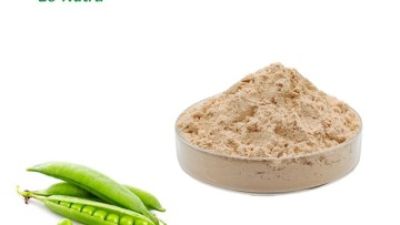
Pea protein powder offers a practical way to add plant-based nutrition to everyday meals. With an 80% or 85% protein specification, its yellowish powder can be used in protein bars, solid beverages, vegetable-protein drinks, grain foods, and animal feed. It also provides high-value protein and vitamins, making it suitable for consumers seeking convenient nutrition without relying exclusively on animal-derived ingredients. According to the Food and Agriculture Organization of the United Nations, livestock supply chains account for approximately 14.5% of global human-caused greenhouse-gas emissions, highlighting the importance of diversifying protein sources.

Sustainability is increasingly influencing food choices. The Good Food Institute’s industry reports show continued investment and consumer interest in alternative proteins, while research published by the World Resources Institute identifies plant-based foods as an important part of building more resource-efficient diets. Pea protein can support this shift because peas are nitrogen-fixing legumes that can contribute to soil health and may require fewer agricultural inputs than some conventional protein sources. Its neutral, adaptable format makes it easy to incorporate into smoothies, cereals, baked products, and formulated nutrition products, helping manufacturers develop accessible plant-based options for everyday wellness.

FAQS

What does a 10:1 plant extract ratio actually mean?

It usually means ten kilograms of raw material produced one kilogram of extract. It does not prove ten times stronger activity. Plant part, moisture, harvest season, and processing can change the result.

Why can an extract ratio be misleading?

A ratio describes material input, not necessarily active-compound concentration. Two 10:1 extracts may have different biological profiles. The label alone is incomplete.

How does solvent choice affect plant concentrates?

Water can recover polysaccharides, minerals, and some proteins. Food-grade ethanol often extracts polyphenols and aromatic compounds. Supercritical carbon dioxide can target oils with limited heat exposure. Ask for residual-solvent testing.

What should a Certificate of Analysis include?

It should identify the lot number, botanical name, and plant part. It should also show moisture, microbial limits, and heavy-metal results. Testing methods and laboratory details matter. A missing lot number is a warning sign.

What does a standardized active claim mean?

It means the concentrate targets a stated level of a marker compound. For example, a product may claim 20% total polyphenols. The report should show the testing method and reference standard. Batch variation should be stated clearly.

Which tests can support standardized active claims?

HPLC or validated spectrophotometric methods may support these claims. Neither method eliminates sampling errors. Testing quality depends on proper sampling, equipment, and laboratory controls.

How should buyers compare plant concentrate suppliers?

Review GMP evidence, capacity, assay accuracy, traceability, and export records. Check inspection reports, hygiene controls, and corrective-action documents. A sealed sample pouch should match its batch number. Factory photos are not enough.

Why are three production lots better than one sample?

Three lots can reveal changes in potency, color, odor, and solubility. Storage tests may show sediment or marker instability. One attractive report can create false confidence. I would still question incomplete records.

Conclusion

This guide explains how Plant Concentrate is produced, evaluated, and sourced for international applications. It clarifies extract ratios, extraction solvents, and standardized active compounds, while placing the market in the broader context of traditional-medicine use reported by 170 of 194 WHO member states. A transparent ranking framework compares ten manufacturers using practical metrics, including GMP systems, production capacity, assay consistency, quality documentation, and export experience.

The article also outlines essential quality controls, such as HACCP, ISO 22000, GMP compliance, and batch-level marker testing. For global buyers, it highlights the importance of reviewing U.S. 21 CFR Part 111 and EU Directive 2002/46/EC requirements, as applicable to the intended product category. A final comparison focuses on MOQ, lead time, extract ratio, assay specifications, testing records, packaging, and Incoterms, helping buyers make informed, compliant, and risk-conscious sourcing decisions.
Sophie

Sophie

Sophie is a dedicated professional marketer with a profound expertise in the natural and innovative raw materials industry. As part of a forward-thinking company that specializes in the research, production, and marketing of high-quality nutraceuticals, foods, beverages, and cosmetics, she brings a......
Previous How To Select the Best Cosmetic Active Ingredients in 2026