So, when it comes to making custom dietary supplements, the whole process actually kicks off way before those capsules even hit the bottle. It all starts with nailing down a solid formula, working with trusted suppliers, and setting realistic quality goals. Funny enough, according to the 2024 Consumer Survey by the Council for Responsible Nutrition, about 75% of folks in the U.S. are using dietary supplements these days. That’s a huge number, and it definitely raises the bar for safety, consistency, and clear labeling. But here’s the thing—no matter how pretty the packaging looks, if the controls behind the scenes aren’t solid, it’s not gonna save the day.
A good manufacturer really digs into the ingredients by doing tests to confirm what they are, checking for contaminants, and making sure their suppliers are qualified—things like identity testing, setting specs, and documenting everything. Then, formulators work out the right dosage, flow, stability, flavor, and how well everything fits together with the format they chose. Throughout production, they should be following the current Good Manufacturing Practice guidelines outlined in 21 CFR Part 111. Keeping thorough records—batch details, in-process checks, lab results, and final product testing—is super important for accountability. As Daniel Fabricant, who used to lead the FDA’s Division of Dietary Supplement Programs, famously said, “You cannot test quality into a product.” Quality has to be built into every step from the ground up.
Looking at industry data gives us even more perspective. For example, Grand View Research estimates the global dietary supplement market was worth about $177.5 billion in 2023, and they expect it to keep growing through 2030. But, bigger markets come with their own risks—more recalls, fluctuations in product strength, and communication hiccups. The process isn’t perfect, even with seasoned teams. Sometimes, they underestimate moisture levels, supplier differences, or how long the product will last on the shelf. That’s why responsible development involves doing pilot batches, stability testing, getting independent reviews, and being ready to make improvements along the way. Before choosing a manufacturing partner, it’s smart to check their safety certificates, audit practices, testing methods, and traceability. It’s all about making sure you’re getting a product you can trust every step of the way.
Defining the product concept and target consumer is the first practical decision in custom dietary supplement manufacturing. A vague goal, such as “better wellness,” creates weak formulas and unclear claims. The Council for Responsible Nutrition reported that 74% of U.S. adults used dietary supplements in 2023. That broad market still needs sharper segmentation. A product for busy professionals may require single-serve sachets, while older adults may prefer easy-to-swallow capsules.
Start with one consumer problem. Describe the user’s age, routine, diet, health concerns, and purchasing motivation. Then set measurable product boundaries: dosage form, serving size, flavor, allergen controls, and acceptable cost. The phrase Boost Dietary Supplement Ingredients may attract attention, but it does not define a credible product benefit. Ingredient selection should follow evidence, safety reviews, and the intended consumer’s needs. It should not begin with a fashionable ingredient.
Consumer behavior can challenge assumptions. CDC data from the 2017–2020 National Health and Nutrition Examination Survey showed that 58.5% of U.S. adults used dietary supplements during the previous 30 days. However, frequent use does not guarantee satisfaction or adherence. A powder that clumps in a cold shaker may fail, even with a strong formula. Manufacturers should test taste, texture, packaging, and daily convenience with representative users. Early feedback may feel uncomfortable. That is useful. The concept may need revision before pilot production, stability testing, and compliant label development.
What Is the Custom Dietary Supplement Manufacturing Process?
Select Ingredients and Establish the Formula
Selecting ingredients is the foundation of custom dietary supplement manufacturing. A competent formulator starts with the intended user, serving size, delivery format, and measurable health objective. Each ingredient should have documented identity, purity, potency, origin, and appropriate safety data. Certificates of analysis help, but they are not a substitute for independent verification. I prefer testing higher-risk materials, especially botanicals, minerals, and ingredients with variable active levels.
The formula must work in the real product, not only in a spreadsheet. Powders may clump, oils may oxidize, and certain minerals can create an unpleasant metallic taste. Compatibility checks can reveal problems with moisture, heat, light, or capsule fill weight. Dose calculations should consider evidence, tolerable intake limits, target populations, and possible medication interactions. Allergen controls and target-market labeling requirements belong in this stage. Small pilot batches provide useful evidence before scale-up.
A good formula is also practical to manufacture consistently. I have seen attractive formulas become unstable because excipients were chosen too late. That mistake is avoidable, though not always obvious. Sometimes, a lower dose or simpler ingredient list improves quality and user adherence. The difficult part is admitting that more ingredients do not necessarily create a better supplement. Stability testing, retained samples, and documented revisions support reliable decisions throughout development. Still, early assumptions can be wrong. That is where careful reformulation matters.
| Process Stage | Key Activities | Typical Formula Decisions | Required Information or Documents | Quality and Regulatory Checkpoints | Typical Timeline | Primary Output |
|---|---|---|---|---|---|---|
| 1. Define the Product Concept | Identify the intended consumer, product format, serving size, dietary positioning, and target retail requirements. | Capsule, tablet, powder, liquid, gummy, or softgel; number of servings per container; flavor and allergen preferences. | Product brief, target market, proposed claims, serving instructions, packaging preferences, and budget range. | Claims should describe the product accurately and must not imply that a dietary supplement diagnoses, treats, cures, or prevents a disease. | 1–2 weeks | Approved product-development brief |
| 2. Select Active Ingredients | Compare ingredients according to identity, potency, source, dosage form, stability, solubility, taste, and supply availability. | Botanical extracts, vitamins, minerals, amino acids, enzymes, probiotics, fatty acids, or other permitted dietary ingredients. | Ingredient specifications, certificates of analysis, supplier qualification records, safety information, and country-of-origin details. | Confirm ingredient identity, purity, contaminant limits, allergen status, and applicable regulatory requirements before approval. | 1–4 weeks | Preliminary ingredient shortlist |
| 3. Evaluate Dosage and Serving Size | Set the amount of each active ingredient per serving while considering published evidence, safety data, physical formulation limits, and label space. | Amount per serving, number of daily servings, potency standardization, and whether nutrients are listed by weight or activity. | Technical literature, safety references, proposed Supplement Facts information, and target serving instructions. | Check that proposed amounts are supportable, compatible with the selected format, and consistent with applicable nutrient reference and labeling rules. | 1–3 weeks | Draft active-ingredient dosage matrix |
| 4. Screen Ingredient Compatibility | Review interactions among active ingredients and excipients, including moisture sensitivity, oxidation, pH effects, flowability, and taste. | Selection of compatible carriers, binders, fillers, disintegrants, flow agents, preservatives, flavors, sweeteners, or encapsulation aids. | Material specifications, stability information, processing constraints, and allergen or dietary restriction requirements. | Identify risks such as hygroscopicity, microbial growth, nutrient degradation, poor powder flow, sedimentation, or unpleasant taste. | 1–3 weeks | Compatibility assessment and formulation strategy |
| 5. Build the Prototype Formula | Combine active ingredients and necessary excipients into a preliminary formula designed for the selected dosage form and manufacturing process. | Ingredient percentages, target fill weight, tablet weight, liquid concentration, gummy weight, capsule size, and excipient levels. | Formula worksheet, manufacturing process assumptions, target specifications, and preliminary packaging concept. | Verify that the formula can be manufactured consistently and that all ingredients are suitable for the proposed product type. | 1–3 weeks | Prototype formula version 1 |
| 6. Conduct Bench Testing | Prepare small-scale samples to assess appearance, taste, odor, texture, dispersion, disintegration, fill accuracy, or viscosity. | Adjust flavor intensity, sweetness, color, particle size, compression characteristics, capsule fill, or liquid suspension behavior. | Prototype batch records, sensory feedback, test results, and documented formulation changes. | Check basic physical properties and confirm that changes do not compromise ingredient levels or product safety. | 1–4 weeks | Refined prototype formula |
| 7. Review Manufacturing Feasibility | Assess whether the formula can be scaled using available blending, granulation, encapsulation, compression, filling, coating, or packaging equipment. | Batch size, mixing sequence, processing temperature, acceptable moisture range, overage requirements, and packaging line compatibility. | Process instructions, equipment requirements, material handling information, and preliminary batch record. | Confirm that the process can deliver uniformity, accurate fill or weight, acceptable yield, and repeatable product quality. | 1–2 weeks | Manufacturing-feasible formula |
| 8. Establish Product Specifications | Define the measurable quality attributes used to accept or reject finished batches and incoming raw materials. | Identity, appearance, potency, microbial limits, moisture, weight variation, disintegration, dissolution, viscosity, pH, and shelf-life targets. | Raw-material specifications, finished-product specifications, analytical methods, and sampling plan. | Specifications should be scientifically justified and appropriate for the dosage form, ingredients, and intended storage conditions. | 1–3 weeks | Approved raw-material and finished-product specifications |
| 9. Perform Stability Planning | Determine how the product may change over time under proposed packaging and storage conditions. | Container-closure system, desiccant or oxygen absorber needs, light protection, storage statement, and proposed expiration period. | Stability protocol, packaging samples, testing schedule, and storage-condition requirements. | Monitor attributes such as potency, moisture, microbial quality, appearance, odor, texture, and package integrity. | Initial assessment: 2–8 weeks; ongoing studies may continue through shelf life | Stability protocol and preliminary shelf-life assessment |
| 10. Finalize the Formula and Label Data | Approve the final ingredient list, serving directions, warning statements, packaging configuration, and manufacturing instructions. | Final active amounts, excipient declaration, allergen statement, storage instructions, lot coding, and net quantity. | Master formula, approved label text, packaging specifications, batch manufacturing record, and quality agreement. | Review label accuracy, ingredient nomenclature, required statements, claims substantiation, and alignment between formula and label. | 1–3 weeks | Released master formula and production-ready documentation |
| 11. Scale-Up and Process Validation | Produce a larger pilot or validation batch and confirm that critical process parameters remain controlled at production scale. | Mixing time, order of addition, granulation endpoint, compression force, filling speed, temperature, and packaging settings. | Pilot-batch record, process validation protocol, deviation records, and in-process testing results. | Evaluate blend uniformity, yield, weight control, potency, microbial quality, and other predefined acceptance criteria. | 2–6 weeks | Validated or qualified production process |
| 12. Quality Release for Production | Review production and laboratory records before authorizing the finished product for distribution. | Final batch quantity, release tests, packaging details, storage conditions, and retain-sample requirements. | Certificate of analysis, completed batch record, test reports, packaging records, and deviation or corrective-action documentation. | Release only after required testing and record review demonstrate compliance with approved specifications and applicable good manufacturing practices. | 1–3 weeks after batch completion | Released finished supplement batch |
Timeline estimates are typical planning ranges for a new formula and may vary according to ingredient availability, testing requirements, dosage form, regulatory review, packaging complexity, and stability-study design.
Custom dietary supplement manufacturing begins with a compliance plan, not a colorful label. A qualified team reviews the formula, intended users, serving size, and target market. Each ingredient needs identity, purity, strength, and contamination checks. Robust Dietary Supplement Ingredients should arrive with current specifications and supplier documentation. Testing may include heavy metals, microbes, pesticides, allergens, and undeclared compounds. Small details matter. A missing lot number can weaken traceability during an investigation.
Manufacturers should use documented quality systems and appropriate good manufacturing practices. Raw materials remain quarantined until approved by quality personnel. Weighing records, cleaning logs, and in-process checks create an auditable trail. Finished batches require release testing before distribution. Stability studies help confirm that potency survives heat, moisture, and storage time. Regulatory review should examine claims, warnings, directions, packaging, and notifications in each market. Requirements differ, and assumptions can become expensive mistakes. Production speed sometimes receives too much attention.
Tips: Ask for a certificate of analysis, but do not treat it as complete proof. Confirm the laboratory, test method, date, and matching lot number. Request a sample batch record and review deviation handling. Keep retain samples under defined conditions. If a result looks unusual, pause release and investigate. Rushing rarely improves safety.
Developing a custom dietary supplement begins with a practical prototype, not a polished label. A formulation team translates the target user, dosage form, and intended use into measurable specifications. Dietary Components are reviewed for identity, purity, compatibility, and realistic serving sizes. A powder may look simple, yet moisture can cause clumping within days. That detail matters. Scientists check ingredient documentation, supplier data, and applicable safety requirements before blending.
Small bench batches allow controlled adjustments to flavor, texture, color, and fill weight. The team records each change, including mixing time, temperature, and room humidity. Prototype testing usually includes microbiological screening, contaminant analysis, and potency verification by qualified laboratories. Accelerated stability studies expose samples to heat and humidity, while real-time studies track performance under normal storage. Packaging is tested too. A poorly sealed pouch can undermine a well-designed formula. Structured sensory feedback may reveal bitterness that instruments cannot capture.
The first prototype often needs revision. One batch may dissolve slowly; another may improve mouthfeel but miss its potency target. That is useful evidence, not failure. However, changing several variables at once makes results difficult to interpret. Before scale-up, manufacturing instructions, test methods, acceptance limits, and traceability records should be reviewed by qualified personnel. Retaining samples from every pilot batch is also wise. They can answer uncomfortable questions later.
What Is the Custom Dietary Supplement Manufacturing Process?
Scale Up Production and Control Manufacturing Conditions
Custom dietary supplement manufacturing turns a product concept into a controlled, repeatable production system. Scaling up is not simply adding larger equipment. It requires evidence, trained personnel, and carefully reviewed procedures.
At pilot scale, technicians confirm the formula’s flow, blend uniformity, and ingredient compatibility. During scale-up, the team adjusts mixing time, batch size, and equipment speed. Temperature and humidity also matter, especially for powders, capsules, and moisture-sensitive ingredients. A minor change in humidity can affect filling accuracy. It may also cause clumping or slower processing.
Manufacturers should record each step in approved batch documents. Raw materials need identity testing and supplier verification before use. In-process samples can check weight variation, appearance, and uniformity. Finished products require testing against established specifications, including safety and stability requirements. Qualified quality personnel review the results before release.
Real production is rarely perfect. A batch may show unusual flow or require a longer mixing cycle. That is not automatically a failure, but it demands investigation. Teams should document deviations, identify root causes, and improve the process without hiding inconvenient results. Clear traceability helps connect each container to its materials, equipment, operators, and test records. Regulatory expectations differ across markets, so manufacturing controls should match applicable requirements and the product’s intended use.
What Is the Custom Dietary Supplement Manufacturing Process?
Packaging begins after the formula passes documented quality checks. The container must protect Essential Dietary Components from moisture, light, oxygen, and handling damage. Packaging staff verify the correct bottle, closure, liner, desiccant, and batch code against the approved master record. Small errors matter. A missing seal can compromise confidence before use.
Labeling requires the same discipline. The declared serving size, ingredient amounts, allergen statement, directions, and lot number must match the tested formula. The Council for Responsible Nutrition’s 2024 Consumer Survey reported that 75% of U.S. adults use dietary supplements. That level of adoption increases the need for clear, readable information. A label may look flawless and still contain a unit error. Human review remains necessary.
Inspection covers appearance, count or fill weight, seal integrity, coding, and label placement. Quality personnel compare samples with approved specifications, then investigate deviations instead of quietly correcting them. FDA’s Current Good Manufacturing Practice requirements under 21 CFR Part 111 call for written procedures, testing, and quality control release decisions. Grand View Research estimated the global dietary supplements market at over 177 billion dollars in 2023, showing the scale of this responsibility. Release should occur only after records are complete and authorized personnel approve the batch. Even strong systems need reflection; rushed line clearance is still a practical weakness.
Packaging, labeling, inspection, and release are the main finishing stages. The chart shows an illustrative production-planning timeline for a completed batch; actual durations vary according to product complexity, testing requirements, and quality procedures.
Process overview: The finished product is packaged according to approved specifications, labeled with verified product information, inspected through quality-control checks, and released only after required records and test results are reviewed.
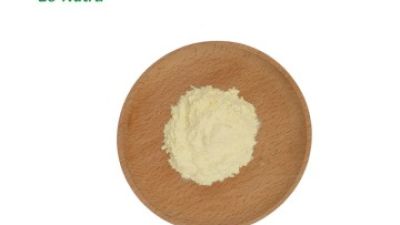
Neutral protease enzyme serrapeptase powder is a functional ingredient designed for use in food supplements. Also known as serrapeptase powder or pure serrapeptase, it is valued for its proteolytic activity and may support normal inflammatory balance, comfortable movement, and healthy circulation when used as part of a well-balanced lifestyle. Its potential applications include capsules, tablets, and other supplement formats, making it suitable for product developers seeking an enzyme ingredient with flexible formulation options.
Quality and specification are important considerations when selecting serrapeptase powder. Available activity levels include 200 SPu/mg and 2200 SPu/mg, with customized specifications possible according to formulation requirements. The powder generally appears yellowish brown to brown, and activity testing should be supported by consistent manufacturing controls and appropriate documentation. For storage and transportation, vacuum aluminum foil bags can help protect the ingredient from moisture and air, while 25 kg fiber drums with an inner double-layer food-grade polyethylene bag provide practical bulk packaging. Finished products should follow applicable food-supplement regulations and recommended usage guidance.
Start with one clear consumer problem. Define the user’s age, routine, diet, concerns, and buying motivation. “Better wellness” is too vague.
Different users need different formats. Busy professionals may prefer single-serve sachets, while older adults may prefer easy-to-swallow capsules.
Set the dosage form, serving size, flavor, allergen controls, and acceptable cost. These limits keep the formula practical and focused.
Pilot testing can examine flow, blend uniformity, taste, texture, and ingredient compatibility. A powder that clumps in a cold shaker may fail.
Mixing time, batch size, equipment speed, temperature, and humidity all matter. Small humidity changes can affect filling accuracy and cause clumping.
Materials need identity testing and supplier verification. In-process checks can review weight variation, appearance, and uniformity.
Document deviations and investigate their root causes. A longer mixing cycle is not automatically failure. Hiding inconvenient results is worse.
Check the container, closure, liner, seal, desiccant, batch code, serving size, allergens, directions, and ingredient amounts. Small errors matter.
Release only after testing, records, inspections, and quality reviews are complete. Authorized personnel must approve the batch.
Rushed line clearance can still create mistakes. The process may look controlled, but practical habits deserve regular reflection.
The Custom Dietary Supplement Manufacturing Process begins by defining the product concept, intended benefits, dosage format, and target consumer. Manufacturers then select suitable ingredients and develop a balanced formula based on quality, stability, compatibility, and practical serving requirements. Before production, the formula is reviewed for safety, product quality, and applicable regulatory expectations. This stage helps ensure that the supplement is suitable for its intended use and can be produced consistently.
Next, a prototype is developed and tested for taste, appearance, texture, stability, and performance. Once the formula is approved, production is scaled up while controlling equipment, environmental conditions, mixing procedures, and quality checkpoints. The finished supplement is then placed in appropriate packaging, labeled with accurate product information, inspected, and tested against established specifications. Only products that meet all quality and release requirements are approved for distribution, helping maintain consistency, reliability, and consumer confidence.