Overcoming the Classic Retinoid Trilemma in Modern Formulations
Why premium skincare formulators are migrating from traditional Vitamin A derivatives to Hydroxypinacolone Retinoate HPR for sensitive-skin-compliant anti-aging portfolios.
For decades, cosmetic chemists and dermatology brand managers have faced an industry-wide paradox: the Retinoid Paradox. Vitamin A derivatives remain the gold standard in topical dermatology for stimulating cellular turnover, upregulating procollagen synthesis, inhibiting matrix metalloproteinases (MMPs), and normalizing hyperkeratinization. However, traditional retinol and retinaldehyde inherently suffer from notorious formulation liabilities: severe photolability, rapid oxidative degradation, manufacturing discoloration, and pronounced cutaneous adverse events commonly characterized as "retinoid dermatitis" (erythema, flaking, burning, and compromised stratum corneum barrier function).
As the global consumer base becomes increasingly conscious of skin barrier integrity, formulations requiring prolonged "retinization periods" suffer from elevated consumer attrition and return rates. Enter Hydroxypinacolone Retinoate HPR (CAS 893412-73-2)—a next-generation cosmetic ester of all-trans retinoic acid. Unlike retinol and retinal, which require sequential enzymatic dehydrogenation inside dermal keratinocytes to reach biologically active retinoic acid, HPR demonstrates direct, receptor-level binding affinity to retinoic acid receptors (RARs) without metabolic conversion, while exhibiting extraordinary clinical cutaneous tolerability.
The Enzymatic Degradation Pipeline
Retinyl Palmitate → (Esterase) → Retinol → (Alcohol Dehydrogenase) → Retinaldehyde → (Aldehyde Dehydrogenase) → All-Trans Retinoic Acid (ATRA).
HPR Mechanism:
Hydroxypinacolone Retinoate (HPR) → Directly Binds to Cellular RAR-α, RAR-β, RAR-γ Receptors without enzymatic breakdown steps. No released free retinoic acid on the epidermal surface, resulting in negligible irritation.
HPR Core Characteristics & Physicochemical Properties
Comprehensive analytical specifications for pure Hydroxypinacolone Retinoate cosmetic ingredient and stabilized liquid forms.
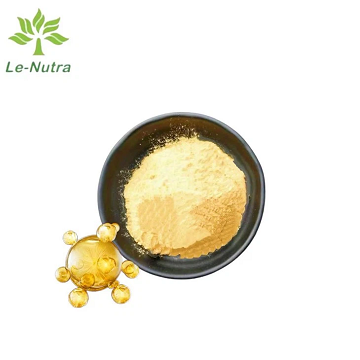
Hydroxypinacolone Retinoate (INCI: Hydroxypinacolone Retinoate) is an ester of all-trans retinoic acid and pinacol (3,3-dimethyl-1,2-butanediol). The molecular architecture confers exceptional chemical resistance against thermal-induced cis-trans isomerization and atmospheric photo-oxidation. Le-Nutra supplies both High-Purity Pure HPR Powder (>99.0%) and the industry-standardized HPR 10% Solution pre-solubilized in cosmetic-grade Dimethyl Isosorbide (DMI) for immediate cold-phase compounding.
| Parameter / Test Item | Pure HPR Powder Specification | HPR 10% Cosmetic Liquid Grade | Analytical Method |
|---|---|---|---|
| INCI Name | Hydroxypinacolone Retinoate | Hydroxypinacolone Retinoate (and) Dimethyl Isosorbide | PCPC Nomenclature |
| CAS Number | 893412-73-2 | 893412-73-2 / 5306-85-4 | Chemical Abstracts |
| Active Assay (HPLC) | ≥ 98.5% - 99.5% | 10.0% ± 0.5% Active Retinoid | Reversed-Phase HPLC |
| Physical Appearance | Light yellow to pale orange crystalline powder | Clear to light yellow oily liquid | Visual Inspection |
| Solubility Profile | Insoluble in water; soluble in lipophilic esters, DMI, ethanol | Completely miscible with oils, silicones, and lipid esters | OECD Test Guideline 105 |
| Heavy Metals (Pb, As, Hg, Cd) | ≤ 10 ppm total; Individual metals ≤ 2 ppm | ≤ 5 ppm total | ICP-MS |
| Residual Solvents | Complies with USP <467> / EP 5.4 Class 2 & 3 | Strictly controlled | Headspace GC-FID |
| Microbial Enumeration | Total Aerobic < 100 CFU/g; Yeast/Mold < 10 CFU/g | Total Aerobic < 10 CFU/g; Zero Pathogens | USP <61>/<62> / ISO 16212 |
| Optimal Finished Formulation pH | pH 5.0 – 7.0 | pH 5.0 – 7.0 | Potentiometric (10% aqueous) |
Molecular Photostability
Retinol degrades over 80% under standard UV-A/B exposure within 2 hours. HPR maintains upwards of 95% intact molecular structure under equivalent irradiation due to steric pinacol ester protection.
Immediate Gene Induction
In-vitro dermal fibroblast assays confirm that HPR stimulates cellular transcription and collagen I & III production with kinetics equivalent to tretinoin, outperforming slow-converting retinyl esters.
Sub-Irritation Profile
Human Repeat Insult Patch Testing (HRIPT) demonstrates near-zero erythema induction at active dosages up to 0.2% pure HPR (equivalent to 2.0% HPR 10% solution), avoiding skin barrier breakdown.
HPR vs Retinol vs Retinal: Head-to-Head B2B Comparison
A multi-dimensional performance matrix evaluating conversion steps, stability, formulation safety, and regulatory compliance.
| Evaluation Parameter | Hydroxypinacolone Retinoate (HPR) | Retinol (Pure Vitamin A) | Retinal (Retinaldehyde) |
|---|---|---|---|
| Enzymatic Conversion Requirement | Zero Steps (Direct RAR Agonist) | 2 Steps (Retinol → Retinal → Retinoic Acid) | 1 Step (Retinal → Retinoic Acid) |
| Relative Cutaneous Irritation | Very Low / Barrier Sparing | Moderate to Severe (Dermatitis common) | Moderate (Better than Retinol, higher than HPR) |
| Atmospheric & Thermal Stability | High (Stable at ambient temp & mild light) | Extremely Labile (Oxidizes rapidly to yellow/brown) | Unstable (Requires encapsulation / nitrogen purging) |
| Standard Recommended Usage Rate | 0.05% - 0.2% (Pure) / 0.5% - 2.0% (10% Solution) | 0.10% - 0.50% (Max 1.0% in high-tier OTC) | 0.05% - 0.15% |
| In-Bulk Color Stability in Finished Products | Maintains bright white/ivory cream appearance | Progressively shifts to deep amber / brown | Imparts intrinsic vivid yellow/orange tint |
| Regulatory Limits (EU SCCS Stance) | Not restricted under EU 2024/996 SCCS Retinol Caps | Capped at 0.05% Body Lotion, 0.3% Face Care (EU 2024) | Under active European regulatory monitoring |
| Manufacturing Cold-Process Suitability | Yes (HPR 10% readily dispersible <45°C) | Requires inert gas flushing & strict heating controls | Requires micro-encapsulation or specialized carriers |
| Formulation Overall Cost-in-Use | Cost-effective (No complex encapsulation needed) | Moderate raw material, high stabilization overhead | High raw material & liposome stabilization costs |
The Strategic Regulatory Edge: Under Commission Regulation (EU) 2024/996 amending Regulation (EC) No 1223/2009, the European Union has implemented stringent upper limits on pure Retinol, Retinyl Acetate, and Retinyl Palmitate (0.05% in body lotions, 0.3% in other leave-on and rinse-off products). Brands facing product reformulation dead-ends are actively pivoting to Hydroxypinacolone Retinoate HPR, which is free from these SCCS quota restrictions while providing dermatological efficacy equal or superior to high-dose retinol.
Formulation Advantages: Why Cosmetic R&D Chemists Specify HPR
Engineered to eliminate factory batch failures, extend commercial shelf-life, and delight modern skincare consumers.
Thermal & Photochemical Longevity
Traditional retinol drops significantly in potency under accelerated 40°C stability testing after 30 days. Hydroxypinacolone Retinoate maintains >92% active potency without nitrogen-purged hermetic vacuum pumps, reducing packaging development costs.
High Compliance for Sensitive Skin
The absence of free retinoic acid release avoids triggering pro-inflammatory cytokines (IL-1α, TNF-α) in epidermal layers. This enables brands to position anti-aging products specifically for rosacea-prone, compromised, or post-procedure skin.
Broad Ingredient Compatibility
Unlike standard Vitamin A which decomposes in the presence of acidic actives or oxidizers, HPR exhibits superior co-existence with Niacinamide, Oil-soluble Vitamin C (THD Ascorbate), Peptides, Centella Asiatica, and Ceramides for multi-benefit formulas.
Purity-Driven Aesthetics
Formulators often struggle with the strong yellow chromatic cast introduced by Retinaldehyde or oxidized Retinol. HPR allows the creation of elegant milky-white serums, crystal-clear oil concentrates, and pristine pearlescent day emulsions that meet discerning luxury beauty visual standards.
Simplified Manufacturing Logistics
When employing the 10% HPR Solution in DMI, formulators bypass challenging hot-phase dissolution. It can be directly stirred into the emulsion during cool-down (<45°C) under standard stainless-steel paddle agitation, significantly shortening production lead time.
Target Application Scenarios for Brand Portfolios
How leading skincare brands deploy HPR cosmetic ingredient across diverse skincare architectures.
Intensive Night Serums
Suggested Dosage: 1.0% – 2.0% (10% Solution)
Combined with low-molecular hyaluronic acid, squalane, and ectoin. Rebuilds extracellular matrix integrity, accelerates re-epithelialization, and visibly reduces deep wrinkle depth within 28 days.
Barrier-Gentle Creams
Suggested Dosage: 0.5% – 1.0% (10% Solution)
Formulated within biomimetic lamellar lipid bases alongside phytosterols and 5-ceramide complexes. Tailored for first-time retinoid consumers and dry, compromised skin barriers.
Periorbital Eye Elixirs
Suggested Dosage: 0.2% – 0.5% (10% Solution)
The non-irritating nature of HPR makes it ideally suited for the thin, delicate periorbital zone to target dynamic crow's feet, micro-ptosis, and hyperpigmentation without stinging or tears.
Blemish & Pore Clarifying
Suggested Dosage: 0.8% – 1.5% (10% Solution)
Paired with 2.0% Salicylic Acid or Zinc PCA. Normalizes folliculair follicular keratinocyte desquamation, dissolves microcomedones, and regulates excessive sebum production without redness.
Comprehensive HPR Formulation Development Guide
Practical benchwork parameters covering HPR solubility, thermodynamic limits, stabilizer synergies, and process protocol.
Technical Processing Protocols
-
Solubilization & Carrier Selection:
Pure HPR is completely lipophilic. Dissolve pure crystalline powder in medium-polarity esters such as C12-15 Alkyl Benzoate, Caprylic/Capric Triglyceride, Isononyl Isononanoate, or polar solvents like Dimethyl Isosorbide (DMI). When utilizing the pre-dissolved 10% solution, no carrier heating is required.
-
Addition Phase & Thermal Thresholds:
Always incorporate HPR during the cool-down phase (Phase C) of emulsification, ideally below 45°C (never exceed 50°C for extended periods). For cold-process serum formulas, HPR 10% solution can be added directly into the pre-neutralized polymer solution under moderate agitation.
-
Finished Formula pH Buffer:
Maintain the system pH between 5.0 and 7.0. Avoid formulating in ultra-acidic ranges (pH < 4.0) to prevent premature hydrolysis of the ester bond back into pinacol and free retinoic acid.
-
Antioxidant Stabilization Architecture:
Although HPR demonstrates superior photostability compared to retinol, formulating with 0.1% - 0.2% Tocopherol (Vitamin E), 0.05% BHT or biological alternatives like Rosemary Leaf Extract drastically extends shelf stability under real-world air exposure.
Solubility & Dispersion Index
| Water | Practically Insoluble (<0.001 mg/mL) |
| Dimethyl Isosorbide (DMI) | Freely Soluble (>200 mg/mL) |
| C12-15 Alkyl Benzoate | Soluble (>80 mg/mL) |
| Caprylic/Capric Triglyceride | Soluble (>60 mg/mL) |
| Ethanol (96%) | Sparingly Soluble (approx. 25 mg/mL) |
| Glycerin / Butylene Glycol | Insoluble (Requires co-solubilizers) |
Dos and Don'ts for Bench Formulators:
• DO utilize chelating agents (e.g., Disodium EDTA or Sodium Phytate at 0.05% - 0.1%) to sequester trace transition metal ions that catalytically accelerate lipid peroxidation.
• DO test in amber glass, opaque airless bottles, or high-barrier multi-layer tubes to safeguard against long-term direct sunlight UV-A irradiation.
• DO NOT submit bulk HPR mixture to high-shear rotor-stator homogenization for prolonged intervals above 50°C.
Xi’an Le-Nutra Ingredients Inc: Global API & Cosmetic Raw Material Manufacturer
Your strategic synthesis partner delivering verifiable purity, international regulatory compliance, and scalable capacity.
Xi’an Le-Nutra Ingredients Inc is dedicated to the research, production, and marketing of natural, healthy, and innovative raw materials widely used in the fields of Nutraceuticals, Foods and Beverages, and Cosmetics & Personal Care Products. We boast a broad product range that includes Botanical Extracts, Plant Proteins, protein hydrolysate actives, moisturizing agents, emollients, and advanced cosmetic actives such as Hydroxypinacolone Retinoate HPR.
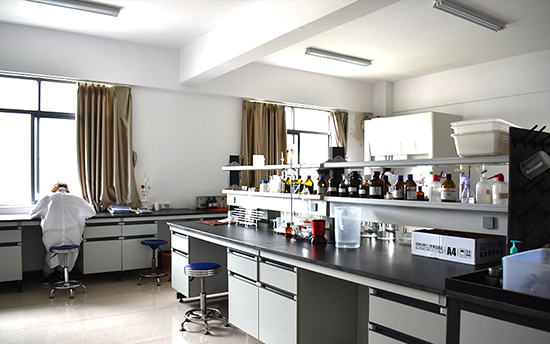
Our state-of-the-art facility covers 60,000 square meters with an annual raw material production capacity exceeding 3,000 metric tons. Equipped with 6 multifunctional production lines and varied industrial-scale extraction tanks, we process a broad spectrum of plant and synthetic chemical derivatives with diversified purities and commercial applications.
With over 10 years of export experience and world-renowned customer cooperation cases, we have accumulated expert knowledge in global compliance. Our high-quality ingredients and professional service have been highly recognized by clients across more than 40 countries, including the USA, Canada, UK, France, Germany, Switzerland, Spain, Netherlands, Belgium, Sweden, Thailand, Philippines, Japan, Korea, Russia, Singapore, Indonesia, and Brazil.
Le-Nutra focuses on providing innovative raw materials and tailored solutions for its business partners, backed by strong R&D capability and in-depth cosmetic and personal care industry expertise. We maintain close cooperation with leading domestic and international universities and scientific research institutes. Our dedicated Research and Development (R&D) department comprises experienced scientists, chemical engineers, and analytical specialists committed to advancing bioactive cosmetics, small-molecule peptides, and ester synthesis technologies.
Frequently Asked Questions on Hydroxypinacolone Retinoate
Detailed technical answers for formulation engineers, regulatory associates, and procurement specialists.
Accelerate Your Retinoid Formulation with Le-Nutra
Request comprehensive regulatory dossiers (TDS, COA, HPLC Methodologies, HRIPT Clinical Data), order pilot-scale evaluation samples, or schedule a direct consultation with our cosmetic chemistry engineering team.