


Hydrolysed Oat Protein vs Regular Oat Protein: Why Hydrolysed Variants Excel in Skincare and Haircare?
In recent years, oat-derived ingredients have surged in popularity within the global personal care market. Hydrolysed Oat Protein is progressively replacing traditional oat protein as the core active ingredient favoured by brands. Whether in sensitive skin creams, infant care products, or premium restorative shampoos, the market perception of ‘oat soothing’ remains indispensable.
For brands specialising in hair care, skincare, bath products, infant care, or premium spa offerings, selecting the appropriate oat protein goes beyond mere ingredient choice. It is pivotal to product positioning, efficacy intensity, and market competitiveness. This article will provide a concise yet professional overview of the fundamental differences and core efficacy distinctions between the two.
I. Why has oat protein become so popular in skincare and haircare?
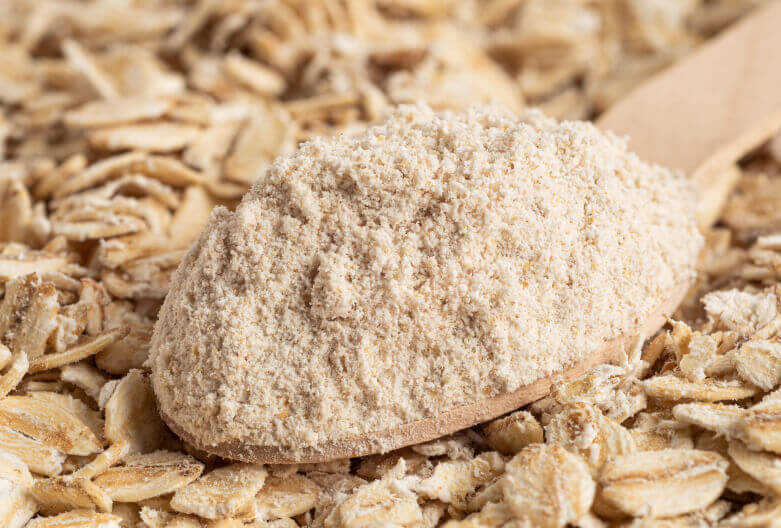
In recent years, within the global skincare and haircare market, keywords such as ‘natural, safe, and gentle’ and ‘suitable for sensitive skin’ have evolved from trends into core consumer demands. Against this backdrop, oats have distinguished themselves as a star ingredient in the ‘Clean Beauty’ sector, owing to their long-standing tradition of soothing properties and scientifically validated efficacy.
-
Oats are inherently rich in bioactive compounds, demonstrating exceptional soothing and anti-irritant properties. They effectively strengthen the skin barrier and exhibit broad skin tolerance, making them particularly suited for fragile and sensitive skin conditions.
However, translating these theoretical ‘oat benefits’ into perceptible effects within skincare and haircare products is no simple feat. Conventional oat proteins possess large molecular weights, hindering effective absorption and utilisation by skin or hair. Their active potential often remains “locked in”, unable to be fully harnessed.
This leads us to the key player in achieving this breakthrough: hydrolysed oat protein. Through advanced hydrolysis technology, large oat protein molecules are precisely broken down into smaller peptide fragments and amino acids. This transformation not only significantly enhances the ingredient's solubility and stability but, crucially, markedly boosts its skin penetration and bioavailability. This allows its core benefits—soothing repair, barrier reinforcement, and moisture retention—to be deeply released, truly uniting ‘natural gentleness’ with ‘high-performance repair’. Consequently, the surge in popularity of hydrolysed oat protein is the inevitable outcome of the market's pursuit of ‘smarter natural ingredients’.
II. Regular Oat Protein vs Hydrolysed Oat Protein: Structural Differences Determine Everything
The key to efficiently delivering oats' natural benefits to skin and hair lies not in the raw material itself, but in the molecular “form”. The fundamental distinction between regular oat protein and hydrolysed oat protein stems precisely from their entirely different structures, which in turn determine their completely distinct application efficacy.
Regular Oat Protein
As a naturally derived, intact protein extracted from oat kernels, it possesses a relatively large molecular weight and a complex, complete structure. Its core advantages lie in its natural origin and fundamental safety profile. However, its application limitations are pronounced: its macromolecular structure exhibits poor permeability into skin and hair surfaces, hindering deep penetration of its benefits; it demonstrates moderate compatibility within formulations, prone to precipitation that compromises product appearance and stability; and its active properties are relatively difficult to harness directly.
Hydrolysed Oat Protein
This represents an upgraded form of ordinary oat protein, precisely cleaved through targeted enzymatic hydrolysis. This process breaks it down into smaller molecular fragments—typically peptides and amino acids ranging between 300–3000 Dalton. This structural leap brings fundamental changes: it achieves complete water solubility, enabling seamless integration into diverse formulation systems; its chemical stability is significantly enhanced, reducing susceptibility to inactivation; most crucially, its diminutive molecular weight enables effortless penetration through the skin's stratum corneum or hair shaft fibres. This substantially elevated bioavailability ensures its core benefits—soothing, repairing, and strengthening—are efficiently absorbed and utilised.
III. Skincare Efficacy Comparison: Why is Hydrolysed Oat Protein More Effective?

Structure determines function. When the hydrolysation process ‘unlocks’ the macromolecules, their skincare efficacy undergoes a qualitative shift from ‘surface action’ to ‘deep intervention’. This distinction manifests across three key dimensions:
1. Moisturising Capacity: From ‘Water-Sealing Barrier’ to ‘Active Hydration’
The molecular structure of ordinary oat protein dictates its mode of action: it primarily forms a hydrophilic protective film on the skin's surface, reducing moisture evaporation through physical means – an ‘exogenous hydration’ approach.
In contrast, the small peptide molecules in hydrolysed oat protein can directly penetrate the stratum corneum. Acting as components or precursors of the Natural Moisturising Factor (NMF), they actively enhance the skin's intrinsic water-holding capacity, achieving ‘endogenous hydration’.
2. Repairing Power and Sensitive Skin Compatibility: From ‘Gentle Soothing’ to ‘Active Repair’
The inherent soothing properties of oats (primarily derived from beta-glucans) form a shared foundation. However, hydrolysis technology unlocks superior repair capabilities:
The small peptide fragments produced through hydrolysis exhibit a structure more ‘affinity-aligned’ with the intercellular lipids of skin cells. This enables more precise binding to the skin barrier, actively participating in lipid reorganisation and structural reinforcement.
This signifies that it not only passively ‘soothes’ irritation but actively promotes barrier self-repair. Clinically, this manifests as:
Significantly elevated skin tolerance thresholds
Swifter, more effective reduction of redness and stinging sensations
Deep improvement in dryness and flaking caused by barrier damage
This is precisely why virtually all premium infant creams, sensitive skin emergency treatments, and long-term repair products prioritise hydrolysed oat protein over standard oat protein—it delivers not merely a ‘gentle feel’, but verifiable barrier repair efficacy.
3. Texture and Formulation Compatibility: From ‘Basic Ingredient’ to ‘Sensory-Friendly Component’
The skincare experience directly influences users' willingness to maintain consistent use. At this level, the differences between the two are equally pronounced:
Conventional oat protein, due to its larger molecular size, may impart a slight ‘sticky’ or film-like sensation in formulations, compromising the application experience.
Fully water-soluble hydrolysed oat protein, however, exhibits outstanding formulation properties:
Rapid absorption, lightweight texture, and no sticky residue post-application.
Seamless compatibility with other star active ingredients (such as hyaluronic acid, panthenol, niacinamide, etc.), synergistically enhancing efficacy without causing precipitation or compromising activity.
Imparts a silky, luxurious feel to products, significantly elevating overall sensory ratings.
IV. Comparison of Hair Care Effects
-
1. Repair Depth: From ‘Coating’ to ‘Penetration and Bonding’
Due to its large molecular weight, ordinary oat protein primarily adheres to the outer cuticle layer, forming a coating film. This provides temporary smoothness but easily washes off or rubs away, functioning as a ‘surface physical coating’ that fails to address core hair damage. In contrast, the small peptide chains of hydrolysed oat protein can penetrate into the damaged hair shaft. They can:
Fill cavities in the cortex layer caused by heat styling, colouring, and sun exposure. Form hydrogen bonds and other bonds with the keratin chains within the hair shaft, reinforcing the fibre structure from within. This ‘internal reinforcement’ repair method is particularly effective for brittle, split-ended, porous, and chemically damaged hair, achieving strength from the inside out.2. Strengthening Effect: From ‘Perceived Strength’ to ‘Measured Strength’
This deep penetration delivers tangible improvements in mechanical properties. Industry-published instrumental test data indicates that hair strands treated with specific hydrolysed oat proteins exhibit a significant 10–20% increase in tensile strength.
This translates to:
- Substantially reduced breakage during daily combing and styling;
- Enhanced overall hair resilience, making strands less susceptible to external damage;
- Fundamental improvement in tangling caused by fragility, resulting in a qualitative leap in manageability.3. Sensory Enhancement: From ‘Rough Adhesion’ to ‘Uniform Film Formation’
Molecular size also dictates surface behaviour:
Conventional oat protein may adhere unevenly, resulting in a relatively coarse texture with limited shine enhancement and a tendency towards heaviness.
The smaller molecules of hydrolysed oat protein form an ultra-thin, uniform, and translucent protective film on the hair surface, delivering:
Superior lubricity for a smooth, non-greasy feel.
Significantly enhanced natural hair shine with more even light reflection.
Exceptional anti-frizz and cuticle-smoothing effects, presenting hair with a sleek, lustrous, and healthy appearance.
V.FAQ
Q: What is the primary distinction between hydrolysed oat protein and standard oat protein?
A: The core difference lies in ‘molecular weight’ and ‘absorption efficiency’.
Hydrolysed oat protein undergoes enzymatic processing, resulting in smaller molecular weights (300–3000 Da) that can penetrate the stratum corneum and hair shaft;
whereas standard oat protein typically consists of larger molecules that remain on the surface, providing only basic moisturisation.
Q:For which product types is hydrolysed oat protein suitable?
A:Its applications are exceptionally broad, particularly suited to:
Sensitive skin repair skincare
Infant creams and bath products
Post-aesthetic treatment recovery products
Shampoos / Conditioners
Leave-in hair serums
Highly moisturising functional emulsions and essences
Men's refreshing skincare (rapid absorption, non-greasy)
If your formulation targets ‘gentle, restorative, soothing, hydrating, lightweight’ properties, hydrolysed oat protein is an excellent choice.
Q: Can hydrolysed oat protein be combined with ingredients like hyaluronic acid, panthenol, or ceramides?
A:Absolutely, and the synergistic effects are enhanced:
Hyaluronic acid: Boosts long-lasting hydration
Panthenol: Strengthens restorative and soothing properties
Ceramides: Strengthen the skin barrier
Glycerin / Propylene Glycol: Improve absorption and spreadability
It demonstrates excellent compatibility within formulation systems, which is why formulators consistently favour its long-term use.
Q: Does hydrolysed oat protein affect product viscosity or colour?
A: Generally not. It typically appears as a pale yellow liquid or powder, readily dissolves in water, and does not significantly impact: product colour, viscosity, or stability. This is particularly crucial for premium brands requiring consistent product appearance.
Q: What is the shelf life of hydrolysed oat protein? Does it require light protection?
A:Typically, the shelf life is 24 months. The hydrolysed form offers greater stability. General recommendations include: storing away from light at room temperature, avoiding high temperatures and exposure to air. Liquid formulations require a robust preservative system; powdered forms facilitate easier transport and storage.
In today's fiercely competitive skincare and personal care market, brands seeking genuine differentiation no longer compete on mere ‘naturalness’ but on whether ingredients deliver greater efficacy, stability, and skin absorption. While ordinary oat protein is naturally derived, its practical benefits struggle to meet modern consumers' heightened expectations for ‘repair, soothing, and deep hydration’. Hydrolysed oat protein, with its smaller molecular weight, enhanced penetration, and superior skin feel, is emerging as the mainstream choice globally for Clean Beauty, sensitive skin care, infant care, and premium hair products. As a long-term supplier of this ingredient, Le-Nutra Ingredients understands precisely what brands require when developing new products: consistent quality, reliable supply, global regulatory compliance, quantifiable efficacy, and market-recognised selling points.
Whether you are developing sensitive skin ranges, repair serums, infant formulations, or premium haircare lines, selecting hydrolysed oat protein positions your products to lead in sensory experience, efficacy, and market competitiveness. Should you be evaluating formulation options, ingredient specifications, or supply chain partnerships, we can provide detailed technical documentation, Certificates of Analysis (COA), samples, and quotations. We welcome your enquiries at any time.
📚 References: