


What distinguishes Acetyl Hexapeptide-1 from conventional brightening ingredients?
Within today's highly homogenised brightening and skin-lightening market, niacinamide and vitamin C have long transitioned from unique selling points to foundational ingredients. While still effective, they struggle to underpin the technical narratives of premium product lines. Concurrently, consumer perceptions of whitening are evolving: shifting from a singular focus on ‘fading spots and achieving whiteness’ towards more fundamental concerns—does the skin possess the capacity to resist photo-damage? Can it mitigate the risks of long-term photo-ageing?
Against this backdrop, brands urgently require a novel active ingredient that not only delivers efficacy but also establishes technical barriers and underpins a premium narrative logic. Acetyl Hexapeptide-1 has entered the mainstream spotlight precisely to address this demand. Unlike traditional whitening ingredients that rely on inhibition or blocking, it represents an entirely new direction—participating in the skin's own regulatory systems through biomimetic mechanisms. This distinction manifests not only in efficacy but also in the product's long-term value and commercial premium potential.
I. The Practical Dilemma of Whitening 1.0: Effective, Yet Increasingly Competitive

Before discussing Acetyl Hexapeptide-1, let us revisit the industry's most familiar logic.
The core approach of traditional skin-brightening ingredients largely follows three pathways:
Either reduce melanin production, prevent its migration upwards, or accelerate its clearance.
For instance, ingredients like arbutin and kojic acid directly target key stages of melanin synthesis, aiming to reduce output at its source. Niacinamide, meanwhile, functions more like ‘traffic control,’ limiting pigment transport to the epidermis. Alpha hydroxy acids (AHAs) and salicylic acid, on the other hand, accelerate metabolism to swiftly clear existing pigmentation.
-
These approaches are not without efficacy; indeed, they underpinned the early development of the entire skin-lightening market. Yet limitations gradually emerged:
Risks of irritation, stability challenges, restricted usage scenarios, and unsuitability for sensitive or post-procedural skin have progressively curtailed their application in premium and repair-focused skincare lines.More significantly, these pathways largely remain reactive interventions rather than participating in the skin's initial assessment and response to photostimulation.
II. Core Approach: Engagement, Not Suppression
Hexapeptide 1 (commonly marketed as Melitane™) does not achieve its skin-brightening effects by ‘suppressing skin reactions’. Its design philosophy draws upon the skin's own physiological mechanisms.
Within the skin, melanocyte-stimulating hormone (α-MSH) serves as a crucial signalling molecule regulating pigmentation and photoprotection. Upon UV exposure, α-MSH binds to the MC1-R receptor on melanocyte surfaces, triggering a cascade of responses linked to pigment synthesis, photoprotection, and repair.
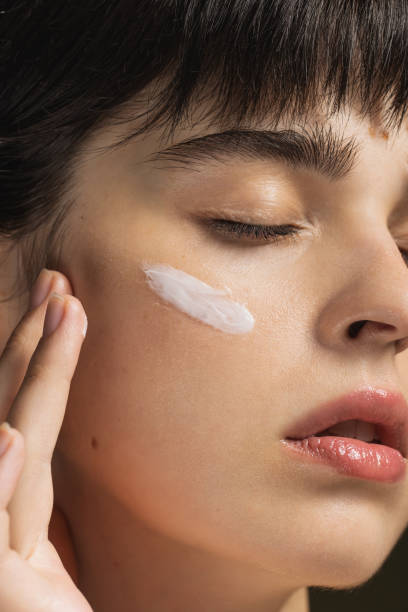
Melitane is a short peptide engineered through biomimetic design based on this signalling pathway. Functionally mimicking α-MSH's signalling characteristics, it participates in MC1-R-related regulatory processes, thereby influencing the direction of skin responses at an earlier stage.
Unlike direct tyrosinase inhibition, this approach functions more like guiding the skin's “response mechanism” rather than forcibly halting it. The outcome is not rapid pigment reduction, but rather a more orderly and stable melanogenesis process, diminishing dullness and unevenness caused by disordered accumulation.
This explains why, in practical applications, Melitane Peptide 98% is predominantly utilised for skin brightening, tone evening, and long-term complexion management—rather than positioning itself as an instant ‘whitening’ solution.
III. From Skin Tone to Photoprotection: Differing Functional Boundaries

Another frequently overlooked aspect is that the MC1-R signalling pathway is not solely associated with melanin production. It also participates in the skin's stress and repair responses following ultraviolet radiation exposure.
By mimicking this pathway through bionic mechanisms, Acetyl Hexapeptide-1 can to some extent support the skin's inherent defence system, helping to reduce the risk of cumulative damage caused by light exposure. This explains why it demonstrates superior compatibility in sunscreen synergists, post-sun repair formulations, and products for sensitive skin.
Fundamentally, it is not a ‘bleaching’ ingredient but rather a synergistic regulator of skin tone management and photoprotection.
IV. Why is it more readily adopted by premium brands?
-
Our practical discussions with brand clients reveal that Acetyl Hexapeptide-1's appeal extends beyond efficacy data.
On one hand, it aligns with the current direction of efficacy-driven skincare towards ‘gentle, long-term, and sustainable’ approaches. On the other, its mechanism of action is clear, facilitating scientific brand narratives while minimising risks of irritation or regulatory non-compliance.
More significantly, it offers a distinct technical pathway for products, clearly differentiating them from traditional whitening approaches. This is particularly crucial for establishing a premium brand image and pricing structure.
V.Commercial Value Proposition: It Transforms Your Product Positioning
For brands and independent retailers, hexapeptide 1 transcends its role as a mere formulation ingredient; it serves as a content and positioning tool.
Firstly, it elevates product narratives from ‘skin-lightening’ to ‘biological-grade light defence’, shifting sun protection and brightening beyond mere physical barriers to incorporate the concept of enhancing the skin's inherent defence capabilities.
Secondly, for post-aesthetic procedures or highly sensitive skin types, it offers a gentler approach to brightening, avoiding the risk of post-inflammatory hyperpigmentation associated with potent irritants.
Furthermore, as a synthetic short peptide, its stability within complex formulations significantly reduces post-sale issues like discolouration or odour changes, making it more suitable for large-scale production and sustained sales.
Q1. Can Acetyl Hexapeptide-1 completely replace traditional brightening ingredients?
A: It is generally not recommended to replace them entirely. It is more suitable for long-term, gentle brightening and skin tone management formulations. In practical applications, it is often combined with ingredients such as niacinamide and antioxidants to balance immediate results with long-term, stable effects.
Q2. Is the whitening speed of Hexapeptide-1 slower than traditional ingredients?
A: Perceptibly, it does not pursue rapid whitening. Instead, it gradually improves skin tone evenness and translucency by regulating skin signals, making it more suitable for products emphasising long-term usage experience.
Q3. Is it suitable for sensitive skin products?
A: As it does not rely on potent enzyme inhibition mechanisms, it is generally more compatible with formulations for sensitive skin when used appropriately. Consequently, it is frequently incorporated into brightening products for sensitive skin or post-aesthetic treatment recovery formulations.
Q4. For which product categories is Melitane Peptide 98% most suitable?
A: It is well-suited for brightening serums, illuminating products for sensitive skin, post-sun protection recovery, and post-aesthetic treatment skin tone management skincare.
Q5. Is it suitable for long-term use?
A: Its mechanism of action makes it particularly well-suited for products intended for prolonged, daily application. This is one key reason for its adoption in premium, high-performance skincare formulations.
Q6. What is its primary functional role within formulations?
A: It is primarily positioned as an active ingredient for brightening, evening out skin tone, and managing complexion, rather than as a potent, instant whitening agent.
The emergence of Acetyl Hexapeptide-1 signifies the skincare industry's evolution from “single-purpose whitening” towards new heights of “biological regulation and cellular protection”. In today's highly homogenised market, selecting this cutting-edge ingredient with dual DNA repair and photoprotective benefits is key to achieving product differentiation and market breakthrough.
However, transforming this high-performance biomimetic peptide into a mature market hit requires a strategic partner with deep expertise in R&D, regulatory compliance, and manufacturing.
Xi'an Le-Nutra specialises in supplying premium Melitane Peptide 98% Acetyl Hexapeptide-1 and other core active ingredients to global cosmetics brands, medical aesthetics institutions, and health industries. Headquartered in Xi'an, Shaanxi Province, China, we leverage extensive expertise in plant extraction and biosynthetic technologies to provide not only raw materials but also end-to-end support from laboratory to market.
For product technical specifications, experimental data samples, or bespoke quotations, please do not hesitate to contact us.
Let us collaborate to unlock the immense potential of biomimetic peptide technology, delivering more technologically advanced skincare experiences for your clients and creating new value at the intersection of marine nutrition and biotechnology.
📚 References: