The global nutrition market keeps pushing for ingredients that absorb faster, are easier to formulate, and come with solid evidence behind them. Grand View Research put the global dietary supplements market at around USD 177.5 billion in 2023, and its report points to strong growth through 2030. That kind of growth is great news for Peptide Hydrolysate suppliers—but it also makes sourcing riskier.
A glossy brochure? It doesn’t prove consistent quality. Buyers need to dig into raw material origin, enzymatic processing, molecular-weight distribution, solubility, and batch-to-batch results. The FAO report, Dietary Protein Quality Evaluation in Human Nutrition, reminds us how much amino acid composition and digestibility matter when you’re assessing protein quality. Those same principles come into play when comparing hydrolysates for sports nutrition, medical nutrition, and functional foods.
Details matter.
With a reliable supplier, you should expect current Certificates of Analysis, microbiological limits, heavy-metal results, allergen statements, and traceability records. Independent testing is worth it, too—especially when specs touch peptide profiles or bioactive claims. Manufacturing systems aligned with HACCP, ISO 22000, or applicable cGMP expectations can make supplier evaluation stronger. But certification by itself isn’t enough, honestly. An audit can still turn up weak documentation, slow corrective actions, or fuzzy change-control procedures.
This guide walks through seven practical tips for choosing a Peptide Hydrolysate supplier. It looks at technical capability, quality systems, regulatory readiness, customization, supply continuity, communication, and total cost. Not every decision will be perfect. Price, performance, and delivery reliability almost never line up perfectly. A thoughtful buyer should test samples, push back on unsupported claims, and review real production records before signing a long-term agreement.

Before comparing suppliers, define what the hydrolysate must do. Is it intended for a sports drink, nutrition formula, skincare product, or laboratory process? Each application requires different peptide size, solubility, taste, and purity targets. Write the goal in practical terms. For example, “dissolves within 30 seconds at 25°C” is more useful than “high quality.” Record dosage, pH, processing temperature, packaging conditions, and intended users.
If your project needs Wheat Protein Hydrolysate, specify its source, enzymatic process, allergen controls, moisture, ash, and peptide distribution. Ask for batch-specific certificates, analytical methods, traceability records, and stability data. Request samples that match production conditions, not only attractive laboratory samples. Test viscosity, odor, color, dispersibility, and storage performance. Keep acceptance limits measurable. “Good taste” needs a defined sensory scale.
We once used a broad protein specification and overlooked heat exposure during filling. The powder performed well in a beaker, then formed sediment in the finished drink. That mistake changed our checklist. Now we compare pilot batches, documentation quality, response time, and consistency across lots. A lower price cannot repair an unsuitable peptide profile. Requirements may change as testing reveals weaknesses. Record every revision and its reason.
A capable supplier should explain its hydrolysis process clearly, not hide behind broad technical language. Ask about raw material selection, enzyme control, filtration, drying, and molecular-weight distribution. Experienced specialists can connect these details to your application. They should also explain expected variation between batches.
Check the manufacturing site, available equipment, and realistic annual capacity. A supplier may produce excellent laboratory samples but struggle with commercial volumes. Request production records, batch traceability, certificates of analysis, and relevant quality-system documentation. Review testing for identity, purity, moisture, microbial limits, and heavy metals. Independent verification is valuable. Documents alone are not enough.
Look for industry experience that matches your intended use, such as nutrition, cosmetics, or research materials. Ask for anonymized case examples, scale-up history, and evidence of consistent delivery. A strong technical team should answer practical questions without rushing you. Communication matters during specification changes, deviations, and shipment delays.
Test their responsiveness.
Evaluate whether the supplier maintains backup equipment, qualified personnel, and continuity plans. Confirm minimum order quantities, lead times, sample policies, and storage conditions before signing an agreement. Be careful with impressive capacity claims that lack supporting records. Even reliable suppliers can have weak points. Your review should identify them early, rather than assume every polished presentation reflects dependable manufacturing.
When choosing a peptide hydrolysate supplier, begin with the raw material.
Tip 1: Ask for the source, species, and processing history.
Tip 2: Review recent certificates of analysis for protein content, moisture, microbial limits, and heavy metals. A polished document is not enough. Compare results across several production lots. Small differences can reveal weak process control.
Tip 3: Check traceability from incoming material to final package. Each lot should connect to supplier records, test results, and production dates.
Tip 4: Request a clear allergen and contamination control procedure. Look for labeled storage areas, sealed containers, and documented cleaning checks. Details matter. I once found that a supplier’s lot code was difficult to match with its test report. That gap deserved further questioning.
Tip 5: Examine production controls, including temperature monitoring, filtration, drying, and batch release criteria.
Tip 6: Ask how deviations are investigated and corrected. Honest suppliers can discuss failures without hiding behind general statements.
Tip 7: Review audit practices, laboratory qualifications, and sample retention periods. Independent testing can confirm identity and purity, but it cannot replace reliable records. A site visit may reveal practical weaknesses, such as handwritten logs or poorly separated materials. These findings should not automatically disqualify a supplier, but they should affect your risk assessment and purchasing decision.
A reliable supplier should explain how each batch is tested. Ask for HPLC results, peptide-size distribution, and amino acid profiles. LC-MS can confirm identity when the material has a complex composition. Microbiological testing should cover total counts, yeast, mold, and relevant pathogens. Heavy metals and residual solvents also need documented limits. Do not accept a generic certificate of analysis.
Certifications require careful review. Check whether the certificate covers the actual manufacturing site, product category, and current production process. Useful systems may include GMP, HACCP, ISO 22000, or ISO 9001, depending on the intended application. In supplier audits, I look for traceable batch numbers, controlled storage records, and signed laboratory results. A polished certificate is not proof by itself. The scope matters.
Regulatory compliance depends on the destination market and final use. Request allergen statements, origin details, contaminant controls, and change-notification procedures. Ask how the supplier handles deviations and product recalls. Their answers should be specific, not rehearsed. I once treated fast document delivery as a sign of quality. That was a weak assumption. A slower supplier with transparent testing may be safer. Review stability data, packaging conditions, and sample-to-batch consistency before approving a long-term supply arrangement.
Choosing a peptide hydrolysate supplier requires more than comparing prices. Start by checking product purity through a recent certificate of analysis. The report should show peptide content, moisture, ash, microbial limits, and heavy metal results. Ask whether independent laboratories verify these values. Request the testing method, not just a printed number. Small details matter.
Consistency is equally important. Compare several production lots, not one attractive sample. Review amino acid profiles, molecular weight distribution, solubility, color, and odor.
For Pea Protein Hydrolysate Powder, examine dispersion in water at your intended temperature. A smooth powder may still perform poorly in a beverage.
Batch records and retained samples can reveal gradual changes. I once focused too heavily on purity and underestimated mixing behavior. That was a useful mistake.
Customization should match your process. Discuss hydrolysis level, flavor, particle size, packaging, and target peptide range. A capable supplier should explain what can change and what cannot.
Technical support should include formulation guidance, stability testing, storage advice, and responsive troubleshooting. Ask for a pilot batch before approving full production. Good support sounds specific, not promotional. Be cautious when answers remain vague.
Supplier documentation should also support quality systems and applicable food regulations in your market. A clear communication record can prevent costly misunderstandings later.
Choosing a peptide hydrolysate supplier requires more than comparing a price list. In pilot projects, I have seen low quotes change after freight, testing, or special packaging. Cheap is not always cheap. Request a complete landed-cost sheet for the required grade, concentration, documentation, and delivery terms. Compare like with like. Ask whether prices remain valid for 30, 60, or 90 days. A supplier should explain adjustments clearly, not hide them inside vague service fees. Review the minimum order quantity against your actual production plan. A large MOQ can lock cash in storage and increase expiry risk. A smaller trial lot may cost more per kilogram, but it can reveal solubility, odor, color, and batch consistency before scale-up.
Lead time deserves written detail. Ask for standard production time, testing time, dispatch time, and realistic delays during peak seasons. For Keratin Hydrolysate, confirm the specification, source description, hydrolysis range, and certificate package before placing an order. Request recent certificates of analysis and sample records, then check whether values match your internal methods. Evidence matters. Supply reliability is broader than having inventory today. Examine backup raw-material channels, batch-release procedures, complaint handling, and communication during disruptions. A supplier who reports a delay early is safer than one who promises everything. Ask for references from comparable users when possible. I once treated fast replies as proof of reliability; that was a poor shortcut. Response speed helps, but consistent batches and honest forecasts matter more. Leave room for doubt, and test the first shipment before depending on it.
7 Tips to Choose a Peptide Hydrolysate Supplier?
Requesting samples and auditing a supplier should happen before price negotiations. A polished brochure proves very little. Ask for three production lots, not one laboratory sample. Compare solubility, odor, color, peptide distribution, moisture, ash, and microbial results. For a Protein Hydrolysate 20 specification, request the testing method behind the stated protein content. Check whether the method measures true protein or nitrogen indirectly. Small differences can affect formulation performance.
Samples should arrive with batch numbers, certificates of analysis, allergen declarations, and stability data. Test them through an independent laboratory when the material supports critical applications. WHO estimates that contaminated food causes 600 million illnesses and 420,000 deaths each year, with children under five representing 30% of those deaths (WHO, Food Safety Fact Sheet, 2024). That figure makes supplier verification more than paperwork. It is risk control.
Audit the facility, remotely or in person. Observe water treatment, cleaning records, calibration labels, employee hygiene, storage temperatures, and complaint handling. Review traceability by selecting one lot and tracing its raw materials forward and backward. Ask for recent deviations and corrective actions. A supplier that hides every problem may be less trustworthy than one showing controlled improvements. The uncomfortable part: a successful sample does not guarantee consistent production. I would score evidence, not confidence. Recheck critical specifications after scale-up, because reliability is often lost between the sample room and the manufacturing line.
| Tip | Evaluation Dimension | Information or Sample to Request | Verification Criteria | Audit or Sample Check | Decision Signal |
|---|---|---|---|---|---|
| 1 |
Define the product specification Before comparing suppliers, document the intended use and required quality attributes. |
Product name and source material Intended application Target molecular-weight distribution Protein or peptide content Solubility, color, odor, moisture, and pH requirements |
The supplier can provide a product specification with clear test methods and acceptance limits. Molecular-weight distribution should be reported using a stated analytical method, such as size-exclusion chromatography. | Compare the specification with the intended formulation and test the sample under actual processing conditions, including dissolution, heat exposure, and storage. |
Required Do not proceed if critical specifications are undefined. |
| 2 |
Check quality-system maturity Evaluate whether quality is controlled consistently from raw material receipt to shipment. |
Quality certificates Manufacturing-site scope Change-control procedure Deviation and CAPA records Complaint and product-recall procedures |
The supplier should demonstrate a documented quality-management system, controlled procedures, trained personnel, traceable records, and a defined process for handling deviations and corrective actions. | During the audit, review document control, batch-record completion, training records, calibration records, and recent corrective-action examples with confidential details removed. |
Required Weak document control indicates elevated supply risk. |
| 3 |
Verify food-safety and manufacturing controls Confirm that the facility controls biological, chemical, and physical hazards. |
HACCP or food-safety plan GMP-related procedures Allergen-control policy Sanitation and pest-control records Environmental-monitoring program, where applicable |
Hazard controls should cover raw materials, processing steps, packaging, storage, and transport. Allergen status and cross-contact controls must be clearly documented. | Inspect material-flow separation, hygienic zoning, equipment-cleaning practices, warehouse conditions, and the handling of rejected or returned materials. |
Required Uncontrolled cross-contamination or sanitation gaps are major concerns. |
| 4 |
Review the certificate of analysis Assess whether each batch can be verified against agreed requirements. |
A recent lot-specific CoA Test methods and specifications Batch number and production date Expiry or retest date Authorized quality-release signature |
The CoA should identify the tested lot and report relevant parameters, such as identity, protein or peptide content, moisture, ash, microbiological results, and contaminants applicable to the product. | Cross-check the CoA against the original laboratory report, test method, sample identity, and retained-sample procedure. Confirm that results are not merely copied from a generic template. |
Required Generic or incomplete CoAs should not be accepted for final approval. |
| 5 |
Request samples and conduct independent testing Use representative samples to compare performance and verify supplier data. |
At least one production-lot sample Sample quantity sufficient for repeat testing Sample storage and shipping conditions Retained-sample information Packaging and labeling details |
The sample should be traceable to a production lot and arrive in intact, correctly labeled packaging. Independent results should be evaluated against the agreed specification and method variability. | Test identity, moisture, protein or peptide content, molecular-weight profile, microbiological quality, relevant heavy metals, and other application-specific attributes through a qualified laboratory. |
Required Approve only when documentation and independent results are consistent. |
| 6 |
Evaluate supply continuity and traceability Confirm that the supplier can support routine production, not only a successful trial. |
Production capacity and lead time Minimum order quantity Lot-size information Raw-material sourcing policy Business-continuity and backup plans |
Each shipment should be traceable from finished-goods lot to raw materials, processing records, packaging materials, and distribution documents. | Review a mock traceability exercise, inventory controls, warehouse temperature and humidity records where relevant, and the supplier's response plan for shortages or disruptions. |
Preferred Choose suppliers with documented continuity plans and realistic delivery commitments. |
| 7 |
Perform a risk-based supplier audit Make the final decision using evidence from samples, records, and on-site or remote assessment. |
Completed audit questionnaire Audit agenda and scope Open nonconformity list Corrective-action deadlines Commercial and technical contact details |
Critical findings should be closed before approval. Major findings should have documented corrective actions, responsible owners, and target completion dates. | Use a consistent scoring model: 0 = unacceptable, 1 = partially demonstrated, and 2 = fully demonstrated. Score quality, safety, technical fit, traceability, capacity, and responsiveness. |
Final Gate Approve only when critical risks are controlled and corrective actions are verified. |
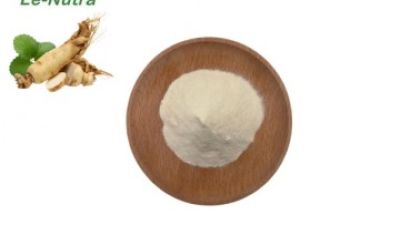
Ginseng Peptide Powder is a functional ingredient made from the roots of *Panax ginseng C. A. Mey*, a member of the Araliaceae family. It contains at least 80% protein and features small-molecule peptides with a molecular weight below 3,000 Da, supporting convenient absorption. Its fine white to off-white powder dissolves quickly in water, producing a clear, bright solution that is easy to use in dietary supplements, functional foods, and personalized nutrition products.
Potential benefits of ginseng peptides include support for anti-aging nutrition, healthy glucose management, and tyrosinase inhibition, making them suitable for formulas focused on vitality, skin care, and dietary therapy for health preservation. However, the final function of a product depends on its complete formulation, dosage, and intended use. Consumers and formulators should review ingredient quality, peptide specifications, solubility, testing standards, and application requirements before making a selection.
When choosing the right formula, consider whether the powder is designed for beverages, capsules, powdered blends, or biotechnology applications. Packaging and supply flexibility may also be important for manufacturers: the powder can be packed in a food-grade inner plastic bag with an outer kraft paper bag, in 15 kg or 25 kg quantities, with customized options available. Experience in the natural ingredients industry and dependable technical support can further assist with product development and quality control.
Request batch-specific HPLC results, peptide-size distribution, and amino acid profiles. LC-MS may confirm identity in complex materials. Microbiological tests should cover total counts, yeast, mold, and relevant pathogens. Ask for heavy metal and residual solvent limits. A generic certificate is not enough. Evidence matters.
Check whether the certification covers the actual manufacturing site and product category. Review the current production process and certificate scope. Useful systems may include GMP, HACCP, ISO 22000, or ISO 9001. Also inspect signed laboratory results and traceable batch numbers. A polished certificate can still hide gaps.
Request allergen statements, material origin, contaminant controls, and change-notification procedures. Ask how deviations, complaints, and recalls are managed. The answers should include specific procedures and records. Fast document delivery is not proof of compliance. I once assumed it was. That assumption was weak.
Request a complete landed-cost sheet for the required grade and concentration. Include freight, testing, packaging, documentation, and delivery terms. Compare equivalent specifications, not attractive headline prices. Ask how long quoted prices remain valid. Cheap is not always cheap. Hidden service fees can change the final cost.
Match the minimum order to your actual production plan and storage capacity. A large order can lock cash into inventory. It may also increase expiry risk. A smaller trial lot may cost more per kilogram. That extra cost can reveal odor, color, solubility, and consistency problems. Test before scaling.
Ask for production, laboratory testing, dispatch, and delivery timelines. Request realistic delay estimates during busy seasons. Confirm the specification, source description, and hydrolysis range before ordering. Recent certificates should match your internal testing methods. A promise is not a schedule.
Request samples from three production lots, rather than one laboratory sample. Compare solubility, odor, color, moisture, ash, and peptide distribution. Review batch numbers, certificates, allergen declarations, and stability data. Use an independent laboratory for critical applications when practical. One successful sample does not prove consistency.
Audit remotely or in person, depending on application risk. Review water treatment, cleaning records, calibration labels, hygiene, and storage temperatures. Select one lot and trace its raw materials backward and forward. Ask for recent deviations and corrective actions. A supplier showing controlled improvements may be more credible than one showing no problems. I would score evidence, not confidence.
Choosing the right Peptide Hydrolysate supplier requires more than comparing prices. Begin by defining your application goals, required specifications, target purity, and expected volume. Then assess each supplier’s technical expertise, manufacturing capacity, industry experience, and ability to maintain stable production. Pay close attention to raw material quality, traceability, process controls, testing methods, certifications, and compliance with applicable quality and regulatory standards. Clear documentation and reliable quality systems are essential for reducing risks and supporting consistent results.
You should also compare product consistency, customization options, technical support, minimum order quantities, pricing, lead times, and long-term supply reliability. A supplier that communicates clearly and responds efficiently can provide valuable support throughout development and production. Before making a final decision, request representative samples, evaluate their performance against your requirements, and consider conducting a facility or documentation audit. This structured approach helps you select a dependable partner capable of meeting both current needs and future growth.