Picking reliable suppliers for botanical extracts used in dietary supplements isn't just about comparing prices or scrolling through shiny websites. Honestly, it’s a bit more involved. In this article, I’ll walk you through ten China-based companies that serve the botanical dietary supplements market. Some of these include Shaanxi Undersun Biomedtech, Xi’an Greena Biotech, Hunan Nutramax, Xi’an Lyphar Biotech, Shaanxi Fuheng Biotechnology, and Xi’an Sost Biotech. We’ll also look at others like Changsha Vigorous-Tech, Xi’an Tonking Biotech, Changsha Huir Biological-Tech, and Shaanxi Hongbaiyi Biotech.
Here’s the thing—quality really starts with the raw materials. A good supplier should be upfront about plant species, where they’re grown, what extraction solvents they use, and how they test for the purity of their products. Clear certificates and traceable records are a must. Sure, a brown extract stored in a sealed drum might look pretty ordinary, but behind the scenes, the real magic (or danger) lies in its identity, moisture levels, and microbial safety—stuff that really matters for safety. And, as Mark Blumenthal from the American Botanical Council puts it, “Herbs aren’t drugs, but they can still have drug-like effects.” That’s a good reminder to be cautious—meaning careful formulation, honest marketing, and solid testing are key.
Now, I should mention, not every supplier is a perfect fit. Some might have really thorough technical info but fall short on showing consistent manufacturing quality. Others might have eye-catching catalogs but lack the deep verification needed to be truly trusted. That’s just part of the reality. It’s always a bit of a gamble. So, if you’re serious about choosing a supplier, ask for recent certificates of analysis, heavy metal testing results, pesticide screening, stability data, and maybe even samples to evaluate before signing anything.
In this comparison, I focused on factors like their experience, technical capabilities, documentation, ability to customize, and how well they communicate. The goal isn’t to give you a perfect answer but to help supplement brands ask smarter questions and avoid making claims that aren’t backed by solid info.
What Are Botanical Extracts and Why Are They Used in Supplements?
Botanical extracts are concentrated preparations made from leaves, roots, flowers, seeds, or bark. They contain naturally occurring compounds such as polyphenols, carotenoids, alkaloids, and essential oils. In Botanical Food Supplements, these extracts provide a practical way to deliver selected plant constituents in capsules, powders, liquids, or functional foods.
Their uses vary by plant and extraction method. Some are included for antioxidant support, digestive comfort, immune function, or general nutritional balance. Evidence differs widely. A traditional reputation cannot replace human clinical research. The World Health Organization’s Global Report on Traditional and Complementary Medicine found that 170 of 194 member states reported using traditional medicine, showing broad public interest. Yet popularity is not proof.
Demand also appears in commercial data. HerbalGram’s 2024 market report estimated U.S. herbal supplement sales at about $12.6 billion in 2023. That figure reflects consumer demand, not guaranteed effectiveness.
Quality depends on correct species identification, extraction controls, contaminant testing, and consistent active-marker levels. Suppliers should provide batch-specific certificates of analysis and follow recognized good manufacturing practices. Solvent choice matters too.
“Natural” is not a quality certificate.
A careful buyer should question vague dosage claims and unclear sourcing. Even standardized extracts can vary between batches. I would also avoid treating one positive study as a final answer; research methods, populations, and extract formulas often differ. That uncertainty deserves honest labeling and professional review.
How to Evaluate Botanical Extract Suppliers in China
Choosing among China’s top botanical extract suppliers requires more than comparing prices or glossy websites. I would begin with botanical identity, plant part, harvest region, and extraction method. Ask for a current certificate of analysis for every proposed batch. It should show marker compounds, moisture, microbial limits, heavy metals, pesticides, and residual solvents. Vague specifications deserve caution.
A reliable supplier can explain how raw materials move from farm or collection site to finished powder. Request lot numbers, supplier records, cleaning procedures, and storage conditions. An on-site or independent audit can reveal details that documents miss, such as dusty packaging areas or poorly labeled drums. Small details matter. Also compare a production sample with the final commercial batch. They should match in color, odor, solubility, and tested potency.
Technical support is another practical measure. Experienced teams should discuss dosage-form compatibility, stability testing, and realistic shelf-life data without promising impossible results. Check whether their laboratory uses validated methods and qualified third-party testing. I have learned that one clean report does not prove consistent quality. A supplier may perform well on a sample, then struggle during peak harvest season. That risk should be discussed openly. Evaluate communication, corrective-action speed, and document accuracy over several orders. The best choice is not always the largest factory; it is the supplier that can repeatedly provide safe, traceable, specification-compliant extracts for your intended supplement market.
China’s Top 10 Botanical Extract Suppliers for Supplements
China’s Top 10 Botanical Extract Suppliers for Supplements
China remains a major sourcing base for botanical extracts, supported by broad agricultural regions and mature processing infrastructure. Grand View Research estimates the global botanical extracts market reached about US$6.6 billion in 2023. It also projects strong growth through 2030. This demand raises supplier expectations.
A practical top-ten shortlist should examine more than export volume. Experienced buyers check botanical identity, extraction solvent, marker compounds, and batch consistency. HPLC or LC-MS testing should confirm key actives. Pesticide, heavy metal, microbial, and residual solvent reports are equally important. Ask for a recent certificate of analysis. Not an old template.
Suppliers serving supplements should demonstrate GMP or equivalent quality systems, traceable raw materials, and stable lead times. The WHO emphasizes quality assurance and contaminant control for herbal products. Packaging details matter too. A sealed 25-kilogram fiber drum needs a clear lot number, production date, and storage instructions. Some suppliers communicate well during sampling but respond slowly after a purchase order. That weakness deserves attention.
The best candidates may also support water-soluble powders, standardized extracts, and formulation trials. Botanical Extracts Skin Care is another growing application, but supplement documentation must remain separate. A supplier experienced in cosmetics is not automatically suitable for oral products. Regulatory files can be incomplete. Buyers should verify claims, testing scope, and destination-market requirements independently. This ranking should remain flexible, because crop quality, harvest timing, and manufacturing performance can change each year.
Key Products and Specializations of Each Supplier
China’s Top 10 Botanical Extract Suppliers for Supplements?
China’s leading botanical extract suppliers often specialize in different product families. One focuses on ginseng, astragalus, and immune-support extracts. Another develops standardized green tea, grape seed, and citrus bioactives. A third supplies milk thistle, artichoke, and liver-health ingredients. One concentrates on turmeric, ginger, and boswellia extracts for joint formulas. Another serves sports nutrition with beetroot, cordyceps, and adaptogenic blends. A sixth supplier produces berry anthocyanins and fruit polyphenols. A seventh specializes in mushroom extracts, including reishi and lion’s mane. An eighth handles botanical powders, instant granules, and custom blends. A ninth provides organic-certified herbs and traceable agricultural materials. The tenth focuses on water-soluble extracts for beverages and functional foods.
Product quality depends on more than a polished specification sheet. Experienced buyers check botanical identity, extraction solvents, marker compounds, and batch consistency. Reliable suppliers should provide current certificates, contaminant testing, stability data, and clear country-of-origin records. Some suppliers excel at high-volume production but offer limited formulation support. Others provide excellent research assistance but cannot meet urgent delivery schedules. That trade-off is easy to miss.
Tips: Request a small pilot batch before signing a large contract. Compare the declared marker level with independent laboratory results. Ask how suppliers control pesticides, heavy metals, microbes, and allergens. Review packaging details, because moisture can quietly damage powdered extracts. I have found that communication quality matters, although it is not a perfect measure of manufacturing strength. Supplier claims still need verification.
Quality Standards, Certifications, and Testing Practices
When assessing China’s top ten Botanical Extract suppliers, quality begins with traceability, not attractive specification sheets. WHO’s 2019 Global Report on Traditional and Complementary Medicine states that 170 of 194 member states reported using herbal medicines. That scale increases the need for controlled sourcing, especially for roots, leaves, and concentrated powders. Suppliers should document farm locations, harvest dates, drying temperatures, and batch codes. ISO 22000 or HACCP systems can support process control, while ISO/IEC 17025 accreditation strengthens laboratory reliability.
Testing should match the plant and its risks.
Identity checks may combine microscopy, HPTLC, and LC-MS fingerprinting. DNA testing can help, but it may struggle with highly processed extracts. I would not accept one method alone. Each batch should also receive pesticide, heavy-metal, microbial, aflatoxin, and residual-solvent testing. USP quality standards emphasize identity, purity, strength, and contaminant control for botanical ingredients. Certificates of analysis should show methods, detection limits, sample numbers, and actual results, not only pass-or-fail language.
A serious supplier can provide audit records and retain samples. Ask to see stability data from real storage conditions, including heat and humidity exposure. Seasonal variation remains difficult. No certificate catches every mistake. Independent retesting is wise for high-value extracts or unusual color changes. This extra step costs more, but it can reveal substitution, dilution, or incomplete standardization before production begins.
How to Select the Right Chinese Botanical Extract Supplier
How to Select the Right Chinese Botanical Extract Supplier
Choosing among China’s top botanical extract suppliers requires more than comparing prices. Start with the plant, not the sales brochure. Ask for the botanical name, plant part, growing region, extraction solvent, and standardization method. A serious supplier should provide batch-specific certificates of analysis, including identity, active compounds, heavy metals, pesticides, microbes, and residual solvents.
Request traceability records from farm or processor to finished powder. Review sample labels, packaging photos, storage conditions, and stability data. For supplements containing Botanical Peptides, confirm the material’s source, processing temperature, peptide profile, and allergen controls. Small details matter. A mismatched lot number is a warning sign.
Arrange a technical call with quality personnel, not only a salesperson. Discuss minimum order quantities, lead times, change-control procedures, and rejected-batch handling. Ask whether an independent laboratory can verify results. Factory audits are useful, but documents should support what you see onsite. Compliance requirements also vary by destination market, so the supplier must understand your intended regulations.
No checklist is perfect. Seasonal crops can alter color, aroma, and active levels, even under controlled sourcing. I would therefore approve a pilot batch before signing a long contract. Test it independently, compare three production lots, and record every deviation. The lowest quote may exclude testing, documentation, or dependable replenishment. Cheap can become expensive.
NAD+ Supplement Market Insights: Grand View Research & MarketsandMarkets Data on Premium NAD Powder
The premium NAD+ supplement segment is gaining attention as consumers increasingly seek science-oriented ingredients for healthy aging and cellular wellness. Grand View Research valued the global dietary supplements market at approximately USD 177.5 billion in 2023 and projects a 9.1% CAGR from 2024 to 2030, while MarketsandMarkets forecasts the nutraceutical market to grow from about USD 418.7 billion in 2023 to USD 722.5 billion by 2028. These figures support continued demand for high-purity, convenient ingredients such as NAD+, also known as Nicotinamide Adenine Dinucleotide.
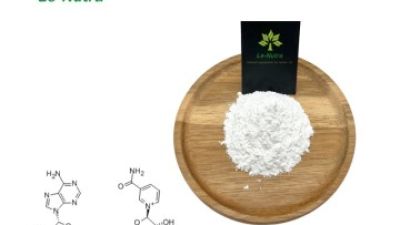
This NAD+ powder is a white crystalline material with 99% purity and CAS No. 53-84-9, suitable for formulation development and premium supplement applications. NAD+ is associated with antioxidant support, cellular repair, healthy-aging programs, and the maintenance of normal cellular energy pathways. For quality-conscious manufacturers, consistent powder specifications and protective packaging are important considerations. The product is supplied in vacuum aluminum foil bags, with 25 kg quantities packed in fiber drums containing an inner double-layer, food-grade polyethylene bag to help protect the powder during storage and transportation.
FAQS
Botanical extracts are concentrated preparations from leaves, roots, flowers, seeds, or bark. They may contain polyphenols, carotenoids, alkaloids, or essential oils.
They provide selected plant compounds in capsules, powders, liquids, or functional foods. Uses may include antioxidant support, digestive comfort, immune support, or nutritional balance.
No. Traditional use can guide interest, but it cannot replace human clinical research. Popularity is not proof.
Quality depends on plant identity, extraction methods, solvent choice, contaminant controls, and active-marker consistency. A polished specification sheet is not enough.
Request batch-specific certificates of analysis, contaminant results, stability data, and country-of-origin records. Testing should cover pesticides, heavy metals, microbes, and allergens.
Yes. Standardization can improve consistency, but differences may still occur. Each batch needs verification, not automatic trust.
Compare botanical identity, marker levels, extraction details, production capacity, and technical support. Ask for independent laboratory confirmation when possible.
Moisture can quietly damage powdered materials. Check sealed packaging, storage conditions, and moisture protection before accepting delivery.
A small pilot batch is safer. Compare its declared marker level with independent results before signing a large contract.
No. Natural is not enough. Clear sourcing, testing, and manufacturing controls matter more than attractive wording. I may still judge communication too generously.
Conclusion
This article provides a practical overview of Botanical Extracts Used In Dietary Supplements, explaining how plant-derived ingredients are processed, standardized, and selected for products such as capsules, tablets, powders, and functional beverages. It examines why botanical extracts are valued for their naturally occurring compounds, consistent formulation, and potential role in supporting everyday wellness. The article also outlines the main factors buyers should consider when sourcing from China, including raw material traceability, extraction technology, production capacity, documentation, communication, and supply reliability.
A structured review of China’s top 10 botanical extract suppliers compares their general product categories and areas of specialization without focusing on brand promotion. It also discusses quality systems, certifications, laboratory testing, contaminant screening, batch consistency, and regulatory documentation. Finally, the article offers a clear supplier-selection framework to help supplement companies match their needs with the right manufacturing capabilities, quality standards, order requirements, and long-term partnership expectations.