Hey there! If you're curious about China's top suppliers of hydrolyzed peptides, you'll find this overview pretty helpful. These companies are really pushing into the growing peptide ingredients market, serving everything from nutrition and sports recovery to beauty and special foods. Their products include stuff like collagen peptides, marine-derived peptides, plant-based options, and functional protein hydrolysates—pretty diverse, right?
Now, quality is key here—it's all about starting with good raw materials. From there, they go through processes like enzymatic hydrolysis, filtration, drying, and packaging. When you're checking out products, it’s smart to look at things like the molecular weight breakdown, amino acid profiles, how soluble they are, taste, and whether each batch stays consistent. Having a clear Certificate of Analysis is a must, and traceability matters too—knowing where everything comes from gives you peace of mind.
Professor David Julian McClements, a well-respected expert in food science, once said, “Structure matters because it shapes function,” and that really hits home with hydrolyzed peptides. Smaller peptide chains can boost solubility and ease of processing, but don’t just assume smaller is automatically better—that’s something to think about.
This overview takes a look at ten leading Chinese suppliers based on real-world, practical factors like their manufacturing experience, research capabilities, production capacity, quality systems, export track record, and technical support. Companies like Hunan Nutramax, Qingdao Saminchem, and Hangzhou Nutrition Biotechnology each bring their own strengths to the table. But remember, the real value is in verified data, not just shiny brochures.
Some suppliers are pretty transparent and share lots of testing details—things like recent test reports, allergen info, heavy metal levels, microbiological data, and stability tests. Others are more reserved, which can be a bit risky when you're deciding who to work with. So, ask for recent test results before making any commitments. Price is important, but don’t let it fool you—sometimes a cheap ingredient ends up costing you more in the long run due to formulation challenges.
Just a heads-up: this list isn’t set in stone. Supplier capabilities can change pretty quickly, so always verify independently. Still, it’s a solid starting point to find trustworthy hydrolyzed peptides from China for your business.

Hydrolyzed peptides are protein fragments produced by breaking large proteins into shorter chains. Enzymatic hydrolysis usually offers better control than harsh chemical treatment. The result is a material with improved solubility, faster absorption, or more predictable processing behavior.
Common types include collagen peptides, milk-derived peptides, soy peptides, and fish protein peptides. Hydrolyzed Whey Peptides are valued for their balanced amino acid profile and easy dispersion in liquid products. Collagen peptides often support functional food and beauty formulations. Plant-based peptides may suit products requiring specific dietary positioning. Peptide performance depends on molecular weight, hydrolysis degree, taste, and raw material quality.
Industrial buyers should examine more than a laboratory sample. Reliable suppliers normally provide amino acid data, microbiological results, heavy-metal testing, and batch traceability. In practical formulation work, a peptide that dissolves quickly at 25°C can still create foam during high-speed mixing. Small details matter. Applications include sports nutrition, medical nutrition, beverages, cosmetics, animal nutrition, and fermentation media. Spray drying can improve storage stability, while excessive heat may reduce functional quality. Not every batch behaves identically. This remains a real manufacturing challenge. Processors in China increasingly use controlled enzymes, membrane filtration, and standardized testing, but buyers should verify specifications independently. A low molecular weight does not automatically guarantee better performance. Product claims still require careful validation.
China Top 10 Hydrolyzed Peptides Suppliers
Selecting China’s leading hydrolyzed peptide suppliers requires more than comparing prices or browsing product catalogs. Buyers should examine manufacturing experience, technical capacity, and quality systems. A reliable supplier can explain its hydrolysis process clearly. It should also provide traceable raw material records and consistent batch documentation.
For Hydrolyzed Collagen Peptides, evaluators should request molecular weight data, amino acid profiles, solubility results, and sensory specifications. Independent testing should confirm microbiological safety, heavy metal limits, moisture, and prohibited contaminants. Certificates matter, but certificates alone are not proof. Auditors should verify their validity and match them with actual production records. Factory visits can reveal equipment cleanliness, storage conditions, and staff training.
Practical selection also includes sample testing and small pilot orders. Compare several batches, not one attractive sample. Check whether powder dissolves evenly in cold water and whether its odor changes between lots. Communication is another useful signal. Technical staff should answer specific questions without vague promises. Some suppliers may offer impressive documents but weak traceability. That risk deserves attention. Even experienced buyers can overlook packaging details, such as moisture barriers and lot-code accuracy. A stronger evaluation combines laboratory evidence, site observations, customer feedback, and realistic delivery records. Pricing still matters, but unusually low pricing requires careful questioning. Good selection is rarely perfect. It should remain open to review when new test results or regulatory requirements appear.
The chart presents a transparent screening framework for comparing leading Chinese hydrolyzed peptide suppliers. The criteria reflect commonly used procurement requirements in food, nutrition, cosmetic and pharmaceutical supply chains.
How to read it: Quality systems, product consistency and regulatory documentation receive the highest weighting because they directly affect safety, batch repeatability and import compliance. Capacity, customization and export experience help distinguish suppliers with stronger long-term fulfillment capabilities.
China’s top 10 hydrolyzed peptide suppliers are best assessed through verified capabilities, not promotional rankings. Public rankings remain imperfect. A reliable profile should show production scale, raw-material origin, enzymatic processing, and batch-level traceability.
Grand View Research reported that the global collagen market reached about USD 9.1 billion in 2022, with continued growth expected through 2030. This demand supports China’s diverse supplier base. The strongest profiles typically include manufacturers of Collagen Hydrolyzed Peptides for food, nutrition, and personal-care applications. They provide amino-acid analysis, peptide molecular-weight distribution, microbiological testing, and heavy-metal results. Several facilities also document HACCP, ISO 22000, or GMP-based controls. Certificates alone are not enough.
Among the ten profiles, some suppliers focus on fish-derived peptides, while others process bovine or porcine materials. A few specialize in low-molecular-weight powders that dissolve quickly in cold water. Others offer customized mesh sizes, moisture levels, flavors, and packaging. IMARC Group has identified functional nutrition as a major driver of collagen ingredient demand, particularly in Asia-Pacific markets. Buyers should still verify species identification, allergen controls, country-of-origin records, and stability data. A polished specification sheet may hide inconsistent batches. Independent testing matters. Supplier audits, sample comparisons, and storage trials can reveal practical weaknesses before a long-term contract begins.
China’s top hydrolyzed peptide suppliers offer more than standard collagen powders. Their product ranges often include hydrolyzed fish, bovine, and porcine collagen peptides for food, beverage, and nutrition applications. Some suppliers also develop Hydrolyzed Collagen Peptides Vegan products. This term needs careful review, because true collagen is animal-derived. Vegan formulas usually contain plant peptides, amino acids, or nutrients that support the body’s natural collagen formation.
Leading suppliers use controlled enzymatic hydrolysis to reduce molecular weight and improve dispersibility. Smaller peptides can dissolve faster in cold water and create fewer gritty particles. Spray drying helps protect powder stability during storage. Some facilities provide instantized grades for protein drinks and sachets. Others offer low-odor products for coffee, gummies, and functional foods. Custom particle sizes are also available.
Quality evidence matters. Reliable suppliers usually provide batch testing for identity, moisture, heavy metals, microbiological safety, and prohibited substances. Traceability should cover raw material origin, processing records, and packaging lots. Many manufacturers use HACCP, GMP, ISO systems, or third-party audits. Yet certificates alone are not enough. Testing methods and current reports deserve close examination. A low molecular weight does not automatically prove better absorption. Results can vary between studies, diets, and users. Even experienced buyers may overlook flavor stability after heat processing. Small pilot trials remain practical before large orders.
China Top 10 Hydrolyzed Peptides Suppliers
For a credible supplier shortlist, quality evidence matters more than production claims. Hydrolyzed peptides should have defined molecular-weight distribution, peptide content, moisture limits, and microbiological results. A clear certificate of analysis should identify the batch, test method, laboratory, and release date. USP General Chapters and provide recognized approaches for microbial enumeration and specified microorganisms. These details help buyers compare suppliers without relying on attractive brochures.
Regulatory readiness also requires GMP controls, HACCP planning, and traceability from raw material to finished powder. ISO 22000 certification can support food-safety management, while ISO 17025 accreditation strengthens confidence in testing laboratories. The FAO/WHO expert reports on food safety repeatedly stress risk-based assessment and reliable exposure data. Certification is useful, but it is not proof of every product’s compliance. A certificate can expire. A polished COA can still miss an undeclared allergen or an unstable batch. I would request recent records, not only scanned certificates.
Tips: Ask for three recent batch COAs, allergen statements, heavy-metal results, and microbial limits. Check whether testing is internal or independently verified. Confirm storage conditions, shelf-life evidence, and recall procedures. Supplier audits should include weighing areas, cleaning logs, calibration records, and complaint handling. Some buyers overlook change-control notices. That is a costly gap. Pricing should come after verification, not before it.
| Rank | Supplier Profile | Typical Peptide Materials | Common Product Forms | Core Quality Standards | Typical Quality-Control Tests | Relevant Certifications or Compliance Documentation | Recommended Buyer Verification |
|---|---|---|---|---|---|---|---|
| 1 | Large-scale food-grade peptide manufacturer | Fish, bovine, porcine, or poultry-derived collagen peptides | Powder; instantized powder; granules | HACCP-based food safety system; GMP principles; documented allergen and traceability controls | Protein content, moisture, ash, pH, molecular-weight distribution, heavy metals, microbiological limits | Food-safety management certificate where applicable; product specification; certificate of analysis; allergen statement; traceability records | Confirm raw-material origin, species declaration, production-site scope, and batch-specific testing |
| 2 | Pharmaceutical-grade peptide producer | High-purity collagen peptides and short-chain bioactive peptides | Fine powder; sterile or low-bioburden grades when specifically qualified | Pharmaceutical quality-system procedures; validated analytical methods; controlled change management | Identity, assay, peptide profile, residual solvents, elemental impurities, microbial limits, stability indicators | GMP-related documentation; validation summaries; analytical method information; batch release records | Verify whether the facility is approved for the intended pharmaceutical application rather than only food production |
| 3 | Export-oriented nutraceutical supplier | Hydrolyzed collagen, elastin peptides, and plant-derived peptide ingredients | Standard powder; agglomerated powder; sachet-ready grade | Food GMP; HACCP; documented foreign-material, sanitation, and supplier-approval programs | Moisture, protein, solubility, bulk density, total plate count, yeast and mold, pathogens | Food-safety certificate; health or nutrition-product documentation where required; free-sale or origin documents when applicable | Check destination-market requirements, permitted claims, packaging conformity, and customs documentation |
| 4 | Marine peptide specialist | Fish-skin, fish-scale, and marine collagen hydrolysates | Low-odor powder; neutral-flavor powder; instantized powder | Species and origin traceability; controlled hydrolysis; allergen management; oxidation control | Peptide molecular-weight distribution, fish allergen controls, peroxide value where relevant, heavy metals, microbiology | Raw-material traceability statement; allergen declaration; non-GMO statement when applicable; certificate of analysis | Request evidence of species identification, marine-source documentation, odor-control validation, and contaminant monitoring |
| 5 | Bovine and porcine peptide processor | Bovine hide, bovine bone, porcine skin, and related collagen hydrolysates | Food-grade powder; technical-grade powder; customized particle size | Animal-origin traceability; controlled-temperature processing; segregation and sanitation procedures | Protein, hydroxyproline, moisture, ash, molecular weight, microbial limits, heavy metals, prohibited-substance screening | Animal-origin statement; species and country-of-origin declaration; veterinary or sanitary documents where required | Verify species, slaughter-chain documentation, religious-diet suitability, and destination-country import rules |
| 6 | Customized peptide contract manufacturer | Collagen, dairy, egg, soy, and specialty bioactive peptide materials | Custom blends; agglomerated powder; liquid concentrate; application-specific grades | Customer-approved specifications; process validation; controlled formulation and packaging operations | Identity, assay, solubility, viscosity where relevant, particle size, microbiology, stability, packaging compatibility | Technical agreement; specification sheet; certificate of analysis; change-notification procedure; sample retention records | Approve pilot batches, define acceptance criteria, and audit formulation, cleaning, and cross-contact controls |
| 7 | Low-molecular-weight peptide producer | Short-chain collagen peptides and rapidly dispersible hydrolysates | Fine powder; agglomerated instant powder; beverage-grade powder | Controlled enzymatic hydrolysis; reproducible molecular-weight distribution; moisture protection | Size-exclusion chromatography or equivalent peptide profiling, solubility, turbidity, moisture, bulk density, microbiology | Batch analytical report; process-flow documentation; food-safety records; shelf-life and storage data | Compare molecular-weight methods, sampling plans, storage conditions, and claimed dispersibility performance |
| 8 | Organic or sustainability-focused peptide supplier | Traceable marine, bovine, or plant-derived hydrolyzed peptides | Powder; clean-label blends; minimally processed formulations | Documented responsible sourcing; environmental controls; supply-chain traceability; contaminant prevention | Standard compositional tests plus pesticides, heavy metals, microbiology, and species or origin verification where relevant | Organic or sustainability claims only when supported by a recognized certification or auditable documentation; certificate of analysis | Verify the exact scope of environmental, organic, halal, or other claims instead of relying on marketing language |
| 9 | Small-batch specialty peptide manufacturer | Flavored collagen peptides, functional blends, and research-oriented hydrolysates | Powder; capsules or sachet filling through qualified partners; laboratory samples | Documented batch records; sanitation controls; controlled weighing and blending; sample retention | Assay, identity, moisture, organoleptic properties, microbiological testing, blend uniformity, stability screening | Product specification; certificate of analysis; safety data sheet when applicable; packaging and labeling review | Confirm minimum order quantity, batch consistency, subcontractor controls, and scale-up capability |
| 10 | Industrial peptide ingredient supplier | Technical collagen hydrolysates and peptide materials for feed, cosmetics, or industrial applications | Bulk powder; big-bag material; customized mesh size | Application-specific specifications; occupational safety controls; batch traceability; transport and storage management | Protein, moisture, ash, particle size, solubility, heavy metals, microbiological limits according to intended use | Technical data sheet; safety data sheet; certificate of analysis; regulatory statement for the intended application | Ensure the grade is legally suitable for food, feed, cosmetic, or industrial use before placing an order |
Buyer note: Certification availability and regulatory status vary by manufacturing site, product grade, intended use, and destination market. Always request current, batch-specific documentation and verify certificates with the issuing organization.
Comparing Prices, Capacity, Customization, and Export Services
Comparing China’s leading hydrolyzed peptide suppliers requires more than reading a price list. Product cost changes with raw material grade, hydrolysis depth, molecular weight distribution, and order volume. A low quotation may exclude testing, packaging, or cold-chain handling. Ask for a recent COA, moisture data, microbiological results, and batch traceability records. These documents reveal more than a polished sales presentation.
Capacity figures also need careful checking. Some factories report theoretical annual output, not available monthly capacity. During an audit, review reactor size, spray-drying equipment, warehouse conditions, and production records. A supplier producing 20 tons monthly may still struggle with a 500-kilogram customized batch. That detail matters. It affects delivery reliability.
Customization can include peptide size, flavor, solubility, carrier selection, and private packaging. Confirm whether the requested specification is already validated or only technically possible. Trial samples should be tested for dispersibility, odor, color, and stability under real storage conditions. Export service is equally practical. Reliable suppliers should provide commercial invoices, packing lists, certificates of analysis, origin documents, and suitable carton or drum protection. Check port experience and response time for document corrections. Some suppliers communicate well before payment, then respond slowly after production begins. That is an uncomfortable risk, but it deserves attention. Pricing should be compared beside minimum order quantity, lead time, payment terms, inspection rights, and after-sales responsibility.
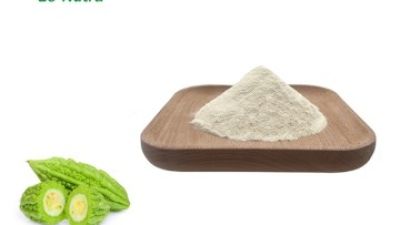
Eco-Friendly Hydrolyzed Bitter Melon Protein Powder offers a practical approach to modern hair and scalp care. With a molecular weight of ≤2,000 Da and protein content of ≥80%, its hydrolyzed peptides are designed for easy incorporation into water-based cosmetic formulas. The white to light-yellow powder produces a clear solution without visible impurities, making it suitable for shampoos, conditioners, hair masks, scalp treatments, and leave-in products. Its cosmetic functions include supporting hair moisture, helping manage excess scalp oil, and providing a soothing skin-care experience.
The ingredient is particularly relevant as consumers increasingly seek multifunctional and environmentally considerate beauty solutions. Grand View Research estimated the global hair-care market at approximately US$91.6 billion in 2023, reflecting continued demand for products focused on scalp health and hair maintenance. As a dry concentrate, peptide powder may also reduce the water weight associated with transportation and storage, although a complete environmental assessment should consider sourcing, processing, packaging, and manufacturing conditions.
For hair-repair applications, formulators can combine bitter melon peptides with humectants, conditioning agents, and mild cleansing ingredients to help improve softness, manageability, and the appearance of damaged hair. Users should apply finished products according to their formulation instructions, avoid excessive heat styling, cleanse the scalp gently, and perform a patch test before regular use. Consistent conditioning and protection from sun, chlorine, and repeated chemical treatments can further support healthier-looking hair.
They are shorter protein chains created by breaking down larger proteins. Enzymatic processing usually provides better control. The final powder may dissolve faster and process more predictably.
Common types include collagen, milk-derived, soy, fish, and other plant peptides. Their performance depends on raw material quality, taste, molecular weight, and hydrolysis degree.
No. Lower molecular weight may improve dispersion, but it does not guarantee better absorption or results. Formulation conditions still matter.
Request amino acid data, moisture results, microbiological testing, safety screening, and batch traceability. A recent certificate of analysis is more useful than an attractive brochure.
Test solubility, odor, color, foam, and stability using the actual formula. A powder dissolving at 25°C may still foam during high-speed mixing.
Applications include sports nutrition, beverages, cosmetics, animal nutrition, fermentation media, and specialized nutrition products. Each use requires different taste, solubility, and stability targets.
Review reactor sizes, drying equipment, warehouse conditions, and recent production records. Reported annual capacity may not reflect available monthly capacity. Numbers can mislead.
Options can include peptide size, flavor, solubility, particle size, carrier selection, and packaging format. Confirm whether the specification is already validated or merely possible.
Check invoices, packing lists, origin documents, analysis certificates, packaging protection, and document response times. Communication may weaken after payment. That risk deserves attention.
True collagen is animal-derived. Vegan products usually contain plant peptides, amino acids, or nutrients supporting natural collagen formation. The wording needs careful review.
This article presents a practical overview of China’s leading Hydrolyzed Peptides suppliers, beginning with their definition, major types, production methods, and applications in nutrition, cosmetics, food processing, and related industries. It explains how suppliers are evaluated through product consistency, manufacturing capability, research strength, quality management, certifications, regulatory compliance, and experience serving international markets.
The article also compares the key products and technologies offered by leading manufacturers, including enzymatic hydrolysis, molecular-weight control, purification, blending, and customized formulation services. In addition, it discusses how buyers can assess pricing, production capacity, minimum order requirements, packaging options, technical support, export documentation, and delivery services. By reviewing these factors together, readers can make more informed sourcing decisions and identify suppliers that offer reliable quality, flexible customization, competitive costs, and stable long-term cooperation.