Leave Your Message
0%

China’s supplement sector is shifting—not just growing fast, but moving toward products built on real evidence. That shift is why a practical Supplement Formulation Development Guide matters so much for global brands, contract manufacturers, and ingredient suppliers. Grand View Research put the global dietary supplements market at USD 177.5 billion in 2023. It also expects a 9.1% compound annual growth rate from 2024 to 2030. Big numbers, right? But they signal opportunity—not guaranteed success.

Consumers are getting pickier, and honestly, more informed. The Council for Responsible Nutrition’s 2024 Consumer Survey found that 75% of U.S. adults take dietary supplements. In China, people are asking harder questions about where ingredients come from, whether dosages are clear, how products are tested, and what science backs them up. A clean label helps. It just isn’t enough on its own. Formulators have to line up consumer needs with permitted ingredients, validated specs, sensory performance, and claims they can actually support. Skincare Formulation can teach useful lessons about texture, stability, and user experience—but oral supplements come with different safety and compliance controls.

This guide walks through concept design, ingredient screening, prototype development, stability testing, and manufacturing transfer. It also looks at China’s registration and filing pathways under the National Medical Products Administration. Reliable development really comes down to traceable suppliers, documented analytical methods, and qualified labs. Results should be checked against applicable Chinese standards and international quality systems, including Good Manufacturing Practice principles. That said, market reports often use different definitions and sampling methods, so their numbers deserve a careful read. That limitation matters. A successful formula isn’t just trendy or technically complex. It should be safe, manufacturable, evidence-informed, and right for the intended consumer. Even experienced teams may need to revise assumptions after pilot batches, sensory feedback, or stability data.

China Top Supplement Formulation Development Guide

Supplement Formulation Development in China: An Overview

China’s supplement formulation development combines nutrition science, local compliance, and practical manufacturing decisions. Teams usually define the target user, dosage form, ingredient limits, and intended claims before laboratory work begins. In China, health food products may require registration or filing, depending on their ingredients and positioning. Claims must match approved evidence and applicable food safety standards.

A reliable development process includes raw material qualification, compatibility testing, pilot batches, and stability studies under controlled conditions. For example, a powder may clump after storage at high humidity, while a softgel can show changes in color or odor. Experienced developers review supplier certificates, identity tests, contaminants, and batch consistency. Cosmeceutical Formulation follows different product logic, so its methods should not be copied directly into ingestible supplement projects. A formula can look excellent on paper and still perform poorly in production. That gap deserves honest review.

Tips: Keep the formula practical. Select ingredients with stable supply and clear specifications. Test taste, flow, filling weight, and packaging together. Build extra time for regulatory feedback and method adjustments. Small pilot batches often reveal problems that laboratory samples hide. Do not rely on one test result. Repeat critical analyses through qualified laboratories, and record every change from the first prototype. Teams may also need to reconsider dosage convenience, because consumers often abandon products that require too many daily servings.

Key Ingredients and Functional Objectives

China Top Supplement Formulation Development Guide: Key Ingredients and Functional Objectives

Formulation should begin with a measurable functional objective, not a fashionable ingredient. The 2023 Council for Responsible Nutrition Consumer Survey reported that 74% of U.S. adults use dietary supplements. This signals demand, but not automatic trust. For China-focused products, developers should consider local dietary patterns, age groups, and approved ingredient requirements. The target matters.

Protein supports muscle maintenance, especially in products for active adults and older consumers. Vitamin D and calcium may suit bone-health concepts, while magnesium is often selected for normal muscle and nervous-system function. Omega-3 ingredients can support heart-health positioning, but oxidation testing is essential. Rancid capsules are not a minor defect. They damage credibility.

The International Probiotics Association emphasizes strain-specific evidence, making “probiotic” an incomplete formulation description. Developers should document strain identity, viable count through shelf life, and storage conditions. Mintel’s 2024 global food and drink research also highlights consumer interest in products connected with healthy ageing and everyday wellness. That trend is useful, but vague claims remain weak. A practical formula may contain fewer actives, stronger evidence, and a clear serving purpose. Stability, sensory testing, contaminant screening, and human-relevant substantiation should guide each development stage. No formula is perfect on the first trial.

Regulatory Requirements and Product Classification

China Top Supplement Formulation Development Guide

Regulatory Requirements and Product Classification

In China, “supplement” is not always a standalone legal product category. Classification usually depends on the product’s intended use, ingredients, dosage form, and claims. A capsule claiming nutritional support may follow a different pathway from a product claiming disease prevention or treatment. The wording matters greatly.

Health foods may require registration or filing under applicable food safety rules. Registration is often relevant to products with specific functional claims or imported ingredients. Filing may apply to selected products with approved ingredients and permitted claims. Labels should match the approved scope, including serving size, warnings, target users, and storage conditions. Technical files commonly include ingredient specifications, stability data, safety evidence, and manufacturing controls.

Do not treat formulation as a paperwork exercise. A powder, tablet, or liquid can raise different compliance questions. Claims such as “supports immunity” still need careful review and appropriate evidence. Disease-related language creates serious classification risks. Cosmetic Cream Formulation belongs to a separate cosmetics pathway, even when the cream contains vitamins or botanical extracts. This boundary is often misunderstood.

A practical review should begin before pilot production. Check each ingredient against current Chinese standards and permitted lists. Confirm whether testing methods can measure the finished product consistently. Small details matter, such as serving spoons, Chinese labels, and allergen statements. Rules can change. Even experienced teams may miss an update, so local regulatory verification remains necessary. There is no perfect checklist.ಿಕ್ಷ

Step-by-Step Formulation Development Process

China Top Supplement Formulation Development Guide

Developing a supplement in China starts with a clear consumer need, not a fashionable ingredient. The Grand View Research 2024 report estimated the global dietary supplements market at over USD 177 billion in 2023. That scale increases competition and raises expectations for evidence. Define the target user, dosage form, serving size, and acceptable cost before laboratory work begins. Small decisions matter.

A practical process moves from concept screening to ingredient review, prototype blending, stability testing, sensory checks, and pilot production. Each ingredient needs identity, purity, specification, and supplier documentation. For beauty products, Beauty Formulation Elements may include peptides, vitamins, minerals, and botanical extracts. Their compatibility must be tested, especially in powders, gummies, and liquid formats. Euromonitor reports continued consumer interest in wellness and beauty-related nutrition, but demand does not replace scientific validation. Claims should match available evidence and applicable Chinese requirements.

Prototype testing should examine moisture, color, taste, microbial limits, and active-ingredient content. Keep samples under controlled temperature and humidity. Record every adjustment. Our first draft may separate after storage. That is useful evidence, not failure. A 30-day observation can expose problems that a one-day bench test misses. The Council for Responsible Nutrition has repeatedly emphasized quality systems, testing, and transparent information across the supplement sector. An experienced development team also challenges unrealistic timelines. Faster is not always better. A careful pilot batch, reviewed against approved specifications, creates stronger evidence for scale-up and safer market preparation.

Testing, Quality Control, and Stability Assessment

China Top Supplement Formulation Development Guide

Testing and quality control should begin before the pilot batch. A clean first result proves little. Confirm ingredient identity with HPLC, FTIR, or suitable pharmacopeial methods. Test assay, impurities, heavy metals, pesticides, and microbiological limits. USP General Chapters , , and provide useful laboratory frameworks. The 2023 Council for Responsible Nutrition Consumer Survey reported that 74% of U.S. adults use supplements. That level of use increases the need for traceable evidence, not optimistic assumptions. Keep retain samples from each lot. Record analyst, instrument, method version, and calculation.

Stability assessment should reflect real storage risks. Follow ICH Q1A principles where applicable, using long-term conditions such as 25°C/60% RH and accelerated conditions near 40°C/75% RH. Monitor potency, moisture, color, odor, dissolution, and microbial quality at defined intervals. Packaging matters. A hygroscopic powder may cake inside an apparently sealed pouch. A light-sensitive botanical may lose potency before visible color changes appear. Accelerated testing is useful, but it is not a perfect forecast. Real-time data can challenge the proposed shelf life. That uncertainty deserves review.

Tips: Use a risk-based sampling plan. Test high-risk ingredients more often. Link every result to its supplier and lot. Include transport simulation, especially for China’s regional temperature and humidity differences. Review out-of-trend results, not only failures. A missing timepoint can weaken the entire stability argument. Quality teams should challenge convenient conclusions and document why each specification protects consumers.

China Top Supplement Formulation Development Guide - Testing, Quality Control, and Stability Assessment
Development Area Quality Attribute or Test Typical Method or Instrument Suggested Testing Point Typical Acceptance Consideration Purpose and Risk Controlled
Raw Material Qualification Identity testing HPLC, FTIR, Raman spectroscopy, microscopy, or DNA-based identification where appropriate Each incoming lot before release Conforms to the approved specification and reference standard Confirms that the intended ingredient has been received and reduces substitution or adulteration risk.
Raw Material Qualification Assay and potency Validated or verified HPLC, UPLC, GC, ICP-MS, or titration method, depending on the ingredient Each lot or according to a justified supplier-monitoring program Within the approved specification range; limits should reflect the declared active content and applicable requirements Controls potency variation that may affect dose uniformity and label compliance.
Raw Material Qualification Heavy metals and elemental impurities ICP-MS or ICP-OES Risk-based testing for each lot or periodically with supplier qualification Within applicable regulatory and product-specific limits for lead, arsenic, cadmium, mercury, and other relevant elements Controls contamination from soil, water, processing equipment, and mineral ingredients.
Raw Material Qualification Microbiological quality Total aerobic microbial count, total yeast and mold count, and specified microorganism tests Each lot for higher-risk materials; otherwise based on documented risk assessment Meets the approved microbial limits for the dosage form and intended use Controls microbial contamination in powders, botanicals, proteins, and other moisture-sensitive materials.
Formulation Development Blend uniformity and content uniformity Stratified sampling followed by validated chromatographic or spectrophotometric analysis During pilot and scale-up batches; after major process changes Results meet predefined uniformity criteria and show no systematic sampling-location bias Confirms that active ingredients are evenly distributed throughout the blend and finished dosage units.
Formulation Development Particle size distribution Laser diffraction, sieve analysis, or microscopy During formulation screening and when milling or supplier changes occur Within the target distribution established for flowability, dissolution, suspension, or blend uniformity Controls segregation, poor flow, sedimentation, and dissolution variability.
Formulation Development Moisture content or water activity Karl Fischer titration, loss-on-drying, or water-activity measurement During development, process validation, and stability testing Within the product-specific range established to preserve physical, chemical, and microbiological quality Controls hydrolysis, caking, capsule brittleness, microbial growth, and tablet deterioration.
Finished Product Release Appearance and organoleptic properties Visual inspection, color comparison, odor assessment, and defined sensory procedure Every finished batch No abnormal color, odor, visible contamination, leakage, cracking, swelling, or phase separation Provides an immediate check for manufacturing errors, degradation, and packaging failures.
Finished Product Release Assay of active ingredients Validated HPLC, UPLC, GC, ICP, or another scientifically suitable method Every finished batch Within the approved release specification and consistent with the declared serving amount Confirms the quantity of active ingredients delivered by the finished product.
Finished Product Release Disintegration or dissolution Pharmacopoeial disintegration or dissolution apparatus, when applicable to the dosage form During formulation development, process validation, and routine release where specified Meets the product-specific performance specification established from development data Assesses dosage-form breakdown and active release under defined laboratory conditions.
Finished Product Release Microbiological quality Total microbial enumeration and specified microorganism testing using validated procedures Every batch or according to an approved risk-based control strategy Meets applicable microbiological limits for the product category and dosage form Confirms that the finished product is not unacceptably contaminated before market release.
Finished Product Release Packaging integrity Visual inspection, seal-strength testing, leak testing, torque testing, or container-closure evaluation Packaging qualification, line start-up, and routine production checks Container and closure remain properly sealed and protect the product throughout the intended shelf life Controls moisture ingress, oxygen exposure, leakage, tampering, and physical damage.
Stability Assessment Long-term stability Assay, degradation products, appearance, moisture, microbial quality, and dosage-form performance testing Common reference condition: 25°C ± 2°C / 60% RH ± 5% RH All critical quality attributes remain within approved shelf-life specifications Generates real-time evidence to support the proposed shelf life and storage statement.
Stability Assessment Intermediate stability Same stability-indicating test panel used for long-term studies Common reference condition: 30°C ± 2°C / 65% RH ± 5% RH Investigates quality trends when intermediate storage conditions are relevant Helps assess products that may experience elevated temperature or humidity during distribution.
Stability Assessment Accelerated stability Assay, degradation products, appearance, moisture, microbial quality, and physical performance testing Common reference condition: 40°C ± 2°C / 75% RH ± 5% RH No unacceptable change during the defined accelerated study period Provides early information on degradation pathways and formulation or packaging weaknesses.
Stability Assessment Photostability Controlled exposure to visible and ultraviolet light followed by comparison with protected controls During development and after changes to formulation, color, or packaging No significant change in assay, degradation profile, color, odor, or physical performance Determines whether light-protective packaging or a storage warning is needed.
Stability Assessment In-use stability Repeated opening, dispensing, or reconstitution simulation with scheduled testing For multi-dose bottles, liquid products, powders, and products requiring reconstitution Quality remains within the defined in-use period after first opening or preparation Evaluates exposure to air, humidity, handling, and repeated consumer use.
Method Control Analytical method verification or validation Assessment of specificity, accuracy, precision, linearity, range, robustness, and detection capability as applicable Before routine use and after significant method or matrix changes Method performance meets predefined suitability criteria for its intended purpose Ensures that test results are reliable, reproducible, and suitable for quality decisions.
Data Review Trend analysis and out-of-trend evaluation Control charts, statistical review, deviation investigation, and comparison with historical data Each stability interval and periodic product-quality review No unexplained drift, recurring deviation, or adverse trend in critical quality attributes Detects emerging problems before they become specification failures.
Quality System Change control and requalification Documented impact assessment covering formulation, raw materials, process, analytical methods, and packaging After supplier, equipment, process, site, formula, or packaging changes Additional testing or stability studies are performed when risk assessment identifies potential product impact Maintains validated product quality throughout the commercial lifecycle.
Note: Storage conditions, sampling intervals, analytical methods, and acceptance criteria should be justified by product-specific risk assessment, applicable Chinese requirements, relevant pharmacopoeial standards, and the final dosage form. The values shown above are commonly used development reference points rather than universal release specifications.

Manufacturing Scale-Up and Market Readiness

China Top Supplement Formulation Development Guide: Manufacturing Scale-Up and Market Readiness

A successful supplement formula must survive the move from laboratory equipment to production lines. During scale-up, engineers compare mixing time, powder flow, moisture levels, and fill-weight variation. A blend that performs well in a small vessel may separate in a 500-kilogram batch. Small errors matter. In-process testing helps identify these changes before commercial release.

Experienced manufacturers document every adjustment through controlled batch records and traceable raw-material specifications. They monitor equipment cleaning, allergen controls, environmental conditions, and yield losses. Stability studies should use the intended packaging, not a convenient substitute. Heat, humidity, and transport vibration can expose weak points. Some teams underestimate these tests. That mistake can delay launch.

Market readiness also requires clear specifications, validated analytical methods, compliant labeling, and evidence for product claims. Regulatory specialists should review requirements for each target market because acceptance differs across regions. Packaging compatibility deserves practical testing, including seal strength and repeated opening. Lessons from Natural Skincare Formulation can help teams evaluate texture, odor, and consumer handling, even when the final product is a capsule or powder. Pilot production gives commercial teams useful samples for feedback, but it cannot replace full-scale verification. A formula may look ready on paper and still need another revision.

China Top Supplement Formulation Development Guide: Manufacturing Scale-Up and Market Readiness

A typical supplement development pathway increases batch size step by step while strengthening process control, quality testing, documentation, and regulatory readiness. The figures below are practical planning benchmarks rather than company-specific data.

Scale-up decisions should be supported by validated analytical methods, raw-material specifications, stability evidence, traceability records, and production controls appropriate for the target market.

Neutral Protease Enzyme Serrapeptase Powder for Food Supplements: Benefits, Quality Standards, and Selection Guide

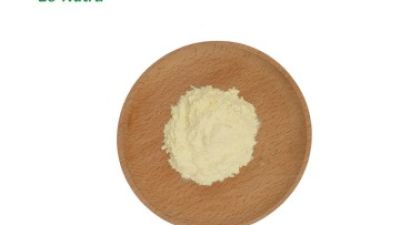
Serrapeptase powder is a neutral protease enzyme increasingly considered for food-supplement formulations focused on inflammation management, comfort, and circulation support. The 2023 Council for Responsible Nutrition consumer survey reported that 74% of U.S. adults use dietary supplements, highlighting the importance of consistent quality and transparent product information. Serrapeptase is available under the names Serrapeptase Powder and Pure Serrapeptase, with typical activity specifications of 200 SPU/mg and 2,200 SPU/mg. Since activity—not simply weight—determines enzyme potency, buyers should confirm the testing method, assay results, and batch-specific certificate of analysis before selection.

A suitable ingredient should have a uniform yellowish-brown to brown appearance and be evaluated for identity, enzymatic activity, moisture, microbial limits, and heavy metals in line with recognized food-safety systems such as HACCP and ISO 22000. Suppliers should also provide traceability, allergen information, and documented manufacturing controls. For storage and transport, vacuum aluminum-foil bags can help protect the powder from moisture and oxygen, while 25 kg fiber drums with double-layer food-grade polyethylene bags are practical for bulk production. Customized specifications may be considered when a formulation requires a particular activity level, packaging format, or quality profile.

FAQS

How should a supplement formula begin?

Start with a measurable functional objective, not a fashionable ingredient. Define the target consumer, serving purpose, and supporting evidence. The target matters.

Which ingredients may support active adults and older consumers?

Protein may support muscle maintenance for active adults and older consumers. Vitamin D and calcium may suit bone-health concepts. Magnesium supports normal muscle and nervous-system function.

What should developers check when using omega-3 ingredients?

Test oxidation carefully during development and storage studies. Rancid capsules can create an unpleasant odor and damage consumer confidence. This is not minor.

What information is needed for probiotic formulation?

Document the exact strain, viable count, shelf-life performance, and storage conditions. The word “probiotic” alone is too broad. Evidence should be strain-specific.

Which quality tests should begin before pilot production?

Confirm ingredient identity using suitable methods, such as HPLC, FTIR, or pharmacopeial procedures. Test potency, impurities, heavy metals, pesticides, and microbiological limits. Keep retain samples from every lot.

How can a team design a useful stability program?

Use long-term and accelerated conditions when appropriate. Monitor potency, moisture, color, odor, dissolution, and microbial quality. A sealed pouch may still contain caked powder.

Why does packaging affect supplement stability?

Packaging can influence moisture, light exposure, oxygen, and transport damage. Test the intended container, seal strength, and repeated opening. Appearance alone proves little.

What problems can appear during manufacturing scale-up?

Powder may flow differently, separate, or show fill-weight variation in a larger batch. Compare mixing time, moisture, yield, and in-process results. Small errors grow.

What is needed before market readiness?

Confirm specifications, validated methods, compliant labeling, and evidence for product claims. Review requirements for each target market. A formula may look ready, yet need another revision.

Conclusion

This Supplement Formulation Development Guide provides a practical overview of how dietary supplements can be developed in China, from initial concept to market readiness. It explains how to define functional objectives, select suitable ingredients, and balance factors such as efficacy, safety, dosage form, consumer needs, and product positioning. It also highlights the importance of understanding regulatory requirements and accurately determining product classification before development begins.

The guide outlines a step-by-step process covering formulation design, laboratory trials, ingredient compatibility, sensory evaluation, and optimization. It further discusses testing, quality control, stability assessment, manufacturing scale-up, packaging considerations, and final readiness checks. By integrating scientific evaluation, documented quality procedures, and compliant production practices, companies can improve consistency, manage development risks, and create supplements that are safe, stable, and suitable for the intended market.
Amelia

Amelia

Amelia is a dedicated professional marketing specialist with a deep commitment to promoting natural, healthy, and innovative raw materials. As an integral part of our team, she channels her extensive knowledge into researching and marketing products that significantly enhance the fields of......
Previous Why Choose an OEM Supplement Manufacturer?