Leave Your Message
0%

Picking a trustworthy supplier is honestly where you should start when figuring out how to choose standardized herbal extracts in China. A shiny certificate isn’t enough on its own—buyers really need to dig deeper. Things like botanical identity, which part of the plant they used, the extraction solvent, marker compounds, and whether batch-to-batch quality stays consistent are all super important. And yeah, the label on the drum should honestly match what's inside—it’s a basic but crucial point.

Dr. Roy Upton, who founded the American Herbal Pharmacopoeia, once said, “Quality isn’t just a single test; it’s a whole system.” And that really rings true for the Chinese extract market. So don’t just take their word for it—ask for full batch records, validated testing methods, heavy metal results, pesticide screenings, microbial limits, and info on residual solvents. Also, check if the testing lab is independent and whether their methods are appropriate for that specific herb. Sometimes a supplier might boast high marker percentages but ignore the real risks of contamination or authenticity. That’s a red flag.

If you’re experienced, you’ll also want to visit the production site—don’t just rely on the website. Look for things like well-controlled storage, properly calibrated equipment, clean processing areas, and traceability for raw materials. Comparing companies like Shaanxi Plant Extract and Hunan Nutramax isn’t just about reputation; go for the documentation, potentially do audits, and maybe even test some samples yourself. It’s smart to request a small pilot batch first. Then, you can check out its color, smell, how it dissolves, and look at the test results.

Let’s be real: perfection isn’t usually realistic. Even the best supplier might mess up communication sometimes or have inconsistent paperwork—that’s just human. But those little details do matter. Deciding how to choose standardized herbal extracts isn’t just about technical stuff, it’s about using judgment, verifying info repeatedly, and making smart decisions. Remember, a standardized herbal extract isn’t just some commodity; it should be treated as a controlled ingredient. The key is to find a balance—looking at solid evidence, transparency from the supplier, and realistic expectations across multiple batches.
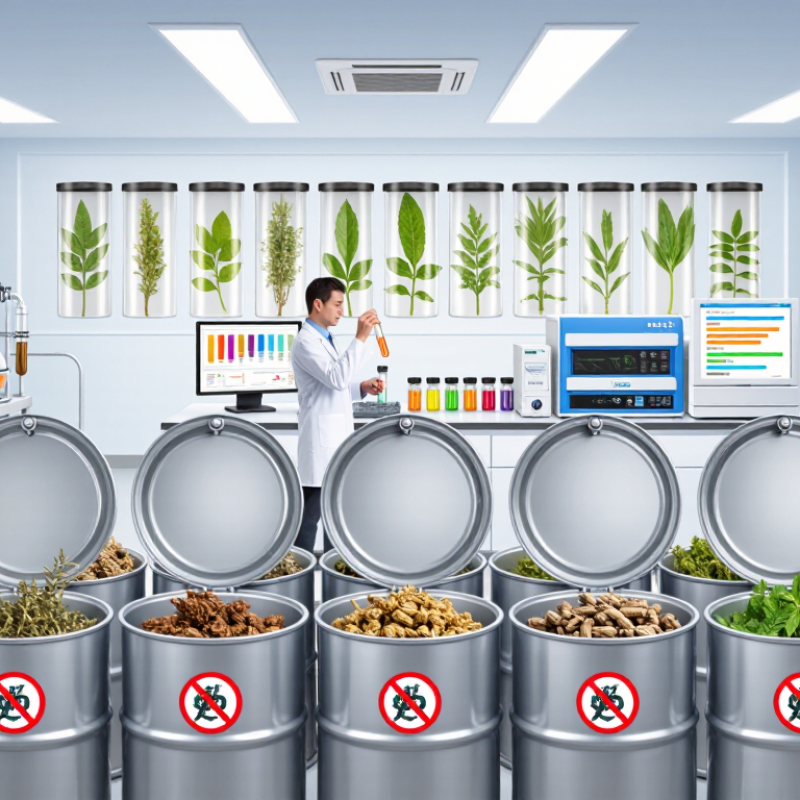
How to Choose the Best Standardized Herbal Extracts in China

Definition and Role of Standardized Herbal Extracts

Standardized herbal extracts are preparations adjusted to contain a defined amount of selected plant compounds, often called marker compounds. They are not simply powdered herbs. Extraction uses a solvent to draw particular constituents from plant material, and the finished extract is tested against a stated specification. In China, this approach can help buyers compare batches from different harvests or production runs. Consistency matters. A label stating “2% marker compound,” for example, gives a measurable reference, but it does not describe every substance in the extract.

Standardization supports quality control, formulation work, and clearer communication between suppliers and manufacturers. A reliable assessment should consider the plant’s identity, the part used, extraction details, test methods, and batch records. Look closely at how results were measured. A clean chromatogram and a traceable sample tell more than a percentage alone. Yet a neat number can create false confidence. Marker compounds may not represent all the plant’s active constituents, and a standardized extract is not automatically more effective or suitable for every use. Even the color and aroma can vary slightly. That may be normal, but it deserves a question, not a guess.

Key Quality Standards for Chinese Herbal Extracts

Choosing standardized herbal extracts in China starts with confirming the plant’s identity. Check the Latin binomial, plant part, origin, and extraction method. Roots, leaves, and flowers can differ in their active profiles. Small details matter.

A reliable specification should state the extract ratio, carrier ingredients, and marker compounds, where relevant. Ask for batch-specific test results, not only a general product sheet. These should cover identity, marker content, moisture, and microbiological quality. Heavy metals and pesticide residues also deserve attention. Testing methods and acceptance limits should be clear enough to review. A certificate of analysis is useful, but it is not proof by itself. Independent verification can help assess whether results match the stated specification.

When comparing a Herbal Extracts List, look for traceable raw materials and consistent records across batches. Confirm whether the extraction solvent is disclosed and whether residual-solvent testing applies. Packaging and storage details matter too; heat and moisture can affect stability. Some supplier documents are oddly uneven. That is a reason to ask precise questions, not to assume poor quality. Standards may also vary by herb and intended use, so one checklist rarely fits every extract.

How to Assess Botanical Identity and Extract Consistency

A dependable standardized herbal extract begins with the right plant, not just a familiar common name. Ask suppliers in China to document the Latin name, plant part, and geographic source. These details matter: leaf, root, and seed from one species can have different chemical profiles. A voucher specimen or qualified botanical review can support identification. No single test settles it.

For extract consistency, compare batch records and analytical results, not only the stated marker percentage. Chromatographic fingerprints can reveal broader similarities or differences between batches. Review the extraction solvent, drug-to-extract ratio, moisture, and test methods. In practice, these details are easy to overlook. They may explain why two extracts with matching marker values behave differently. Liquid Herbal Extracts also need clear records of concentration and storage conditions; appearance alone is a weak guide.

Tips: Request a recent certificate of analysis and ask how identity was confirmed. Check that test methods and specifications stay consistent across batches. If a result seems unusually neat, ask what variation the supplier accepts—and why. That conversation can expose gaps worth investigating.

How to Choose the Best Standardized Herbal Extracts in China - How to Assess Botanical Identity and Extract Consistency

Assessment Dimension What to Verify Useful Evidence or Test How to Assess Consistency
Botanical identity Confirm the accepted Latin binomial, author citation where applicable, and any relevant synonym. Common names alone may refer to more than one plant. Supplier specification and traceable raw-material records; identification against an appropriate pharmacopoeial monograph when one applies. Use the same clearly defined taxon in the specification, test records, and batch documentation. Resolve any synonym or naming differences before purchase.
Plant part Check the exact part used, such as root, leaf, flower, fruit, bark, or seed. Different parts of the same species can have different chemical profiles. Raw-material records, supplier declaration, and an identity test appropriate to the material and monograph. Require the plant part to be stated consistently on the specification and certificate of analysis (CoA); do not treat different parts as interchangeable.
Geographic and supply-chain traceability Review the stated growing or collection area, harvest or collection information, and chain of custody where these are relevant to the product. Supplier traceability records, receiving records, and documented qualification of the source. Compare records across lots and investigate unexplained changes in source, collection conditions, or upstream supplier.
Macroscopic and microscopic examination For incoming botanical material, assess visible and microscopic features that can help distinguish the correct species or plant part from substitutes or adulterants. Pharmacopoeial identification procedures, where available, or a documented laboratory method suitable for the raw material. These examinations are most informative for intact or powdered botanicals. They may have limited value after extraction and should not be the sole identity evidence for a concentrated extract.
Chromatographic identity fingerprint Check whether the sample’s characteristic pattern is consistent with the specified botanical material and reference profile. Thin-layer chromatography (TLC), high-performance TLC (HPTLC), or HPLC/UPLC fingerprinting, using suitable reference materials and a defined procedure. Compare the test sample with the approved reference or validated acceptance criteria. Assess the overall pattern, not just one matching peak or spot.
DNA-based identification Consider DNA testing as a supplementary tool for confirming botanical material when a suitable method and reference sequence are available. Documented DNA barcoding or other validated molecular identification performed on an appropriate sample. DNA may be degraded, removed, or present at low levels in processed extracts. A negative result does not by itself prove misidentification; interpret it alongside chemical and documentary evidence.
Marker-compound assay Verify the named marker compound or group of compounds, the reported basis (for example, dry basis), and the assay method. Validated or compendial HPLC/UPLC or another suitable quantitative method with appropriate reference standards and system-suitability controls. Compare results with the agreed product specification and method uncertainty. A marker assay supports compositional control but does not, by itself, establish botanical identity or overall quality.
Extract ratio and native extract information Review the drug-to-extract ratio (DER) or other clearly defined raw-material-to-extract information, and distinguish native extract from extract that includes carriers or added excipients. Manufacturing description, batch record information, and specification stating how the ratio is calculated. Compare like with like: definitions and calculation bases should match across suppliers and batches. A DER alone does not demonstrate marker content or equivalent potency.
Extraction process and solvent Identify the extraction solvent or solvent system and relevant processing details that can affect the extract’s chemical profile. Manufacturing-process summary, solvent declaration, and residual-solvent testing where applicable. Keep the solvent system and critical process parameters within documented, controlled ranges. Assess process changes for their possible effect on the fingerprint and assay.
Batch-to-batch chemical profile Assess variation in the chromatographic fingerprint, marker assay, and other product-specific attributes across multiple lots. CoAs and trend data from a representative series of production batches; chromatograms or equivalent analytical records where available. Look for consistent profiles and results that meet the approved specification. Investigate shifts, unexplained outliers, and changes in analytical methods or reference standards.
Contaminants and adulterants Review risks for heavy metals, pesticide residues, microbial contamination, mycotoxins, undeclared pharmaceuticals, and other relevant contaminants. Risk-based testing by suitable methods, supplier controls, and applicable current Chinese requirements or relevant pharmacopoeial limits. Use limits applicable to the intended material and use. Confirm the test method, reporting basis, and laboratory suitability; do not assume one universal limit applies to every extract.
Moisture and physical properties Check moisture or loss on drying, appearance, and other specified properties that may affect stability, handling, or processing. CoA results generated using the stated method and a product-specific specification. Compare results with established limits and historical batch trends. Unexpected changes may warrant investigation, particularly when they coincide with changes in assay or appearance.
Stability and retest period Review storage conditions, packaging, stability data, and the assigned expiry or retest period. Stability studies using relevant packaging and monitoring of suitable quality attributes, including assay or fingerprint where appropriate. Confirm that the material remains within specification through the stated period under the recommended storage conditions.
Documentation and quality controls Check that specifications, CoAs, methods, and lot identifiers are complete and consistent. Review the supplier’s quality-system and change-control practices. Batch-specific CoA, test-method references, traceability records, and documented supplier qualification. Verify that each CoA corresponds to the supplied lot and that nonconformities, method changes, and source or process changes are documented and assessed.

Selection principle: Set acceptance criteria for the specific botanical extract, intended use, and applicable current requirements. No single marker, extract ratio, or test can independently confirm identity, purity, and consistency.

Evaluation of Manufacturers, Facilities, and Production Practices

Choosing standardized herbal extracts in China requires more than comparing prices. A serious evaluation begins with the manufacturer’s experience, technical staff, and quality history. Ask for batch specifications, botanical identity methods, and recent certificates from independent laboratories. Organic Herbal Extracts also need credible organic documentation, not a marketing phrase. Review the issuing body, scope, and expiry date. Small details matter.

Visit or audit the facility when possible. Observe material receiving, quarantine labels, air handling, water systems, and cleaning records. Separate areas should control dust and cross-contamination. Production equipment must match the extract’s scale and solvent process.

Operators should explain critical steps without reading a script. Check whether each batch has complete records, including raw-material lot numbers, extraction temperatures, concentration times, and yield. A polished factory can still hide weak controls. I have learned not to confuse spotless floors with reliable data.

Testing should cover identity, marker compounds, microbial limits, heavy metals, pesticides, and residual solvents where relevant. Request methods, acceptance limits, and original reports. Stability data helps confirm that the declared strength survives storage and transport. Traceability should work backward from a finished bag to its farm or approved supplier. Ask how deviations, complaints, and failed batches are handled. No system is perfect. An honest answer may be more valuable than a perfect presentation.

Testing Safety, Purity, Potency, and Contaminant Control

How to Choose the Best Standardized Herbal Extracts in China
Testing Safety, Purity, Potency, and Contaminant Control

A reliable herbal extract begins with clear botanical identification. Ask for the Latin name, plant part, harvest region, and extraction method. These details reduce substitution risks. Experienced buyers should review batch-specific certificates of analysis, not generic product sheets. Identity testing may include microscopy, DNA analysis, TLC, or HPLC comparison. HPLC can also measure marker compounds and confirm declared potency. A single test is rarely enough.

Safety requires more than checking the main active compound. Request results for heavy metals, pesticides, microbial counts, aflatoxins, residual solvents, and unauthorized additives. Testing should use validated methods and, ideally, an independent laboratory accredited to ISO/IEC 17025. Inspect the sample physically, too. Unexpected color, clumping, or a sharp solvent odor deserves investigation. I have found that paperwork can look complete while traceability remains weak. That is an uncomfortable but important limitation.

Tips: Compare the lot number across the packaging, COA, and shipment record. Confirm sampling dates and detection limits. Ask whether results are quantitative or simply “pass.” Store a sealed retention sample for future comparison. Verify storage conditions, because heat and moisture can reduce potency. If a supplier avoids reasonable technical questions, pause the purchase. No certificate replaces careful judgment.

Regulatory Documents, Traceability, and Export Compliance

How to Choose the Best Standardized Herbal Extracts in China

Regulatory Documents, Traceability, and Export Compliance

Selecting Powdered Herbal Extracts requires more than checking the active percentage. In supplier audits, I request the botanical name, plant part, extraction ratio, and standardization method. Each production lot should include a current certificate of analysis. It should cover identity, marker compounds, moisture, microbial limits, heavy metals, pesticides, and residual solvents. A neat PDF is not enough. Verify the testing laboratory, report date, method, and matching batch number.

Traceability should reach the cultivation area or approved raw-material source. Ask for harvest records, supplier approvals, processing dates, and warehouse conditions. Lot codes should connect raw herbs with finished cartons. I also compare production records with the certificate of analysis. Small mismatches deserve questions. Sometimes they reflect clerical mistakes, but assumptions can create expensive customs delays.

Export compliance depends on the destination market. Confirm product classification before shipment. Check labeling, ingredient declarations, packaging language, and permitted claims. Depending on the product and destination, documents may include a commercial invoice, packing list, certificate of origin, customs declaration, or phytosanitary certificate. Request recent GMP evidence and audit responses, not only certificates. I have learned that document control can weaken during rapid growth. Therefore, keep written specifications, approved changes, and retained samples. Independent testing before shipment adds cost, but it can reveal contamination or identity problems early. Clearance rules change, so confirm requirements with customs professionals and the importing authority.

This checklist counts the core evidence items that should normally be verified when selecting a standardized herbal extract from China. The count is a practical sourcing framework, not a universal legal minimum: requirements depend on the product classification, intended use, and destination market.

Key references include China’s National Medical Products Administration, the State Administration for Market Regulation, the General Administration of Customs of China, the applicable Chinese Pharmacopoeia or food standards, and the import rules of the destination country.

FAQS

What details should a herbal extract specification include?

It should identify the Latin plant name, plant part, origin, extraction method, and extract ratio. It should also list carrier ingredients and relevant marker compounds.

What should I check on a certificate of analysis?

Confirm that it matches the batch being purchased. Review the report date, laboratory, test methods, and acceptance limits. A certificate alone is not proof.

Which tests are useful for evaluating an extract?

Ask about identity, marker content, moisture, and microbial quality. Heavy metals, pesticide residues, and residual solvents may also need testing.

How can I assess a manufacturer’s production controls?

Review batch records, cleaning logs, quarantine labels, and equipment suited to the extraction process. Ask how staff handle failed batches and complaints. Spotless floors are not enough.

How can raw materials be traced?

Lot codes should link finished cartons to raw-material batches and approved sources. Harvest records and supplier approvals can help fill the gaps.

What should I check when evaluating organic documents?

Review the issuing body, document scope, and expiry date. A vague claim is not adequate evidence. Details matter.

Why do packaging and storage conditions matter?

Heat and moisture can affect extract stability. Ask for storage guidance and stability data covering the declared strength.

Which documents may be needed for export?

Requirements depend on the destination and product classification. Possible documents include invoices, packing lists, and certificates of origin. Rules can change, so confirm current requirements with relevant authorities.

Conclusion

How To Choose Standardized Herbal Extracts begins with understanding how standardization helps ensure consistent levels of key botanical compounds from one batch to the next. Buyers should verify botanical identity through accepted scientific methods, including correct species, plant part, geographic origin, and extraction ratio. Clear quality standards should cover raw material authentication, processing controls, marker-compound ranges, and consistency testing, allowing the extract to meet its intended application reliably.

A thorough evaluation should also consider the manufacturer’s facilities, equipment, hygiene systems, quality management procedures, and production records. Independent testing is important for confirming identity, potency, purity, and the absence of unwanted contaminants such as heavy metals, microorganisms, pesticides, or residual solvents. Finally, review complete regulatory documentation, certificates of analysis, batch records, traceability systems, and export-related paperwork. Choosing a supplier that provides transparent evidence at every stage helps support product quality, supply continuity, and compliance with applicable market requirements.

Amelia

Amelia

Amelia is a dedicated professional marketing specialist with a deep commitment to promoting natural, healthy, and innovative raw materials. As an integral part of our team, she channels her extensive knowledge into researching and marketing products that significantly enhance the fields of......
Previous What Is Hydrolyzed Wheat Protein in Sports Nutrition?
Next Top 10 Curcumin Bioavailability Improvement Methods