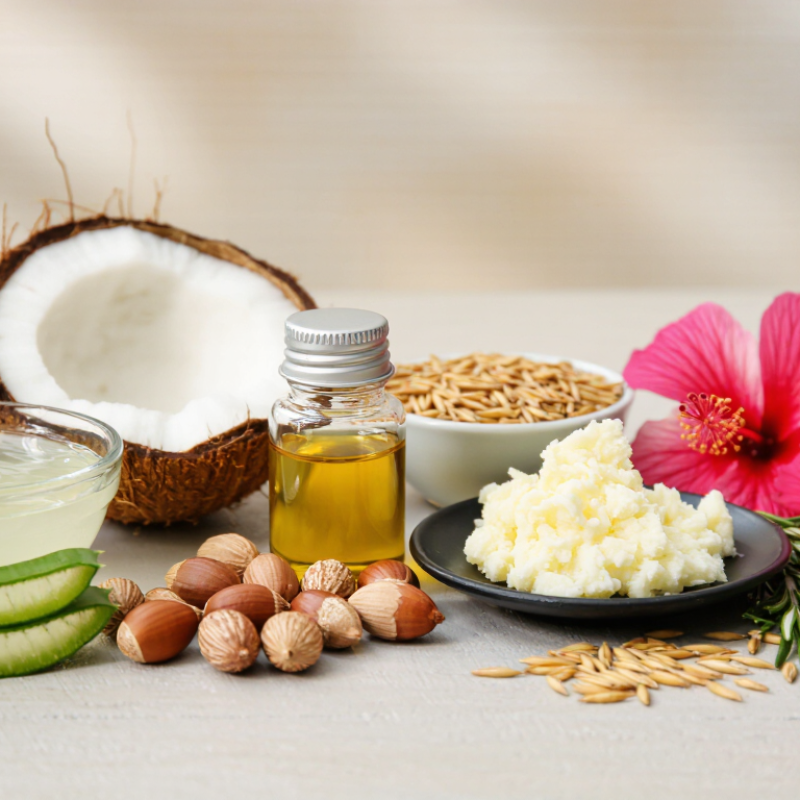
Making good hair products isn’t just about tossing in ingredients that sound natural — there’s more to it. This guide walks you through seven practical ingredients commonly used in natural hair care formulations, like aloe vera, coconut oil, argan oil, shea butter, rosemary, oats, and hibiscus. Each one plays a different role, whether it’s adding slip and softness, helping with scalp comfort, or locking in moisture.
But let’s be real: how well a product works depends on various factors like how much of each ingredient you use, how you process it, the hair type you're targeting, and the overall formula. A cosmetic chemist might blend aloe vera with humectants to create a lightweight conditioner. On the other hand, someone formulating for fine hair might cut back on coconut oil because too much richness can leave strands feeling flat. It’s all about the little details — supplier specs, INCI names, allergen info, and stability data should all guide your choices. And don’t forget sensory tests — they can catch things that lab measurements might miss, like how easy it is to comb through or whether any residue stays behind after drying.
Just because something's labeled 'natural' doesn’t automatically mean it’s gentle, eco-friendly, or perfect for everyone. That’s an honest point worth considering. Some botanical extracts, essential oils, or proteins might still cause irritation or not sit well with certain hair types. So, responsible formulation isn’t just about throwing in pretty ingredients. It means doing preservative checks, microbial testing, evaluating your packaging, and making sure safety assessments are thorough. And when it comes to marketing claims, honesty is key—back them up with real evidence rather than just pretty words.
This intro is a good starting point, but keep in mind that formulating real hair care products involves lots of tweaks, failed trials, and thoughtful reflections. The most fashionable ingredient isn’t always the best one — it’s the one that performs safely and effectively as part of a well-balanced, tested system designed for your specific needs.
7 Best Natural Ingredients for Hair Care Formulations
An effective natural ingredient does more than sound gentle. It must suit the hair fiber, scalp condition, formula pH, and intended use. In practical formulation work, I assess performance through slip, combability, moisture retention, and sensory feel. Aloe vera can provide lightweight hydration, while oat extract may calm a dry-feeling scalp. Coconut oil and jojoba oil can improve softness, but their weight may flatten fine hair. Shea butter offers rich emollience. Rosemary and argan oil require careful dosage.
Effectiveness also depends on evidence and stability. A beautiful plant extract is not useful if it separates, oxidizes, or loses its character during storage. I look for clear supplier documentation, consistent processing, and testing that matches the finished product. Natural ingredients vary between harvests. That uncertainty deserves attention. For example, an oil that feels excellent in a rinse-out mask may seem greasy in a leave-in spray. The mistake is easy. Formulators should also consider fragrance sensitivity, allergen declarations, and appropriate preservation. Natural does not automatically mean safe for everyone.
Tips: Start with a small formula trial. Compare treated and untreated hair under the same conditions. Record combing force, shine, residue, and feel after 24 hours. Patch-test finished products before wider use, and avoid promising results beyond your testing. I still revise formulas after real user feedback. That step can expose problems laboratory measurements miss.
| Natural Ingredient | Primary Hair-Care Function | Why It Can Be Effective | Useful Formulation Types | Best Suited For | Typical Formulation Considerations |
|---|---|---|---|---|---|
| Aloe Vera | Hydration and scalp soothing | Its water-rich gel contains polysaccharides and can provide a light, soothing feel while helping hair retain surface moisture. | Leave-in conditioners, scalp lotions, moisturizing sprays, shampoos | Dry-feeling hair and consumers seeking lightweight hydration | Use a preserved form; fresh botanical gel is highly perishable. Excessive use may create tackiness. |
| Coconut Oil | Pre-wash conditioning and reduced protein loss | Its small, relatively linear fatty acids can penetrate the hair fiber more readily than many larger oils, helping reduce protein loss during washing. | Pre-shampoo treatments, hair masks, conditioners, oil blends | Dry, porous, or chemically treated hair that benefits from richer conditioning | May feel heavy or stiff on fine hair; melting behavior and oxidation stability should be evaluated. |
| Argan Oil | Emollience, shine, and frizz control | Its triglycerides contain oleic and linoleic acids, while tocopherols and other minor components support a smooth, lubricated feel. | Serums, rinse-off conditioners, masks, styling oils | Dry, coarse, frizzy, or dull-looking hair | Use a low-to-moderate level in lightweight products; protect from heat, light, and oxygen to limit rancidity. |
| Shea Butter | Rich conditioning and moisture sealing | Its high content of stearic and oleic lipids forms an emollient film that can reduce roughness and improve softness. | Deep conditioners, hair creams, pomades, curl butters | Very dry, thick, textured, or tightly curled hair | Can weigh down fine hair; melting point, crystal structure, and texture must be controlled during manufacturing. |
| Jojoba Oil | Light conditioning and scalp-feel improvement | It is a liquid wax ester rather than a conventional triglyceride oil, providing slip and a non-greasy emollient film. | Scalp oils, lightweight conditioners, serums, beard and hair treatments | Normal-to-dry hair and formulas designed to minimize heaviness | Assess sensory performance and compatibility with emulsifiers; avoid implying that it changes natural sebum production. |
| Honey | Humectancy and conditioning | Its sugars attract water, which can support a softer, more hydrated feel when the formula is balanced with other ingredients. | Moisturizing masks, conditioners, scalp treatments, shampoos | Dry hair in humid or controlled environments where humectancy is desirable | May feel sticky and can affect preservation, color, odor, and viscosity; use a standardized cosmetic-grade material. |
| Rosemary Leaf Extract | Antioxidant support and scalp-care positioning | Compounds such as rosmarinic acid and diterpenes provide antioxidant activity in suitable extracts; evidence for hair-growth claims remains formulation- and study-dependent. | Scalp serums, shampoos, conditioners, antioxidant hair treatments | Scalp-focused formulas and products designed to help protect oils from oxidation | Do not equate antioxidant activity with proven hair regrowth. Control extract strength, odor, color, allergen profile, and preservative compatibility. |
Formulation note: Natural origin does not automatically determine performance or safety. Final effectiveness depends on ingredient quality, concentration, processing, product pH, preservation, packaging, and compatibility with the intended hair type.
Aloe vera remains a practical botanical for Herbal Cosmetic Formulations, especially when hydration and scalp comfort are priorities. Its gel contains polysaccharides, minerals, and water, creating a light, fresh skin feel. A 2021 review in Molecules linked aloe polysaccharides with moisturizing and soothing potential, although results depend on processing and concentration.
Keep the formula honest. Fresh-looking gel does not guarantee lasting hydration. Humectants, preservatives, and compatible emulsifiers still matter. The 2024 Global Wellness Economy Monitor reported a wellness economy value of 6.3 trillion US dollars in 2023, showing strong demand for comfort-focused personal care. Aloe can support that expectation, but it should not carry the whole formula.
For a daily scalp lotion, formulators may pair aloe with glycerin and panthenol. Apply the product to a clean scalp, then observe tightness, flakes, and redness over several weeks. Patch testing remains sensible, even with familiar botanicals. The 2023 European cosmetics market was valued at about 79.8 billion euros, according to Cosmetics Europe, yet market size does not prove ingredient performance. I have found that aloe formulas feel best when they dry quickly, leave no sticky film, and avoid exaggerated claims.
Coconut oil is valued in hair care because it can coat the fiber and reduce moisture loss. Its small fatty-acid structure may help it move into the hair shaft. A Journal of Cosmetic Science study by Rele and Mohile found that coconut oil reduced protein loss more effectively than mineral and sunflower oils. That matters for dry, brushed hair.
In Cosmetic Chemistry Formulations, the oil works best when its level matches the hair’s porosity and texture. The Cosmetic Ingredient Review expert panel has assessed coconut-derived ingredients as safe in current cosmetic use. Still, natural does not mean universally gentle. Heavy application may leave fine hair flat, waxy, or difficult to rinse. I have seen this mistake in simple conditioning trials. More oil did not create more softness.
Tips: Apply a small amount to damp mid-lengths and ends. Start with 0.5–1% in a rinse-off conditioner, then evaluate slip and residue. Use controlled stability testing, including heat cycles and freeze-thaw checks. Check odor, color, viscosity, and microbial quality after storage. A 2023 professional hair-fiber review also emphasized that conditioning results depend on contact time, rinsing, and fiber damage. Patch testing remains sensible, especially for sensitive scalps. The formula may look elegant in a beaker, yet feel greasy in real use.
Argan oil is a practical ingredient for hair care products that need shine, softness, and protection. In Cosmetic And Toiletry Formulations, its lightweight texture helps reduce a dry, rough feel without leaving heavy residue. The oil contains fatty acids and vitamin E, which support smoother-looking strands and help limit moisture loss. A few drops can make a noticeable difference. Hair often feels less tangled after application.
For reliable performance, formulators should consider purity, oxidation, and the oil’s processing history. Cold processing may help preserve its natural profile, but it does not guarantee perfect stability. I usually check the oil’s scent, color, and supplier documentation before testing a formula. Oxidation remains a concern. Dark packaging and suitable antioxidants can help slow unwanted changes. Still, no formula is automatically stable. Heat, light, and repeated air exposure can alter the finished product.
For dry or textured hair, apply a small amount from mid-lengths to the ends. Start with less than a teaspoon. Fine hair may need only one or two drops. Leave-in serums can combine argan oil with lightweight emollients for easier spreading. Patch testing is sensible, especially for sensitive scalps. Hair can look greasy when too much oil is used. I have found that personal preference matters as much as laboratory measurements. Some users want a glossy finish, while others prefer an almost invisible touch.
Shea butter, listed as Butyrospermum Parkii Butter, gives hair formulations dense, cushiony nourishment. Its triglycerides soften dry strands and help smooth raised cuticles. This can reduce friction, flyaways, and visible frizz. The Cosmetic Ingredient Review Expert Panel reported that shea-derived ingredients are safe in current cosmetic use when properly formulated (International Journal of Toxicology, 2017).
Texture matters. Unrefined shea butter may carry a stronger aroma and variable color. Refined material usually offers better sensory consistency. In a conditioner or mask, formulators can combine it with lightweight emollients to prevent a waxy finish. Leave-in products need more restraint, especially for fine or low-porosity hair. Too much richness can flatten movement and create buildup. That is easy to overlook.
Market demand supports careful innovation. Grand View Research valued the global hair care market at approximately 96.2 billion dollars in 2023, with projected growth through 2030 (Hair Care Market Size Report, 2024). However, “natural” does not automatically mean effective. A stable formula still needs controlled heating, proper dispersion, preservation, and compatibility testing. I would not promise universal frizz control. Humidity, curl pattern, porosity, and application amount change the result. Small testing panels often reveal what laboratory expectations miss. One pea-sized amount may suit thick curls, while a few grains may suit fine hair.
Shea butter’s hair-conditioning properties are closely associated with its naturally high oleic and stearic acid content. The chart shows representative midpoint values from commonly reported compositional ranges for refined and unrefined shea butter.
Oleic and stearic acids are the predominant fatty acids in shea butter, helping support emollience, softness, moisture retention, and improved frizz control in hair-care formulations. Actual values can vary by origin, processing method, and cultivar.
7 Best Natural Ingredients for Hair Care Formulations
Rosemary extract is gaining attention in scalp-care formulas because it supports a cleaner, more evidence-led approach to hair vitality. A six-month randomized trial involving 100 adults with androgenetic alopecia found that rosemary oil and 2% minoxidil produced similar hair-count improvements by month six. The study appeared in SKINmed in 2015, although it examined oil rather than every type of rosemary extract. The evidence is promising, not complete.
For formulators, extract quality matters. Botanical origin, extraction method, marker compounds, and storage conditions can change performance. Rosemary’s phenolic compounds may help defend formulations against oxidation, while a well-designed scalp product can provide a refreshing sensory experience. Still, “natural” does not automatically mean gentle. Irritation, fragrance sensitivity, and unsuitable concentrations remain practical concerns. The global hair-care market was valued at approximately USD 99.45 billion in 2022, according to Fortune Business Insights, increasing demand for credible botanical claims rather than vague promises.
Tips: Select a documented extract. Check supplier testing. Run stability and compatibility studies. Recommend a patch test. Avoid claiming regrowth without clinical support. In practice, many formulas need refinement; rosemary alone cannot solve every scalp concern. Formulators should measure consumer results carefully and remain open to disappointing findings.
7 Best Natural Ingredients for Hair Care Formulations
Green Tea Extract for Antioxidant and Scalp Support
Green tea extract, derived from Camellia sinensis leaves, brings a practical antioxidant story to hair care formulations. Its catechins can help reduce oxidative stress caused by environmental exposure. The scalp benefits from this support. It is not a miracle ingredient.
In a lightweight scalp serum, the extract can complement soothing humectants and gentle cleansing agents. A clear, water-based formula feels fresh between washes. Formulators should check the extract’s concentration, solvent, color, odor, and polyphenol stability. These details affect performance and consumer acceptance. Some extracts darken over time. That can be disappointing, but it signals a need for packaging and stability testing. Airless packaging may help limit repeated air exposure, although it cannot replace proper preservation.
Green tea extract may also support a balanced-feeling scalp, especially when excess oil or urban residue creates discomfort. Evidence varies between extract types, so claims should remain measured. “Supports scalp comfort” is more reliable than promising hair regrowth. Sensitive users still need a patch test. Fragrance-free options may suit more routines. From a professional perspective, testing should include pH compatibility, microbial protection, and accelerated stability. Small pilot batches often reveal problems that a formula sheet misses. The tea scent may seem mild at first, then become noticeable. That is worth reviewing before scale-up.
Natural hair care begins with disciplined selection, not a long ingredient list. Seven useful options include aloe vera, oat extract, jojoba oil, shea butter, coconut oil, argan oil, and rosemary extract. Each behaves differently. Aloe and oat can support soothing formulas, while oils improve softness and reduce friction. Shea and coconut may feel heavy on fine hair. Rosemary extracts require careful concentration and documentation.
When choosing Cosmetic&Personal Care Ingredients, check the supplier’s identity, botanical name, extraction method, allergen statement, and storage guidance. Choose cosmetic-grade materials with current specifications and contaminant testing. Natural does not mean harmless. Essential oils and botanical extracts can irritate sensitive scalps, especially in leave-on products. Perform a small patch test before wider use, and record the result. A simple record matters.
Combine ingredients by function and introduce one change at a time. Start with low levels, then assess scent, texture, scalp comfort, and hair feel after several uses. Water-based aloe and oat blends need suitable preservation and pH control. Oil-rich blends need protection from heat, light, and oxidation. Avoid mixing many fragrant botanicals together. In my own formulation trials, a pleasant scent sometimes distracted me from a rough finish. I still revisit that decision. A formula can look natural and fail in practice.
It should match the hair type, scalp condition, formula pH, and intended product use. Performance matters. Check slip, combability, moisture retention, residue, and sensory feel.
Aloe vera can add light moisture without a heavy finish. Green tea extract may support a balanced-feeling scalp. Results vary with concentration, solvent, and formula stability.
They can, but dosage requires restraint. Coconut oil, jojoba oil, and shea butter may flatten fine strands. A few grains may be enough. Too much can create buildup.
Shea butter softens dry strands and helps smooth raised cuticles. This may reduce friction, flyaways, and rough-looking frizz. Humidity and hair porosity still change the outcome.
No strong promise should be made from the ingredient alone. It may support scalp comfort and antioxidant protection. “Supports scalp comfort” is a more careful claim.
Extracts can darken, separate, oxidize, or lose their original character. Storage conditions matter. Test color, odor, pH, microbial protection, and appearance over time.
Start with a small trial batch. Compare treated and untreated hair under identical conditions. Record combing force, shine, residue, and feel after 24 hours.
Not automatically. Fragrance sensitivity and individual reactions remain possible. Patch-test the finished product, especially before wider use. Real user feedback may expose problems laboratory tests miss.
Effective hair care formulations begin with selecting Natural Cosmetic Ingredients For Hair Care Formulations that provide clear benefits, suit the product’s purpose, and work well with the scalp and hair type. Aloe vera helps hydrate and soothe, while coconut oil supports conditioning and moisture retention. Argan oil can improve softness, shine, and protection, and shea butter offers rich nourishment that helps reduce dryness and frizz. Together, these ingredients can create a balanced foundation for healthier-looking, more manageable hair.
Botanical extracts can further support scalp and hair vitality. Rosemary extract is valued for scalp care, while green tea extract contributes antioxidant support and helps maintain a refreshed scalp environment. When combining natural ingredients, formulators should consider concentration, stability, texture, scent, and compatibility. Careful testing is important to ensure the final formula remains safe, gentle, effective, and suitable for its intended use.