Leave Your Message
0%

Hey, let’s talk about the 2026 trends in dietary supplement ingredients. It's getting more interesting because consumers aren’t just checking labels anymore—they’re asking real questions about safety, proof, and value. A bright, colorful label? That’s just not cutting it. People want to know where ingredients come from, how they’ve been tested, and if the dosage is backed by actual human research. This shift is having a big impact on how products are developed—whether it’s vitamins, minerals, botanical extracts, probiotics, or other functional foods.

Some of the coolest trends might include botanicals that have been studied in clinical trials, specially crafted nutritional mixes, formulas aimed at the microbiome, and products that are more transparent about their sourcing. But just because something is trending doesn’t mean it’s proven to work. For instance, an ingredient might get a lot of buzz on social media but still lack solid clinical evidence. That’s why responsible brands really need to dig into peer-reviewed research, manufacturing standards, stability data, and third-party testing before jumping to conclusions. Organizations like USP or NSF can act as useful quality benchmarks, and regulatory bodies like the FDA or EFSA also set important standards we should keep in mind.

And honestly, details matter—more than you might think. For example, a company comparing two types of magnesium might look at absorption rates, how well tolerated it is, label accuracy, and price. They might also ask their suppliers for reliable certificates of analysis for every batch. But even then, things aren’t perfect. The quality of research varies, product claims can sometimes outpace actual evidence, and consumer preferences change pretty fast. That’s why it’s so important to be honest and transparent about these uncertainties.

So, when you hear about Dietary Supplement Ingredient Trends 2026, think beyond just a list of trendy compounds. It’s really about responsible evaluation, clear communication, and practical judgment. Understanding these trends can help you tell the difference between genuine innovation and fleeting marketing hype—and make smarter choices overall.

Why Do Dietary Supplement Ingredient Trends Matter in 2026?

What Dietary Supplement Ingredient Trends Mean in 2026

Dietary Supplement Ingredients are becoming more targeted, traceable, and evidence-focused in 2026.

Grand View Research estimated the global dietary supplements market at about US$177 billion in 2023, with continued growth expected through 2030. This expansion reflects changing consumer needs, not only marketing pressure. People want support for healthy aging, sleep, gut comfort, immunity, and active lifestyles. Yet popularity does not equal proof.

The 2024 Consumer Survey from the Council for Responsible Nutrition reported that roughly three in four U.S. adults use supplements. That figure signals a large responsibility for manufacturers, clinicians, and retailers.

Ingredient trends now mean clearer sourcing, better stability testing, and clinically relevant dosage information. Personalized nutrition is also growing, but it remains imperfect.

A questionnaire cannot replace medical assessment. Nor can a fashionable ingredient promise universal results. The National Institutes of Health continues to advise consumers that supplements should complement, not replace, a varied diet.

Tips:

Check the ingredient form, dosage, safety notes, and human research. Look for independent quality testing. Record changes in sleep, digestion, or energy for several weeks. Ask a qualified healthcare professional before combining products, especially with prescribed medicines. Be skeptical of dramatic claims. Data often looks cleaner than real life.

Why Ingredient Trends Matter to Consumers and Manufacturers

Why Do Dietary Supplement Ingredient Trends Matter in 2026?

Ingredient trends matter because consumers now examine labels more carefully. They want clear purpose, credible evidence, and practical value. In 2026, many shoppers may seek ingredients linked to sleep, healthy aging, gut comfort, or daily energy. However, interest does not prove effectiveness. A bright package is not enough. Consumers need transparent dosage information, responsible sourcing, and independent quality testing. They should also consider allergies, medication use, and advice from qualified health professionals.

Manufacturers face similar pressure, but with greater responsibility. New ingredients require careful research, stable formulations, and accurate claims. Quality teams should verify ingredient identity, purity, contaminants, and batch consistency. Clear documentation supports trust between suppliers, manufacturers, retailers, and consumers. Trends can move faster than science. That is uncomfortable. A popular ingredient may have limited human research or inconsistent results. Manufacturers should resist rushed launches and explain uncertainty instead of hiding it. Regulatory requirements also vary by market, so compliance checks must remain current.

Tips: Read the full label, not only the front panel. Check the serving size and active amount. Look for testing details and realistic claims. Manufacturers should review human evidence, supplier records, and stability data before changing a formula. They should also collect consumer feedback, because real use can reveal problems that laboratory testing misses. Mistakes happen. Honest correction builds more credibility than exaggerated confidence.

Why Do Dietary Supplement Ingredient Trends Matter in 2026?

Ingredient trends matter because consumer needs differ significantly by age. As supplement use increases among older adults, manufacturers must prioritize ingredients supported by safety, efficacy, quality, and transparent labeling evidence.

Percentage of U.S. adults reporting dietary supplement use in the past 30 days: ages 18–39, 41.9%; ages 40–59, 61.4%; ages 60 and over, 80.2%. Source: U.S. National Center for Health Statistics, National Health and Nutrition Examination Survey, August 2017–March 2020.

Key Factors Driving Supplement Ingredient Innovation

In 2026, dietary supplement ingredient innovation is shaped by changing health priorities. Consumers seek support for sleep, energy, digestion, healthy aging, and everyday resilience. They also ask harder questions about sourcing and evidence. This shift makes ingredient selection more disciplined. Small details matter.

Formulators now assess human studies, dosage clarity, absorption, stability, and safety. Quality begins with identity testing and controlled manufacturing conditions. Independent testing can verify purity and detect unwanted contaminants. Regulatory review remains essential before products reach consumers. Yet evidence is not always perfect. Early studies may involve small groups or short timelines. That limitation should stay visible. It is easy to overstate a result.

Supply reliability also drives supplement ingredient innovation. Seasonal crops can vary in color, strength, and nutrient content. Better traceability helps teams understand where materials come from. Sustainable processing may reduce waste, but it can increase production costs. Delivery formats are changing too. Powders, capsules, liquids, and functional foods require different stability decisions. The goal is to Boost Dietary Supplement Ingredients with evidence, not hype. That standard is demanding. Some choices may need revision as better data emerges.

Emerging Ingredient Categories and Their Health Applications

Dietary supplement ingredient trends matter in 2026 because consumers want clearer links between ingredients and everyday health goals. Emerging categories now include postbiotics, precision fibers, adaptogenic botanicals, and mineral forms designed for better absorption. Each category needs careful evaluation. A promising mechanism does not guarantee a meaningful human outcome.

Postbiotics are receiving attention for digestive and immune support, especially in products using heat-stable formulations. Precision fibers may help support regularity, satiety, and a healthier gut environment.

Adaptogenic botanicals are often positioned for stress resilience, but dosage and extract quality can vary widely. Robust Dietary Supplement Ingredients should have traceable sourcing, consistent specifications, and human research that matches the intended use.

Formulators are also studying electrolytes, protein peptides, and targeted micronutrient combinations for active adults and healthy aging. A practical example is a powder that dissolves fully in cool water, rather than leaving grit at the bottom of a bottle. Small details affect adherence. Yet evidence remains uneven. Some studies use tiny samples or short follow-up periods. That limitation matters. Regulatory requirements also differ across markets, so responsible communication should avoid treatment claims and explain realistic expectations. Consumers deserve transparent labels, independent quality testing, and guidance from qualified health professionals when medications or medical conditions are involved.

How Safety, Quality, and Regulation Shape Ingredient Choices

Ingredient trends in 2026 matter because safety and quality now influence purchasing decisions. The 2024 Consumer Survey by the Council for Responsible Nutrition reported that 75% of U.S. adults use dietary supplements. That scale increases responsibility for every selected ingredient. Popularity alone is not evidence.

A serious formulation begins with identity testing, supplier qualification, and batch-level traceability. A certificate of analysis should match independent laboratory results. Testing may include heavy metals, microbes, allergens, and active-compound strength. Retained samples also help investigators examine complaints months later. Small details matter.

U.S. manufacturers must follow current good manufacturing practices under 21 CFR Part 111. New dietary ingredient notifications may also require safety information before marketing. The FDA’s Current Good Manufacturing Practice inspection framework shows why documentation cannot be treated as paperwork. Regulations differ across markets, creating additional formulation pressure. One ingredient may be acceptable in one country and restricted in another.

The 2024 Global Wellness Economy Monitor also estimated continued expansion in consumer wellness spending, increasing scrutiny of ingredient claims. Yet cleaner labels can still hide weak evidence. I have seen promising ingredients fail when stability data were incomplete. That is an uncomfortable lesson. Responsible teams should ask whether an ingredient remains safe, consistent, and legally supportable through its full shelf life.

Methods for Evaluating the Value of New Supplement Ingredients

Ingredient trends matter in 2026 because consumer interest is moving faster than scientific validation. The 2024 CRN Consumer Survey reported that 75% of U.S. adults use dietary supplements. That demand raises the cost of weak evidence. Grand View Research valued the global dietary supplements market at approximately $177.5 billion in 2023. Growth alone does not prove ingredient value.

A practical evaluation starts with the human question: who benefits, and from what dose? I would rank randomized controlled trials above cell studies, animal findings, and influencer testimonials. Check sample size, study duration, product identity, and clinically meaningful outcomes. A shiny capsule can still hide poor absorption. Confirm stability, contamination controls, allergen handling, and supplier traceability through documented testing. The NIH Office of Dietary Supplements also emphasizes reading evidence within the ingredient’s specific form and dose.

Consumer relevance needs measurement, too. Search data can reveal interest, but repeat purchase, tolerability, and reported outcomes offer stronger signals. For a beauty-focused product, the same discipline applies when a Cosmetic Ingredient enters a “beauty-from-within” formula. Skin appearance claims should connect with validated measures, not only photographs under different lighting. No scorecard is perfect. I have seen promising concepts weaken when cost, taste, or shelf stability were ignored. That uncomfortable gap deserves attention before a trend becomes a product claim.

Why Do Dietary Supplement Ingredient Trends Matter in 2026? - Methods for Evaluating the Value of New Supplement Ingredients
A practical evidence-and-value screening framework based on human research, safety, quality, regulatory fit, and consumer relevance
Ingredient or Ingredient Class Primary Consumer Need Human Evidence Signal Commonly Studied Intake Key Safety or Quality Check 2026 Evaluation Priority Preliminary Value Tier
Creatine monohydrate Strength, power, and lean-mass support Strong and consistent evidence when combined with resistance training; also studied for some cognitive and healthy-aging applications Typically 3–5 g daily after optional loading Verify creatine content and purity; monitor gastrointestinal tolerance and expected water-weight changes Differentiate validated creatine monohydrate from less-studied forms and unsupported claims High
Psyllium husk Digestive regularity, satiety, and cholesterol management Strong evidence for increasing stool bulk; soluble-fiber intake can produce modest LDL-cholesterol reductions Often 5–10 g per serving with sufficient liquid Must be taken with adequate water; separate from some medicines; verify fiber content and allergen controls Assess transparent fiber dosing, instructions, and realistic digestive claims High
EPA and DHA omega-3 fatty acids Heart, triglyceride, and general wellness support Benefits depend on dose, population, formulation, and endpoint; high-dose triglyceride treatment is distinct from general supplementation General products commonly provide several hundred milligrams to about 1 g daily; clinical triglyceride protocols may use 2–4 g under medical supervision Test oxidation, EPA/DHA quantity, contaminants, and interaction warnings for anticoagulant users Compare actual EPA/DHA delivery rather than total oil weight Moderate–High
Vitamin D3 Bone health and correction of inadequate vitamin D status Established role in calcium and bone metabolism; broad benefits in vitamin-replete populations are less consistent Adult recommended intake is commonly 600–800 IU daily; the U.S. adult tolerable upper intake level is 4,000 IU daily Avoid indiscriminate high-dose use; evaluate testing, dosing accuracy, and calcium-related risks Prioritize deficiency-aware positioning over universal disease-prevention claims Moderate–High
Magnesium salts, including glycinate and citrate Magnesium adequacy, muscle function, and relaxation-related positioning Magnesium is essential for normal physiology; evidence for specific outcomes varies by baseline status and formulation Supplement labels commonly provide 100–300 mg elemental magnesium daily Declare elemental magnesium, not only compound weight; excess supplemental magnesium may cause diarrhea and requires caution with kidney disease Test elemental-dose accuracy and avoid treating one salt form as universally superior Moderate
Collagen peptides Skin elasticity, joint comfort, and connective-tissue support Small-to-moderate benefits have been reported in controlled trials, but outcomes vary by population, duration, and product Studies frequently use approximately 2.5–10 g daily Verify peptide identity, protein content, source, allergen labeling, and contaminant testing Require endpoint-specific evidence instead of broad “beauty from within” claims Moderate
Probiotics Digestive and immune-related support Evidence is strain-specific and condition-specific; results cannot be generalized from one microorganism to all probiotics Common products range from millions to tens of billions of CFU daily, depending on strain and intended use Confirm strain identity, viable count through shelf life, storage conditions, and susceptibility for high-risk users Use strain-level clinical support and end-of-shelf-life potency as decision gates Moderate
Postbiotics Digestive resilience and microbiome-related positioning Emerging human evidence; effects are product-specific and depend on the defined inactivated microorganism or preparation No universal evidence-based dose; study protocols differ substantially Define the preparation clearly, document manufacturing consistency, and confirm stability and safety Do not equate the term “postbiotic” with a proven clinical outcome Emerging
Urolithin A Healthy-aging, muscle endurance, and mitochondrial-function positioning Early randomized human studies report changes in selected mitochondrial and muscle-related measures; long-term clinical relevance remains under evaluation Human studies have used approximately 500–1,000 mg daily Verify identity, dose consistency, human safety duration, and applicability beyond trial populations Separate biomarker improvements from demonstrated improvements in meaningful health outcomes Emerging
Berberine Glucose and lipid metabolism support Human studies suggest possible metabolic effects, but trial quality, formulations, and comparators are heterogeneous Many studies use 500 mg two or three times daily with meals Potential medicine interactions and gastrointestinal effects; caution is warranted during pregnancy and breastfeeding Require interaction screening, standardized extracts, and conservative claim language Emerging
Spermidine Healthy-aging and cellular-maintenance positioning Human supplementation evidence remains preliminary; mechanistic and observational findings are stronger than definitive outcome data No broadly accepted clinical dose; product doses vary by source and assay method Standardize assay methodology, verify bioavailability, and evaluate longer-term safety Treat mechanistic “autophagy” language as a hypothesis rather than proof of consumer benefit Early
Recommended 2026 screening sequence
1. Confirm a plausible consumer need.   2. Assess human evidence for the exact ingredient and dose.   3. Review safety, interactions, and vulnerable populations.   4. Verify identity, potency, stability, and contamination controls.   5. Check regulatory and claim suitability in each target market.   6. Compare expected benefit with cost, adherence burden, and differentiation.
Evidence note: Intake ranges and value tiers are screening references, not individualized medical advice. Regulatory requirements and permitted claims vary by jurisdiction.

Giant Knotweed Extract Resveratrol Powder for Supplements: Benefits, Uses, and Quality Guide

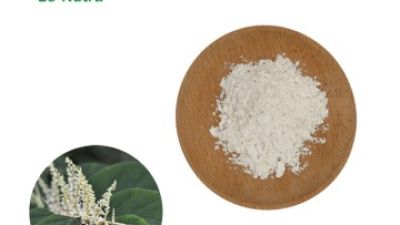
Giant knotweed extract resveratrol powder is a plant-derived ingredient commonly used in dietary supplements, health care products, and pharmaceutical research. Resveratrol, with the chemical formula C₁₄H₁₂O₃, a molecular weight of 228.24 g/mol, and CAS No. 501-36-0, is valued for its antioxidant properties and potential support for healthy inflammatory balance and age-related wellness. It is typically supplied as a white to off-white powder and can be selected in 50%, 98%, or 99% specifications according to formulation and application needs.

When choosing resveratrol powder, buyers should review the assay level, appearance, batch consistency, testing documentation, and suitability for the intended product format. Higher-purity grades may be preferred for specialized formulations, while 50% material can offer flexibility for certain supplement blends. The powder is suitable for capsules, tablets, powdered formulas, and other health-oriented preparations, subject to appropriate formulation and quality controls.

For bulk supply, the product can be packed in a vacuum aluminum foil bag or a 25 kg fiber drum lined with two food-grade polyethylene bags. It should remain sealed in a cool, dry place away from direct sunlight, high temperatures, and humidity. Under suitable storage conditions, the usual shelf life is 24 months, with quality remaining stable for an extended period when moisture and heat are properly controlled.

FAQS

What health needs are driving supplement ingredient innovation in 2026?

Consumers increasingly seek support for sleep, energy, digestion, healthy aging, and everyday resilience.

How should formulators evaluate a new ingredient?

They should review human studies, dosage clarity, absorption, stability, and safety.

What testing helps confirm ingredient quality?

Identity testing confirms the material matches its description.

Why are supplier traceability and batch records important?

Traceability shows where materials originated and how each batch was handled.

How can seasonal crops affect ingredient consistency?

Seasonal crops may change in color, strength, and nutrient content.

Why does shelf stability matter in supplement development?

Ingredients must remain safe, consistent, and effective throughout their shelf life.

Do early studies prove that an ingredient works?

No. Small samples and short timelines can produce uncertain findings.

How should product claims connect with consumer outcomes?

Claims should use measurable outcomes rather than attractive photographs or vague impressions.

Conclusion

Dietary Supplement Ingredient Trends 2026 reflect a shift toward more targeted, evidence-informed, and transparent product development. Consumers are increasingly interested in ingredients that support areas such as healthy aging, cognitive performance, digestive balance, immune function, sleep, and stress management. At the same time, manufacturers must respond to changing lifestyles, sustainability expectations, scientific discoveries, and demand for personalized wellness solutions. These trends matter because they influence how ingredients are selected, formulated, communicated, and evaluated across the supplement industry.

Safety, quality, and regulatory compliance remain essential when introducing new ingredients. Responsible development requires careful assessment of scientific evidence, sourcing standards, stability, dosage, potential interactions, and long-term consumer value. Emerging ingredient categories may offer promising health applications, but innovation should be guided by transparent research rather than temporary popularity. By combining consumer needs with rigorous testing and responsible manufacturing practices, the industry can identify ingredients that are both meaningful and suitable for future supplement development.

Sophie

Sophie

Sophie is a dedicated professional marketer with a profound expertise in the natural and innovative raw materials industry. As part of a forward-thinking company that specializes in the research, production, and marketing of high-quality nutraceuticals, foods, beverages, and cosmetics, she brings a......
Previous China Top Peptide Hydrolysate Supplier How to Choose?
Next How to Choose Botanical Extracts for Immune Support in 2026?